Sponsored
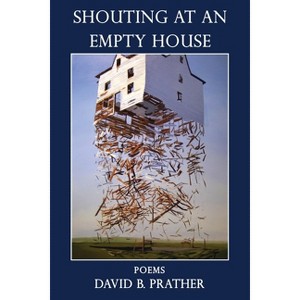
Shouting at an Empty House - by David B Prather (Paperback)
In Stock
Sponsored
About this item
Highlights
- Sometimes what we miss is tangible: a trinket, a pet, a loved one.
- Author(s): David B Prather
- 102 Pages
- Poetry, American
Description
About the Book
"A poetry collection by Appalachian author David B. Prather"--Book Synopsis
Sometimes what we miss is tangible: a trinket, a pet, a loved one. Sometimes we long for something less defined: a feeling, a moment, a sense of youth and wonderment. Shouting at an Empty House is an exploration of what little we have, how it goes unappreciated, and the losses we dwell upon. The speaker in these poems speaks of things that are taken from us, the knowledge that we can't get them back, and the reluctant acceptance that follows.
Review Quotes
This volume contains poems lifted out of the tatterdemalion joys and challenges of the everyday into a realm of transcendence both admirable and compelling. A master of the suburban pastorale, Prather's keen affection for the natural world outside our back doors informs these poems with a convincing and refreshing credibility, poems where he will "inaugurate spring with the first cutting of the lawn," and where in the same poem, "Revolution," he brazenly identifies with a flower to write: "Forgive me if I march against the wind. / Eventually, my hands will open, / the petals unfurl. / And isn't that astonishing?" It is astonishing, as are these poems. Highly recommended.
-Marc Harshman, Poet Laureate of West Virginia,
winner of the Blue Lynx Prize for Woman in Red Anorak
"Perhaps everyone here / is a prodigy, all of us with an innate / talent for magnifying the things / that hurt us most," writes David Prather in Shouting at an Empty House. Here is rural, a place of fishing and factories where "cities grow unseen past the horizon, quick / as an ache," and natural, where a stream runs "smelling of its own struggle." In language both ecstatic and immediate, these poems are finely drawn and contemplative, little moments of attention flung like prayers into the cathedral of a largely indifferent world. Still, they are more celebration than lament, with tadpoles showing "that one swirl of proof that, yes, / this was touched by the creator, / no matter how human that might be." This book is human, with all the complexities that entails, and firmly places that humanness among the larger diversity of creation. With Prather's speaker, we may find ourselves "possessed by a strange solitude," and like his drunken honeybees, we may stagger "from shadow to light, / from shadow to light, from ecstasy / to euphoria, and back again.
-Rachel Custer, author of Flatback Sally Country
Yeats advised poets to "Think like a wise man but communicate in the language of the people." There is much wisdom in this splendid collection, and it is rendered wholly accessible by the poet's ability to communicate plainly with his audience. With precise verbal skill and meticulous detail, Prather presents a rare clarity into the mysteries surrounding our everyday lives, our personal and collective histories, noticing and knowing the extraordinary in the ordinary, telling our stories with "one long and lingering breath." These are stunning poems, delivered by a poet in love with poetry, and ultimately, with us.
-Kirk Judd, author of My People Was Music
Shouting at an Empty House invites you to ponder what the poet hears echoing from this neo-pastoral lamentation breaking into Appalachian prayer. Does he "wish the whole world" feels "this kind of joy," as in the poem "Apple Snowfall?" These poems are topographical, the way they look down on the past, where "someone who would take us as we are, / never asks whether or not we are ready to go," from the poem, "Expulsion." With the lyrical simplicity of an Amish heretic, who asks if he's "been dismissed from Paradise," the intimacy of transcendence is covered in dirt framing the narrative of this stunning collection. Let him do to you what his poems ask the world, "Replace" your "heart with an apple."
-Daniel Edward Moore, author of Waxing the Dents