Sponsored
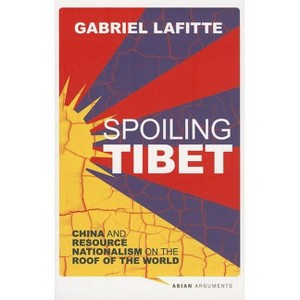
Spoiling Tibet - (Asian Arguments) by Gabriel Lafitte (Paperback)
In Stock
Sponsored
About this item
Highlights
- The mineral-rich mountains of Tibet so far have been largely untouched by China's growing economy.
- About the Author: Gabriel Lafitte has spent years living with Tibetans, in exile and in Tibet.
- 216 Pages
- History, Asia
- Series Name: Asian Arguments
Description
About the Book
The mineral-rich mountains of Tibet, hitherto largely untouched by China's growing economy, are now to be the site of massive investment in copper, gold, silver, chromium and lithium mining for the world's factory, with devastating environmental and social outcomes. Spoiling Tibet is the first book that investigates mining at the roof of the world - an entirely unique authoritative guide through the torrent of online posts, official propaganda and exile speculation.Book Synopsis
The mineral-rich mountains of Tibet so far have been largely untouched by China's growing economy. Nor has Beijing been able to settle Tibet with politically reliable peasant Chinese. That is all about to change as China's 12th Five-Year Plan, from 2011 to 2015, calls for massive investment in copper, gold, silver, chromium and lithium mining in the region, with devastating environmental and social outcomes.Despite great interest in Tibet worldwide, Spoiling Tibet is the first book that investigates mining at the roof of the world. A unique, authoritative guide through the torrent of online posts, official propaganda and exile speculation.
Review Quotes
Gabriel Lafitte is one of the few analysts wtih a profound knowledge of the extent and impacts of mineral exploitaiton in Tibet. This book is a vital reference point for anyone inerested in the future of Tibet.
Isabel Hilton, editor of chinadialogue.net
Spoiling Tibet contains a fascinating wealth of information about mining in contemporary Tibet. Bringing reflections on the relationship between landscape and enlightenment together with analyses of capital flight, primitive accumulation, and the dynamics of Chinese state capitalism in an era of globalization, the book is packed full of often counter-intuitive insights. Lafitte highlights the voices of Tibetans who are excluded from decision-making and object to environmentally destructive mining, while also arguing that to date, China has not exploited Tibetan minerals as much as commonly presumed.
Emily T. Yeh, Associate Professor, University of Colorado at Boulder
This is not just a simple book on minerals and mines in Tibet. It is the first serious study of the subject. It is also a book that tackles the issue of Tibet's sacred mountains, which are at present being badly damaged by the development of mines. At a time when Tibetans are fighting to save their physical environment as well as their religious landscape from destruction, an informative book such as this is most welcome. Written in a comprehensive and lively style, it sheds light on Chinese policies regarding Tibet's minerals resources. It is a must read for anyone interested in Tibet and in the fragility of the environment.
Katia Buffetrille, École Pratique des Hautes Études, co-editor of Authenticating Tibet: Answers to 100 China Questions and editor of Revisiting Rituals in a Changing Tibetan World
About the Author
Gabriel Lafitte has spent years living with Tibetans, in exile and in Tibet. Based in Australia, he researches the impacts of Chinese policies on the Tibetan Plateau, and regularly trains young Tibetan professional environmentalists and advocates. Decades of immersion in Tibetan culture, and a dozen journeys around China, have given him an insider/outsider perspective on two great civilizations in conflict. He is an experienced public policy adviser with expertise in development, biodiversity and resource management policy. He has authored numerous reports, submissions and a 2006 book on the Dalai Lama's teachings Happiness in a Material World.
Gabriel Lafitte has spent years living with Tibetans, in exile and in Tibet. Based in Australia, he researches the impacts of Chinese policies on the Tibetan Plateau, and regularly trains young Tibetan professional environmentalists and advocates. Decades of immersion in Tibetan culture, and a dozen journeys around China, have given him an insider/outsider perspective on two great civilizations in conflict. He is an experienced public policy adviser with expertise in development, biodiversity and resource management policy. He has authored numerous reports, submissions and a 2006 book on the Dalai Lama's teachings Happiness in a Material World.
Shipping details
Return details
Trending Non-Fiction






Discover more options