Sponsored
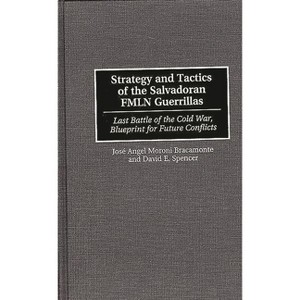
Strategy and Tactics of the Salvadoran Fmln Guerrillas - by Gustavo Perdomo & David E Spencer (Hardcover)
In Stock
Sponsored
About this item
Highlights
- This book examines the military organization, strategy, and tactics of the Salvadoran FMLN guerrillas during their efforts to overthrow the government.
- About the Author: JOSE ANGEL MORONI BRACAMONTE is the pen name of a combatant in the war.
- 216 Pages
- Political Science, General
Description
About the Book
This book examines the military organization, strategy, and tactics of the Salvadoran FMLN guerrillas during their efforts to overthrow the government. It is largely based on the authors' personal collections of guerrilla documents captured in the war, interviews with former and captured guerrillas, and personal combat experience during one of the fiercest wars fought in the Western hemisphere in the 20th century. The book describes the guerrilla tactics from a technical point of view, and their evolution during the war in El Salvador.
It includes discussions of such tactical concepts as concentration and deconcentration, urban combat, anti-air defense, the use of mines, and homemade weapons. It contains a chapter on the FMLN special forces--they were responsible for most of the spectacular attacks of the war--and it examines the sophisticated logistical system of the FMLN that made the prolonged war possible. Wherever possible, these concepts are illustrated by actual combat experiences from sources on both sides of the conflict. An important text for all concerned with guerrilla warfare and counterinsurgency. Latin Americanists and students of the developing world will also find much of interest.
Book Synopsis
This book examines the military organization, strategy, and tactics of the Salvadoran FMLN guerrillas during their efforts to overthrow the government. It is largely based on the authors' personal collections of guerrilla documents captured in the war, interviews with former and captured guerrillas, and personal combat experience during one of the fiercest wars fought in the Western hemisphere in the 20th century. The book describes the guerrilla tactics from a technical point of view, and their evolution during the war in El Salvador.
It includes discussions of such tactical concepts as concentration and deconcentration, urban combat, anti-air defense, the use of mines, and homemade weapons. It contains a chapter on the FMLN special forces--they were responsible for most of the spectacular attacks of the war--and it examines the sophisticated logistical system of the FMLN that made the prolonged war possible. Wherever possible, these concepts are illustrated by actual combat experiences from sources on both sides of the conflict. An important text for all concerned with guerrilla warfare and counterinsurgency. Latin Americanists and students of the developing world will also find much of interest.Review Quotes
.,."If the authors are correct in their assessment of the Salvadoran insurgency as a "blueprint for future conflicts," then this book can provide us both the schematics and marginal notations of that blueprint. ...it is worthwhile to have a threat doctrinal and operational model for someone besides the Group of Soviet Forces in Germany."-Armor
?...If the authors are correct in their assessment of the Salvadoran insurgency as a "blueprint for future conflicts," then this book can provide us both the schematics and marginal notations of that blueprint. ...it is worthwhile to have a threat doctrinal and operational model for someone besides the Group of Soviet Forces in Germany.?-Armor
..."If the authors are correct in their assessment of the Salvadoran insurgency as a "blueprint for future conflicts," then this book can provide us both the schematics and marginal notations of that blueprint. ...it is worthwhile to have a threat doctrinal and operational model for someone besides the Group of Soviet Forces in Germany."-Armor
About the Author
JOSE ANGEL MORONI BRACAMONTE is the pen name of a combatant in the war. He participated in most of the major battles and is one of the lucky few who survived more than 12 years of war unscathed.
DAVID E. SPENCER spent five years between 1987 and 1992 travelling to and studying the guerrilla war. He served as a political consultant to the armed forces. From 1983 to 1991 he served in the U.S. Army and National Guard. An expert on guerrilla warfare and low-intensity conflict, he has published numerous articles on these topics.Shipping details
Return details
Trending Non-Fiction






Discover more options