Sponsored
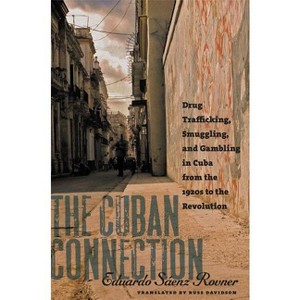
The Cuban Connection - (Latin America in Translation/En Traducción/Em Tradução) by Eduardo Sáenz Rovner (Paperback)
In Stock
Sponsored
About this item
Highlights
- A comprehensive history of crime and corruption in Cuba, The Cuban Connection challenges the common view that widespread poverty and geographic proximity to the United States were the prime reasons for soaring rates of drug trafficking, smuggling, gambling, and prostitution in the tumultuous decades preceding the Cuban revolution.
- About the Author: Eduardo Sáenz Rovner is professor of history at Universidad Nacional de Colombia in Bogotá.
- 264 Pages
- History, Caribbean & West Indies
- Series Name: Latin America in Translation/En Traducción/Em Tradução
Description
Book Synopsis
A comprehensive history of crime and corruption in Cuba, The Cuban Connection challenges the common view that widespread poverty and geographic proximity to the United States were the prime reasons for soaring rates of drug trafficking, smuggling, gambling, and prostitution in the tumultuous decades preceding the Cuban revolution. Eduardo Sáenz Rovner argues that Cuba's historically well-established integration into international migration, commerce, and transportation networks combined with political instability and rampant official corruption to help lay the foundation for the development of organized crime structures powerful enough to affect Cuba's domestic and foreign politics and its very identity as a nation.
Sáenz traces the routes taken around the world by traffickers and smugglers. After Cuba, the most important player in this story is the United States. The involvement of gangsters and corrupt U.S. officials and businessmen enabled prohibited substances to reach a strong market in the United States, from rum running during Prohibition to increased demand for narcotics during the Cold War. Originally published in Colombia in 2005, this first English-language edition has been revised and updated by the author.
Review Quotes
"The Cuban Connection provides a fascinating look at how drug trafficking and related activities helped shape Cuban identity from the early twentieth century through the rise of Fidel Castro. The broad scope of the story and the base of research behind it merit the highest praise. There is no other book like it." -- William O. Walker III, editor of Drugs in the Western Hemisphere: An Odyssey of Cultures in Conflict
"A unique contribution to the fields of Latin American history, U.S. foreign relations, and narcotics studies. . . . Great credit is due to the author for locating this data and producing such a concise account based on it." -- Hispanic American Historical Review
"A valuable addition to that corpus of historical research on Cuba that confronts official myths that it is all too easy to leave unchallenged." -- Latin American Review of Books
"This book fills some Cuban niches untouched by North American scholars. . . . [It] brings to light new documentation regarding Cubans, non-Cuban traffickers, and people who used Cuba as a logistical base from the era of prohibition to the Cuban Revolution. . . . There is no doubt that Saenz Rovner gives Cuba the coverage it deserves." -- American Historical Review
"This meticulously researched and cogently argued work represents a major contribution to Cuban history. . . . Accessibly written and powerfully insightful." -- CHOICE
"Valuable for fields such as political science and sociology and interdisciplinary areas such as Latin American and Caribbean Studies, and criminal justice . . . . A worthy read." -- New West Indian Guide
"This exhaustively researched text will be of great use to scholars of twentieth-century Cuba, U.S.-Cuban relations, and the global drug trade." -- H-Net Reviews
About the Author
Eduardo Sáenz Rovner is professor of history at Universidad Nacional de Colombia in Bogotá. He is author or editor of six other books published in Colombia. Translator Russ Davidson is curator emeritus of Latin American and Iberian collections and professor emeritus of librarianship at the University of New Mexico.Shipping details
Return details
Trending Non-Fiction