Sponsored
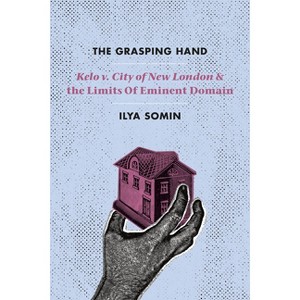
The Grasping Hand - by Ilya Somin (Paperback)
$23.00
In Stock
Eligible for registries and wish lists
Sponsored
About this item
Highlights
- In 2005, the Supreme Court ruled that the city of New London, Connecticut, could condemn fifteen residential properties in order to transfer them to a new private owner.
- About the Author: Ilya Somin is professor of law at the George Mason University School of Law.
- 384 Pages
- Freedom + Security / Law Enforcement, Property
Description
About the Book
Ilya Somin s "The Grasping Hand: "Kelo v. New London" and the Limits of Eminent Domain" is the definitive review of one of the most controversial Supreme Court cases of the 21st century. Somin provides a thorough analysis of the case s historic and factual background along with the broader history of American public-purpose takings and the challenges posed by economic-development takings. The book offers a detailed account of the trajectory of the "Kelo" case itself, from the neighbors electing to fight their eviction through finding legal representation via a collection of strange-bedfellow public-interest groups. The litigators strategies are examined and Somin brings us into the Supreme Court to scrutinize the thrust and parry of oral argument. Somin s close reading and incisive critique of the "Kelo" opinion is the heart of the book. Holding that the Court made several serious doctrinal errors, Somin carefully parses the majority opinion, concurrences, and dissents to show where the Justices went wrong, and even offers some responsible speculation about why. A notably unpopular verdict, "Kelo" sparked significant political backlash. Somin takes a qualitative and quantitative tour through the large number of new state laws passed in the wake of "Kelo," studying the mechanisms by which they were passed, their effectiveness, and public awareness of these new laws. The work concludes with recommendations toward reform, or prohibition, of takings justified on the premise of blight or hoped-for private economic development."Book Synopsis
In 2005, the Supreme Court ruled that the city of New London, Connecticut, could condemn fifteen residential properties in order to transfer them to a new private owner. Although the Fifth Amendment only permits the taking of private property for "public use," the Court ruled that the transfer of condemned land to private parties for "economic development" is permitted by the Constitution-even if the government cannot prove that the expected development will ever actually happen. The Court's decision in Kelo v. City of New London empowered the grasping hand of the state at the expense of the invisible hand of the market. In this detailed study of one of the most controversial Supreme Court cases in modern times, Ilya Somin argues that Kelo was a grave error. Economic development and "blight" condemnations are unconstitutional under both originalist and most "living constitution" theories of legal interpretation. They also victimize the poor and the politically weak for the benefit of powerful interest groups and often destroy more economic value than they create. Kelo itself exemplifies these patterns. The residents targeted for condemnation lacked the influence needed to combat the formidable government and corporate interests arrayed against them. Moreover, the city's poorly conceived development plan ultimately failed: the condemned land lies empty to this day, occupied only by feral cats. The Supreme Court's unpopular ruling triggered an unprecedented political reaction, with forty-five states passing new laws intended to limit the use of eminent domain. But many of the new laws impose few or no genuine constraints on takings. The Kelo backlash led to significant progress, but not nearly as much as it may have seemed. Despite its outcome, the closely divided 5-4 ruling shattered what many believed to be a consensus that virtually any condemnation qualifies as a public use under the Fifth Amendment. It also showed that there is widespread public opposition to eminent domain abuse. With controversy over takings sure to continue, The Grasping Hand offers the first book-length analysis of Kelo by a legal scholar, alongside a broader history of the dispute over public use and eminent domain and an evaluation of options for reform.Review Quotes
"Somin's thorough rebuttal of the constitutional reasoning and philosophical implications of the Supreme Court's Kelo decision demonstrates why that ruling was a constructive disaster: It was so dreadful it has provoked robust defenses of the role of private property in sustaining Americans' liberty."--George F. Will
"Kelo v. The City of New London, perhaps the most derided Supreme Court case in recent memory, has finally received the thorough review it deserves. . . . The Grasping Hand chronicles what led to the infamous decision a decade ago. More importantly, it shows why people of all political persuasions should care about eminent-domain abuse. Somin also adds to the literature by evaluating the effectiveness of the many state laws passed in Kelo's wake to curtail government abuse of eminent domain."-- "Federalist" (11/6/2015 12:00:00 AM)
"[A] key contribution to the literature on property rights. I dare say that this is the most important book on eminent domain since Epstein's classic, Takings. . . . [Somin's] voice is the voice of reason, precisely the kind of scholarship that is sorely needed in our polarized society. And this book is, today, the leading authority on Kelo."--Fernando Teson, Florida State University College of Law
"[A] must-read for anyone interested in the politics and history of property rights and property law in the United States. Its appeal is even broader though, and it would be fruitfully read by anyone with an interest in constitutional theory, judicial impact, or cause lawyering."
-- "Law and Politics Book Review" (6/17/2016 12:00:00 AM)
"A thorough exploration of Kelo v. City of New London and the power of eminent domain generally. . . . If the goal of The Grasping Hand was to retrieve the original meaning of 'public use' from scholarly and jurisprudential oblivion, Somin has succeeded. Will the Court recognize its error and eventually overrule Kelo? One can only hope."
-- "Library of Law and Liberty" (12/30/2015 12:00:00 AM)
"For much of America's past, the rhetoric of property rights was the dominant trope for advocates of democratic and egalitarian economic policies. The anti-Kelo backlash provides a brief glimpse of what a revived, populist property rights rhetoric might look like. Building on that moment would involve some uncomfortable adjustments by both libertarians and liberals. Somin's intriguing book illustrates both the promise and the challenges of that effort."--Eduardo M. Peñalver, Alan R. Tessler Dean of Cornell Law School "New Rambler"
"Sharp legal, economic, and historical analysis of the eminent domain debate. . . . The Grasping Hand tells the story of the battle in fascinating detail. Somin succinctly recounts the facts that many readers will remember but adds a great deal of additional detail to show many ugly but unknown truths about it."-- "Forbes" (7/9/2015 12:00:00 AM)
"Somin has written what is likely to be the definitive legal analysis of Kelo, its aftermath, and its future prospects. . . . The Grasping Hand is excellent at laying out the political and doctrinal developments that led up to Kelo and at canvassing the backlash and legislative response to it."-- "Weekly Standard" (8/14/2015 12:00:00 AM)
"The definitive treatment of eminent domain and the Kelo case. As you might expect, Somin discusses the legal issues with aplomb [and] offers . . . an eye-opening investigation of the history behind many of the major cases."-- "Alex Tabarrok, Marginal Revolution" (5/22/2015 12:00:00 AM)
"An absorbing study not only of the Kelo case, but of the legal and historical context in which it arose; it reveals the fragility of our individual rights against the seemingly boundless power of the modern state and reminds us that we must continue to challenge this kind of arbitrary power in the courts and in the political forum."
--David S. D'Amato "Future of Freedom Foundation" (5/2/2016 12:00:00 AM)
"An in-depth legal analysis of one of the most controversial Supreme Court decisions in recent times. . . . The book provides a very well-written review of the background of the case, a close legal analysis of the relevant case law leading up to it, a detailed review of the legislative and judicial responses to the decision, and a discussion of possible safeguards against excessive use of eminent domain in the face of the Court's ruling."--Thomas J. Miceli "Public Choice" (5/12/2016 12:00:00 AM)
"Somin provides a fine tour of the case and of the intellectual history of eminent-domain law. More important, he provides a framework for thinking about the future of eminent domain and private property. . . . Somin has written an important book that maps the road ahead for those who believe that individual freedom cannot be separated from the protection of private property." --Edward Glaeser "Wall Street Journal" (7/27/2015 12:00:00 AM)
"The Grasping Hand is likely to be the definitive analysis of the Supreme Court's controversial decision in the Kelo case. But Somin attends to much more than that. He sets out the political and doctrinal history that led up to Kelo and critiques the legislative and judicial developments provoked by the reaction to it. Somin has long been a champion of strong property rights. What he has to say will be of value to those who share that commitment and perhaps even more to those who don't."--James E. Krier, University of Michigan Law School
"By dint of his uncommon thoroughness, Somin has become the leading and most persuasive critic of the Supreme Court's ill-fated Kelo decision. His close examination of the case's factual backdrop offers chilling confirmation of his central thesis: weak constitutional protection of property rights opens the door to political intrigue that exacts its greatest toll on the poor and vulnerable in society. Somin's gripping account confirms your worst fears about big government."--Richard Epstein, New York University School of Law, author of Takings: Private Property and the Power of Eminent Domain
"For anyone interested in the Kelo case, I recommend Somin's book. It is the first book-length discussion of the Kelo appellate proceedings by a legal scholar. It is also by far the most exhaustively researched history of the public use doctrine in the state and federal courts before and since Kelo. While I do not share Somin's opposition to the Kelo decision, I welcome his good scholarship on the subject."--Wesley W. Horton, counsel for the city of New London in Kelo v. City of New London
"In this carefully researched and convincingly argued volume, Somin provides a powerful critique of the Supreme Court's 'public use' jurisprudence and the controversial Kelo decision. He also gives careful attention to the hostile public reaction to the ruling and points out that much of the post-Kelo reform legislation is inadequate to prevent future eminent domain abuse. This insightful book belongs on the shelf of anyone interested in the place of property rights in constitutional law."--James W. Ely, Jr., author of The Guardian of Every Other Right: A Constitutional History of Property Rights
"Somin is one of the world's leading scholars on private property rights, and his analysis of the history of eminent domain and the Kelo decision is extremely thorough and insightful. But The Grasping Hand has something more than just solid legal history and reasoning. With its interviews with property owners and explorations of how eminent domain plays out in the real world, the book, unlike virtually all other scholarly works on eminent domain, compellingly communicates the human dimension and costs of governments teaming up with private interests to take the homes, small businesses, and other property of Americans."--Dana Berliner and Scott Bullock, co-counsel for the homeowners in Kelo v. City of New London
About the Author
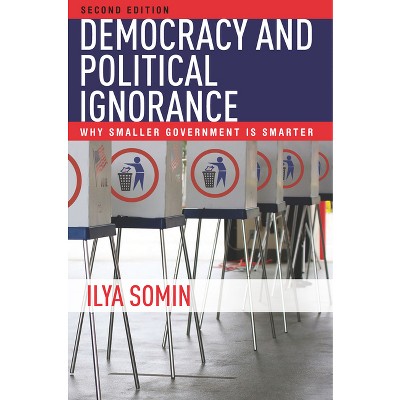
Ilya Somin is professor of law at the George Mason University School of Law. He is the author of Democracy and Political Ignorance: Why Smaller Government isSmarter and writes regularly for the popular Volokh Conspiracy blog.Dimensions (Overall): 9.0 Inches (H) x 6.0 Inches (W) x .78 Inches (D)
Weight: 1.11 Pounds
Suggested Age: 22 Years and Up
Number of Pages: 384
Genre: Freedom + Security / Law Enforcement
Sub-Genre: Property
Publisher: University of Chicago Press
Format: Paperback
Author: Ilya Somin
Language: English
Street Date: November 29, 2016
TCIN: 1007639730
UPC: 9780226422169
Item Number (DPCI): 247-12-6902
Origin: Made in the USA or Imported
If the item details aren’t accurate or complete, we want to know about it.
Shipping details
Estimated ship dimensions: 0.78 inches length x 6 inches width x 9 inches height
Estimated ship weight: 1.11 pounds
We regret that this item cannot be shipped to PO Boxes.
This item cannot be shipped to the following locations: American Samoa (see also separate entry under AS), Guam (see also separate entry under GU), Northern Mariana Islands, Puerto Rico (see also separate entry under PR), United States Minor Outlying Islands, Virgin Islands, U.S., APO/FPO
Return details
This item can be returned to any Target store or Target.com.
This item must be returned within 90 days of the date it was purchased in store, shipped, delivered by a Shipt shopper, or made ready for pickup.
See the return policy for complete information.
Trending Non-Fiction
$19.31
was $20.98 New lower price
4 out of 5 stars with 64 ratings

$4.59
MSRP $7.99
Save $5 when you spend $20 on select books
4.8 out of 5 stars with 123 ratings

$6.20
MSRP $10.95
Save $5 when you spend $20 on select books
4.8 out of 5 stars with 33 ratings

$7.09
MSRP $9.99
Save $5 when you spend $20 on select books
4.9 out of 5 stars with 46 ratings
Discover more options


$10.99
MSRP $15.95
$17.17
MSRP $29.99