Target New ArrivalsFourth of JulyGift Ideas for DadClothing, Shoes & AccessoriesHome & DecorKitchen & DiningOutdoor Living & GardenGroceryHousehold EssentialsBabyBeautyPersonal CareSports & OutdoorsHealthWellnessLuggageSchool & Office SuppliesToys & GamesElectronicsVideo GamesMovies, Music & BooksParty SuppliesGift IdeasGift CardsPetsUlta Beauty at TargetShop by CommunityTarget OpticalDealsClearanceNew ArrivalsGift Ideas for DadBack to SchoolCollegeTop DealsTarget Circle DealsWeekly AdShop Order PickupShop Same Day DeliveryRegistryRedCardTarget CircleFind Stores
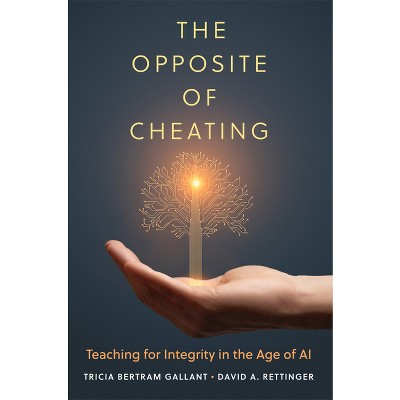
The Opposite of Cheating - (Teaching, Engaging, and Thriving in Higher Ed) by Tricia Bertram Gallant & David A Rettinger - 1 of 1

The Opposite of Cheating - (Teaching, Engaging, and Thriving in Higher Ed) by Tricia Bertram Gallant & David A Rettinger (Hardcover)


FormatHardcover

In Stock

Free & easy returns

Free & easy returns

Return this item by mail or in store within 90 days for a full refund.
Eligible for registries and wish lists

About this item

Highlights

  • In these days of an ever-expanding internet, generative AI, and term paper mills, students may find it too easy and tempting to cheat, and teachers may think they can't keep up.
  • Author(s): Tricia Bertram Gallant & David A Rettinger
  • 276 Pages
  • Education, Philosophy, Theory & Social Aspects
  • Series Name: Teaching, Engaging, and Thriving in Higher Ed

Description


About the Book


The Opposite of Cheating presents a positive, forward-looking, research-backed vision for what classroom integrity can look like in the GenAI era, both in cyberspace and on campus. Accordingly, the book outlines workable measures teachers can use to better understand why students cheat and to prevent cheating while aiming to enhance learning and integrity.


Book Synopsis


In these days of an ever-expanding internet, generative AI, and term paper mills, students may find it too easy and tempting to cheat, and teachers may think they can't keep up. What's needed, and what Tricia Bertram Gallant and David A. Rettinger offer in this timely book, is a new approach--one that works with the realities of the twenty-first century, not just to protect academic integrity but also to maximize opportunities for students to learn.

The Opposite of Cheating presents a positive, forward-looking, research-backed vision for what classroom integrity can look like in the GenAI era, both in cyberspace and on campus. Accordingly, the book outlines workable measures teachers can use to better understand why students cheat and to prevent cheating while aiming to enhance learning and integrity.

Bertram Gallant and Rettinger provide practical suggestions to help faculty revise the conversation around integrity, refocus classes and students on learning, reconsider the structure and goals of assessment, and generally reframe our response to cheating. At the core of this strategy is a call for teachers, academic staff, institutional leaders, and administrators to rethink how we "show up" for students, and to reinforce and fully support quality teaching, learning, and assessment. With its evidentiary basis and its useful tips for instructors across disciplines, levels of experience, and modes of instruction, this book offers a much-needed chance to pause, rethink our purpose, and refocus on what matters--creating classes that center human interactions that foster the personal and professional growth of our students.


Review Quotes


"The Opposite of Cheating offers a timely framework for navigating assessment and integrity in the GenAI era. Its insistence on trust, transparency, and design contrasts sharply with punitive or surveillance-based approaches that have dominated recent discourse. The text's greatest achievement is its relational stance: it repositions integrity as a shared, educative endeavor rather than an enforcement regime. While some institutional and international nuances could be developed further, the book's clarity, theoretical grounding, and pedagogical optimism make it a compelling contribution to global discussions on academic integrity. For learning developers and educational leaders alike, it demonstrates how conversations about GenAI can become conversations about pedagogy, belonging, and the purpose of HE itself. The Opposite of Cheating ultimately serves as both a guide and a reminder that integrity begins not with policy but with how and why we teach."--Journal of Learning Development


"Ever mindful of contract cheating and AI, what is a college professor concerned about academic integrity to do in the twenty-first century? Bertram Gallant and Rettinger have ideas, lots of them. The book is filled with excellent ideas about course design and pedagogy in a range of disciplines. You will emerge from reading this book a better teacher, more confident and better able to prepare students for the lives they will be living."--Susan D. Blum, author of My Word! Plagiarism and College Culture


"Bertram Gallant and Rettinger's clear-eyed, compassionate, no-nonsense approach to teaching with and for integrity presents a must-read for scholar-practitioners across the higher-education spectrum. Never preachy, always practical--this book raises the bar for how we talk about integrity in higher education."--Greer Murphy, Director of the Academic Integrity Office, University of California, Santa Cruz


"Leading with empathy and nuance, Tricia Bertram Gallant and David Rettinger invite instructors to cultivate academic integrity in their students rather than focus solely on cheating. This book offers a rich and current evidence base, insights into teaching and learning in an AI world, motivating illustrations, and highly practical strategies for all classes, disciplines, and modalities."--Flower Darby, co-author of Small Teaching Online: Applying Learning Science in Online Classes

Dimensions (Overall): 9.0 Inches (H) x 6.0 Inches (W) x .75 Inches (D)
Weight: 1.27 Pounds
Suggested Age: 22 Years and Up
Number of Pages: 276
Genre: Education
Sub-Genre: Philosophy, Theory & Social Aspects
Series Title: Teaching, Engaging, and Thriving in Higher Ed
Publisher: University of Oklahoma Press
Format: Hardcover
Author: Tricia Bertram Gallant & David A Rettinger
Language: English
Street Date: March 11, 2025
TCIN: 94349512
UPC: 9780806194950
Item Number (DPCI): 247-40-5230
Origin: Made in the USA or Imported
If the item details aren’t accurate or complete, we want to know about it.

Shipping details

Estimated ship dimensions: 0.75 inches length x 6 inches width x 9 inches height
Estimated ship weight: 1.27 pounds
We regret that this item cannot be shipped to PO Boxes.
This item cannot be shipped to the following locations: American Samoa (see also separate entry under AS), Guam (see also separate entry under GU), Northern Mariana Islands, Puerto Rico (see also separate entry under PR), United States Minor Outlying Islands, Virgin Islands, U.S., APO/FPO, Alaska, Hawaii

Return details

This item can be returned to any Target store or Target.com.
This item must be returned within 90 days of the date it was purchased in store, delivered to the guest, delivered by a Shipt shopper, or picked up by the guest.
See the return policy for complete information.

Q: How many pages does the book contain?

submitted by AI Shopping Assistant - 3 months ago
  • A: The book contains a total of 276 pages.

    submitted byAI Shopping Assistant - 3 months ago
    Ai generated

Q: What age group is this book suitable for?

submitted by AI Shopping Assistant - 3 months ago
  • A: This book is suggested for readers aged 22 years and up.

    submitted byAI Shopping Assistant - 3 months ago
    Ai generated

Q: What is the primary genre of the book?

submitted by AI Shopping Assistant - 3 months ago
  • A: The primary genre of the book is Education, focusing on philosophy, theory, and social aspects.

    submitted byAI Shopping Assistant - 3 months ago
    Ai generated

Q: What type of format does this book come in?

submitted by AI Shopping Assistant - 3 months ago
  • A: The book is available in a hardcover format.

    submitted byAI Shopping Assistant - 3 months ago
    Ai generated

Q: Who are the authors of this book?

submitted by AI Shopping Assistant - 3 months ago
  • A: The authors of the book are Tricia Bertram Gallant and David A Rettinger.

    submitted byAI Shopping Assistant - 3 months ago
    Ai generated

Additional product information and recommendations

Discover more options

Frequently bought together

Guests also viewed

Get top deals, latest trends, and more.

Privacy policy