Sponsored
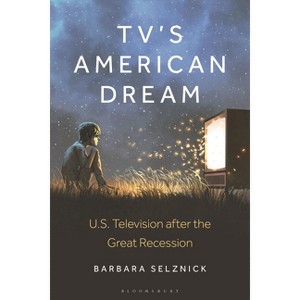
Tv's American Dream - by Barbara Selznick (Hardcover)
In Stock
Sponsored
About this item
Highlights
- TV's American Dream examines how the U.S. television industry in the 2010s pursued audiences whose ideas about hope, fairness, work, and economic class were shaped by the Great Recession.
- About the Author: Barbara Selznick is an Associate Professor in the School of Theatre, Film and Television at the University of Arizona, USA.
- 216 Pages
- Performing Arts, Television
Description
About the Book
"TV's American Dream examines how the U.S. television industry in the 2010s pursued audiences whose ideas about hope, fairness, work, and economic class were shaped by the Great Recession. Each chapter focuses on a particular strategy mobilized in the 2010s to speak to audiences about their expectations for and concerns about the Dream. Bringing together research on industrial practices with an examination of sociocultural context, this book demonstrates how interconnected forces give rise to the television programs, including The Office, Atlanta, Arrow, and Friends, among others, that reinforce and redefine audiences' ideas about the world in which they live"--Book Synopsis
TV's American Dream examines how the U.S. television industry in the 2010s pursued audiences whose ideas about hope, fairness, work, and economic class were shaped by the Great Recession.
While Americans navigated the trauma of the economic meltdown, the television industry faced growing pressure stemming from new program distribution and viewing methods, increasingly fragmented audiences, shifts in methods of advertising, and regulatory changes. To cut through the clutter of television content to appeal to elusive viewers, television programming reimagined some of the traditional representations of the American Dream and continued to bolster others. Exploring shows on different platforms from legacy networks to Netflix, Selznick takes a deep dive into representations of the American Dream on television. Each chapter of this book focuses on a particular strategy mobilized in the second decade of the new century to speak to audiences about their expectations for and concerns about the Dream. Bringing together research on industrial practices with an examination of sociocultural context, TV's American Dream demonstrates how interconnected forces give rise to the television programs that reinforce and redefine audiences' ideas about the world in which they live.Review Quotes
"While Barbara Selznick adeptly interrogates the meanings of the dreams that Great Recession TV offered its viewers, she equally challenges us to ask how those dreams emerged from the economies in which TV is produced and distributed. TV's American Dream reveals how industrial hopes and aspirations for profitable futures can determine what dreams become available to whom." --Derek Johnson, Professor and Chair of Communication Arts, University of Wisconsin-Madison, USA, and author of Transgenerational Media Industries: Adults, Children, and the Reproduction of Culture (2019)
"A wide-ranging, insightful, and accessible study of post-recession television, TV's American Dream meticulously probes narrative, character, genre, audience, and industry to ascertain how the medium adapted to the fallout of an economy gone sour. Selznick maps the elusiveness of the American Dream onto the shifting terrains of television and demonstrates that while the dream can be contested, TV cannot tolerate its complete undoing." --Deborah Jaramillo, Associate Professor, Department of Film and Television, Boston University, USA "Contributing to a body of work that is writing history's second draft about the Recession's impact on US sociocultural institutions, this volume deftly links both industry trends and narrative content to a set of material conditions." --CHOICEAbout the Author
Barbara Selznick is an Associate Professor in the School of Theatre, Film and Television at the University of Arizona, USA. She is the author of Sure Seaters: The Emergence of Art House Cinema (2001) and Global Television: Co-Producing Culture (2008). Her research has also appeared in edited book collections and journals.Shipping details
Return details






Trending Non-Fiction






Discover more options