Sponsored
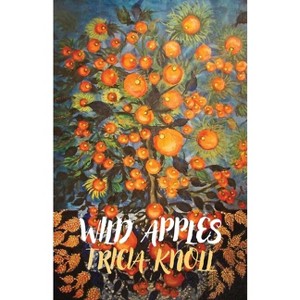
Wild Apples - by Tricia Knoll (Paperback)
In Stock
Sponsored
About this item
Highlights
- Wild Apples are hard fruits left in abandoned orchards.
- Author(s): Tricia Knoll
- 98 Pages
- Poetry, Subjects & Themes
Description
About the Book
Tricia Knoll's poems tell of both loneliness and wonder at the birth of grandsons who live just down the road and the wildlife that moves through her five acres of land.
Book Synopsis
Wild Apples are hard fruits left in abandoned orchards. Like rock walls, a symbol of New England where poet Tricia Knoll found a home in the Vermont woods just before the pandemic locked down. She begins the book with downsizing to make her move. Then her poems tell of both loneliness and wonder at the birth of grandsons who live just down the road and the wildlife that moves through her five acres of land.
Review Quotes
"The bones of this land are not mine," writes Tricia Knoll, long-time Oregon poet moved to the woods of northern Vermont.... Here she awaits and then welcomes a first grandchild, telling him what she holds sacred: "milkweed, horses, dogs..." and the list ends with "poetry and songs by people who tell the truth." This poet has brought with her the gift of telling truth with beauty.
Penelope Scambly Schott, past recipient of the Oregon Book Award for Poetry and author of On Dufur Hill
I laugh with Knoll's humor, wit, imagination and sly cultural critiques-discarding the body but keeping a doll's head and stitching it with white dog hair to look more like the speaker. I find balm in the sense of connection to family, friends, and those unmet: the previous homeowner, the Native Americans who never willingly ceded their lands; the flora and fauna, even gravel, dirt and potholes, "since the road is in me, / I am not lost."
April Ossmann, author of Event Boundaries
While reading Tricia Knoll's Wild Apples, the latest of her eight volumes of poems, I was struck by how she transforms the everyday into the luminous by interweaving human lives with their landscapes, whether the American Northwest of Oregon's coasts or the seasons of Vermont's forested terrain. The span of the continent becomes a way to examine the span of a life, its history and rhythms embedded in both seasonal and geographic explorations.
Mary Jane Dickerson, author of Tapping the Center of Things and Water Journeys in Art & Poetry with artist Dianne Shullenberger
Shipping details
Return details
Trending Poetry
Discover more options