Many 4-cube units include anti-tip or anti-toppling hardware (wall anchors or straps) to fasten the unit to a wall. Some listings also note indoor-air or chemical screening/testing for finishes or materials. Always check the product details to confirm what anchoring hardware is included and whether the finish or material has any listed safety/certification information.
Most 4-cube organizers require adult assembly and ship with instructions and at least some of the basic hardware or tools. Expect a straightforward setup that typically takes one person 15–45 minutes; check the product listing or manual for exact tool requirements, included parts, and step-by-step guidance.
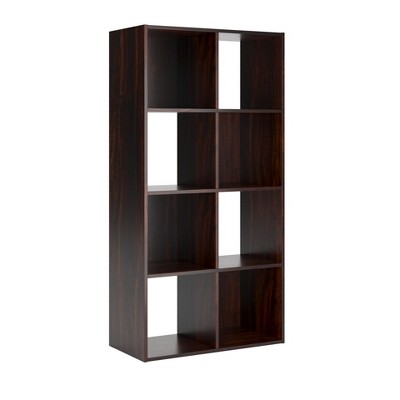
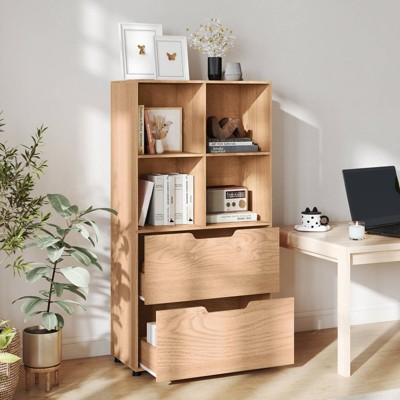
Beyond four open cubes, many models add features like an enclosed cabinet or door, pull-out drawers beneath the cubes, a wider top surface for display, or a mix of open and concealed compartments to suit different storage needs.
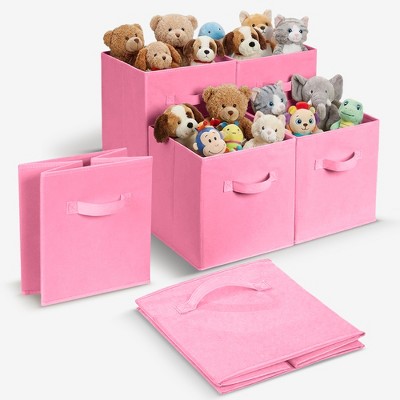
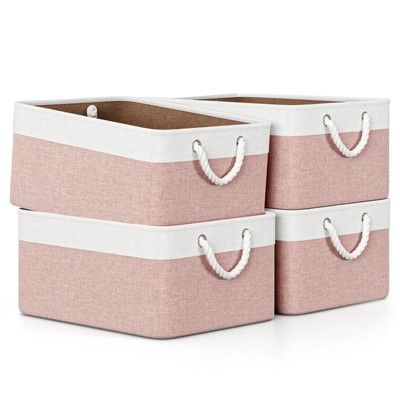
It depends on the model. Some organizers explicitly state compatibility with 13" bins, while others have slightly smaller cubby maximums (for example, about 12.5" W x 12.25" D x 10.5" H). Check the cubby/internal dimensions in the product details to confirm a proper fit.
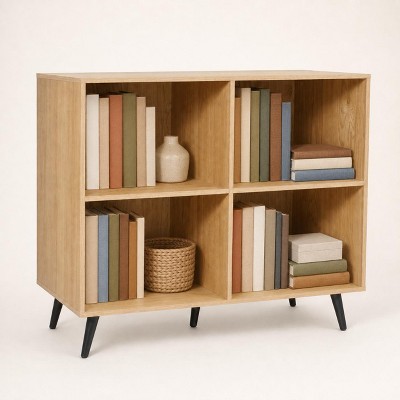
Common materials include solid wood or wood frames, MDF (medium-density fiberboard), particle board, melamine-coated panels, and paper or wood veneer surfaces. Check the product details to confirm the exact material and finish used.
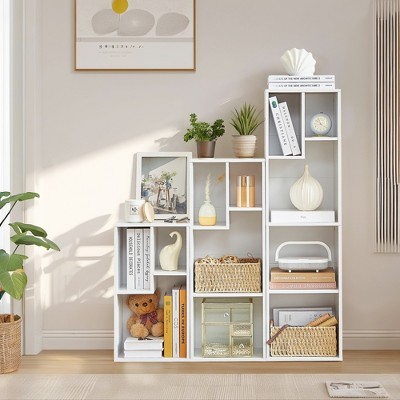
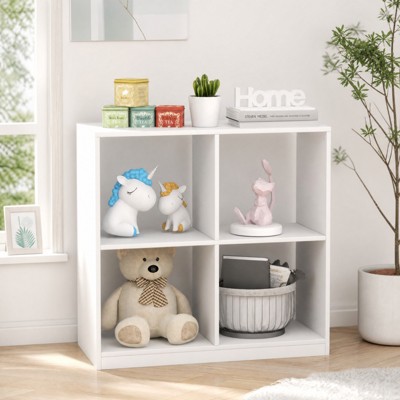
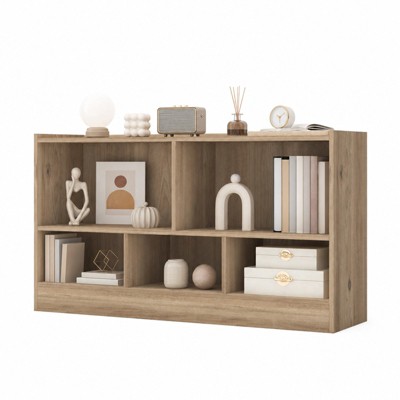
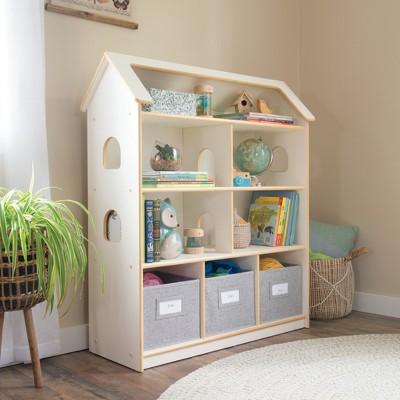
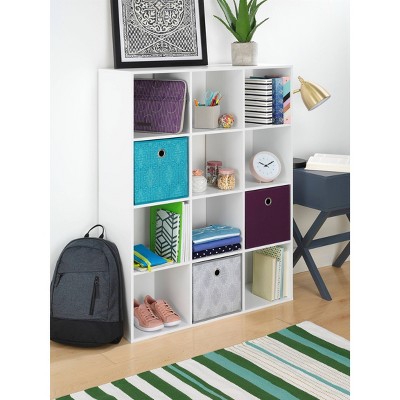
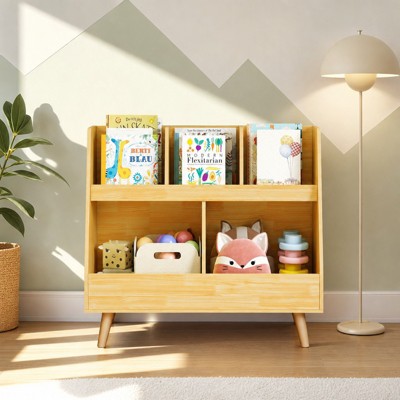
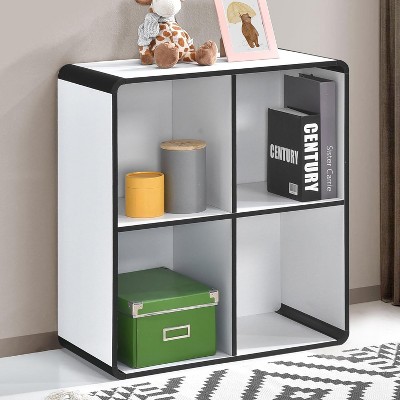
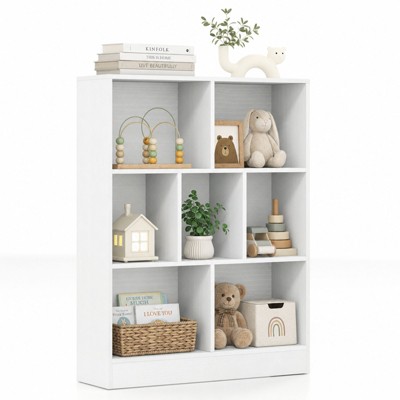
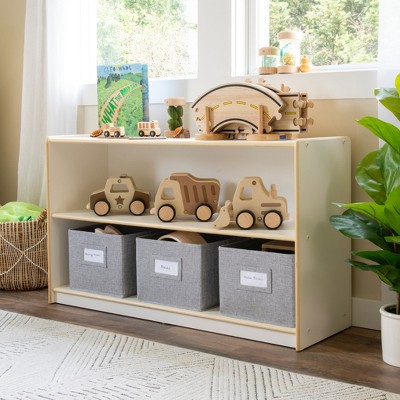
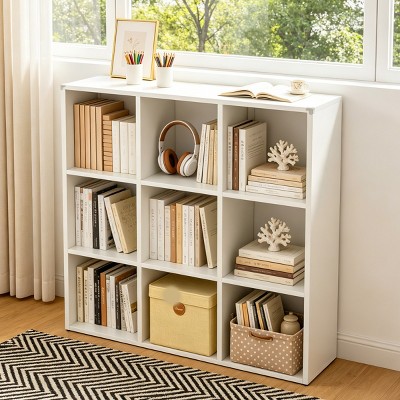
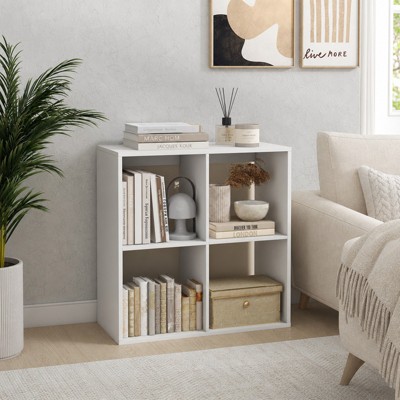
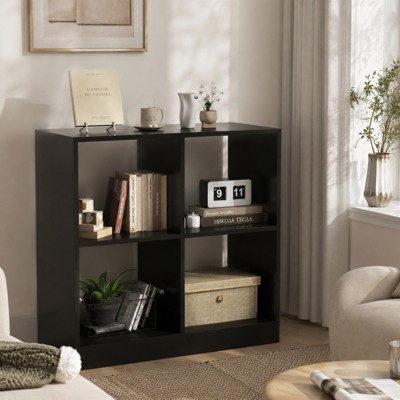
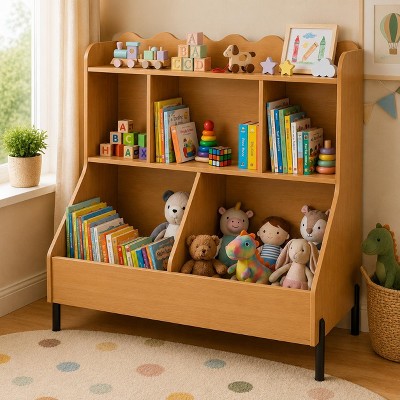
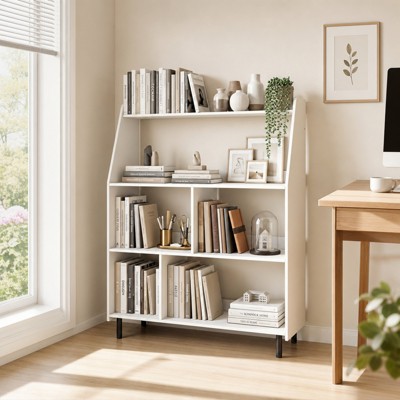
4-cube units are versatile and commonly used in nurseries and kids’ rooms as well as living rooms, bedrooms, studies, and home offices. They work well for books, display items, bins and baskets, toys, and general small-item organization.
Some organizers can be placed vertically or horizontally, and orientation can significantly change load ratings. For example, one listing shows a top capacity of 25 lb when vertical but 105 lb when mounted horizontally. Check the product’s orientation-specific load ratings before arranging heavy items.