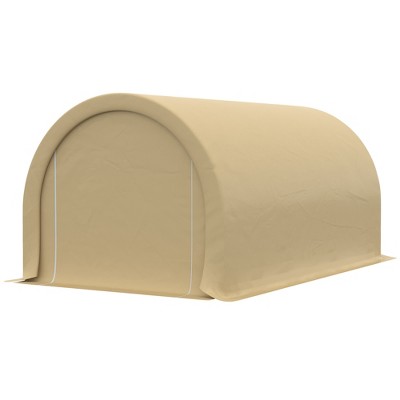
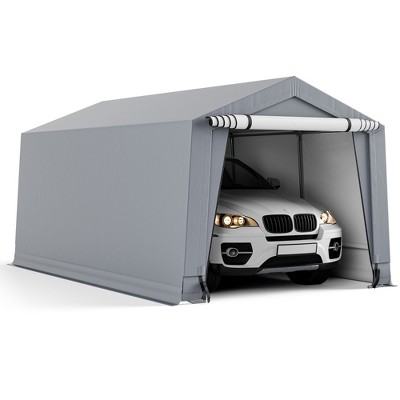
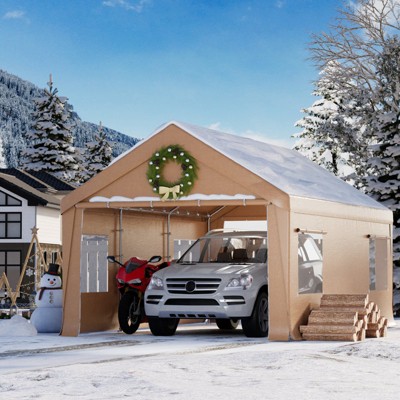
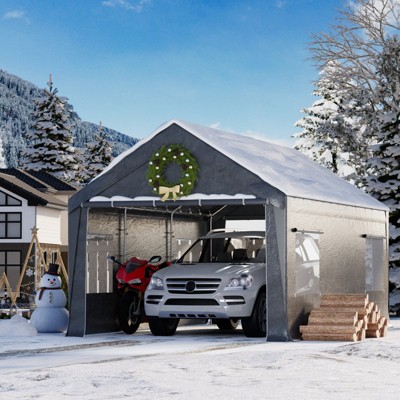
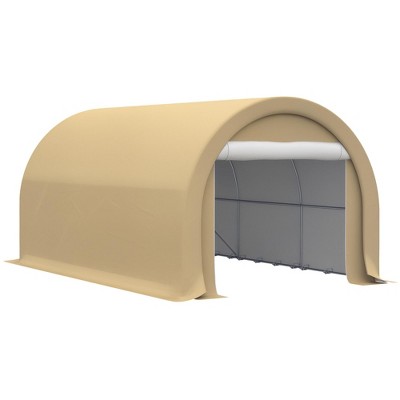
Most portable garage canopies use polyethylene (PE) covers in single-, double- or triple-layer constructions. Listings commonly describe heat-sealed or double-coated PE tarps and note weights such as 160 g and 180 g PE; some models emphasize triple-layer or heat-sealed construction for extra durability.
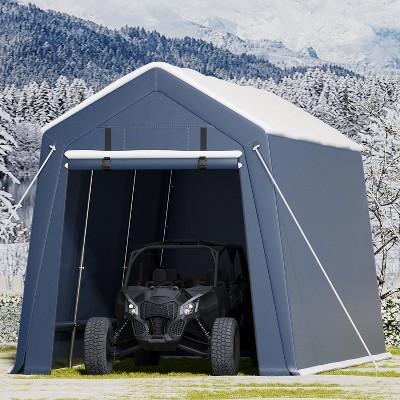
Listings describe several anchoring methods to secure the frame and canopy against wind and movement, including wind ropes, ground stakes, auger anchors, elastic ball straps, and support feet.
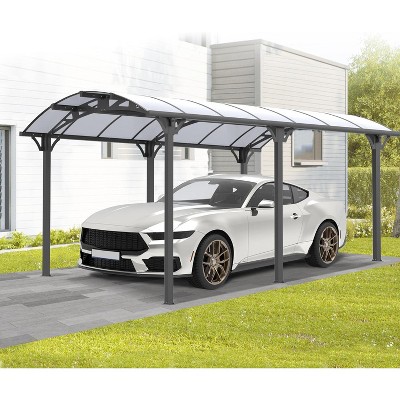
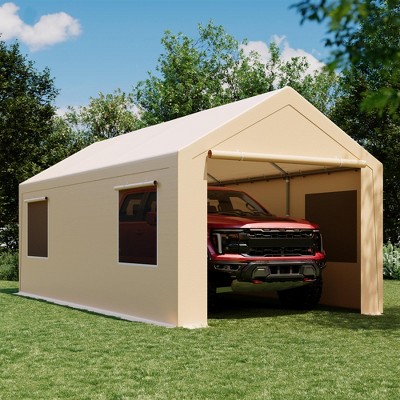
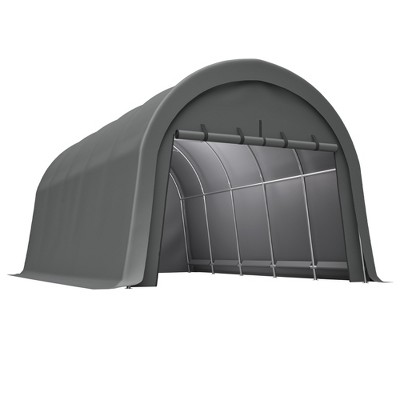
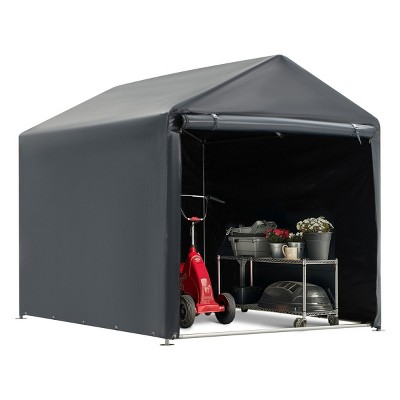
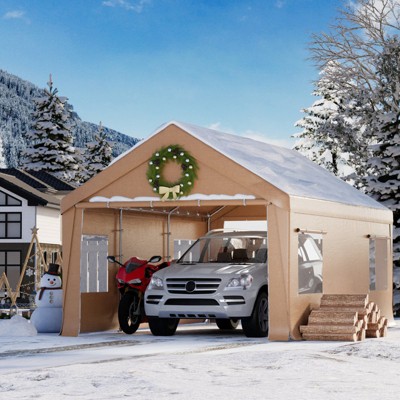
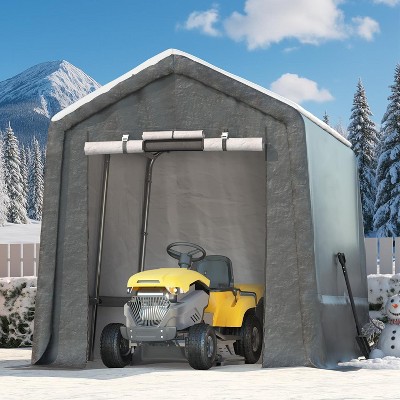
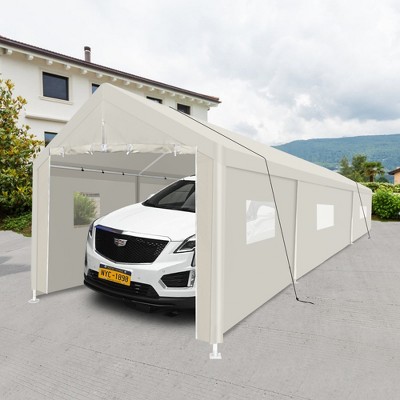
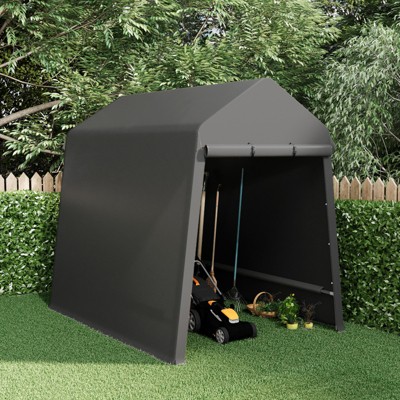
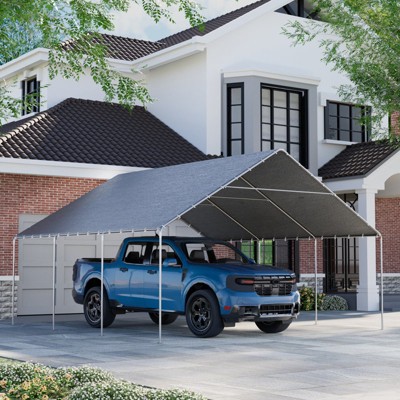
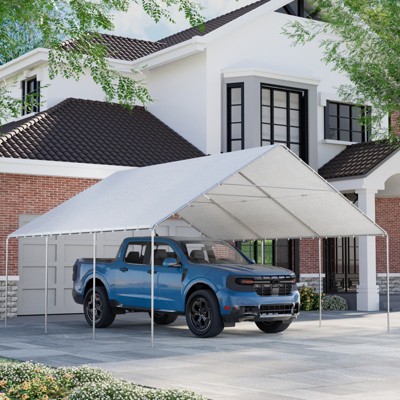
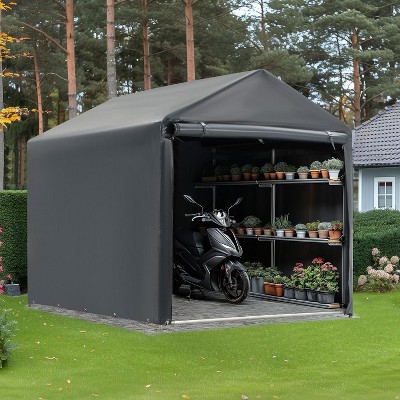
Common uses include vehicle shelter (cars, trucks, SUVs, boats, RVs), equipment and tool storage, motorcycle and ATV storage, and multi-purpose uses such as party tents, workshops, emergency shelters, or a tool room.
Reported ratings vary by model. Examples in the listings include a capacity of up to “800 lbs of evenly distributed weight” and a quoted “Snow Load Rating: Up to 3 PSF (with proper anchoring).” Since ratings differ by product and depend on anchoring and load distribution, check each model’s specifications for details.
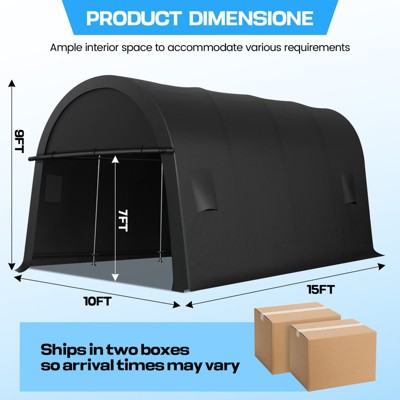
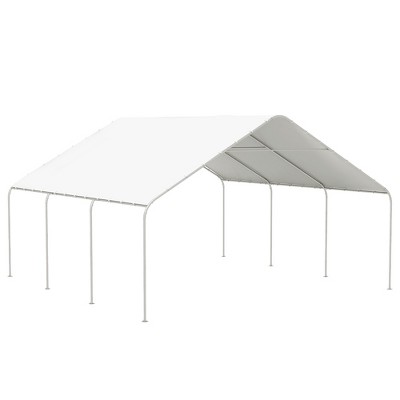
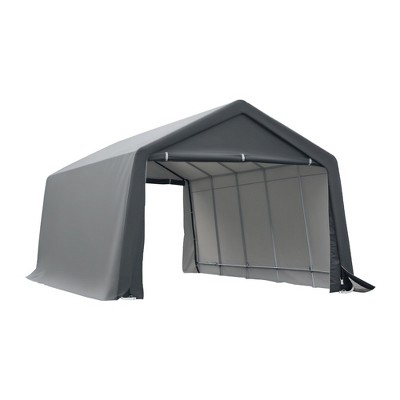
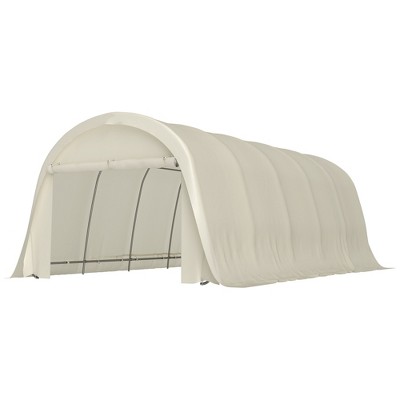
Common footprints range from compact 7'×10' shelters up to larger 12'×20' models, with many listings around 10'×20'. Some models offer configurable widths such as 10', 12' or 13' paired with 20' depths.
Frames are typically steel-based, most commonly finished as powder-coated steel or galvanized steel to resist rust and corrosion.
Portable garages commonly use UV-resistant, waterproof PE covers or tarps and weatherproof finishes to protect against sun, rain, snow, dust, and wind. Frame finishes such as powder-coating or galvanization are described to resist rust and corrosion.
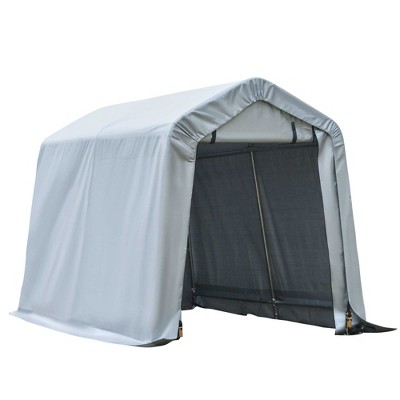
Many shelters offer roll-up or removable doors with dual zippers and buckles, plus detachable sidewalls. Some doors include dual vents and some sidewalls include ventilation windows to improve airflow.
Door counts reported range from single-door designs up to six-door configurations (1–6 doors). Common access styles include roll-up or removable doors, often fitted with dual zippers and buckles.