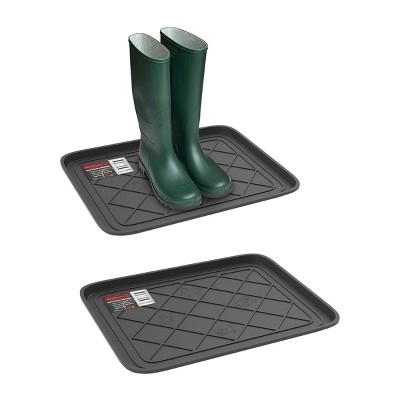
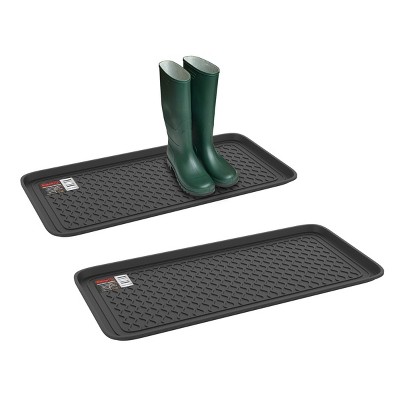
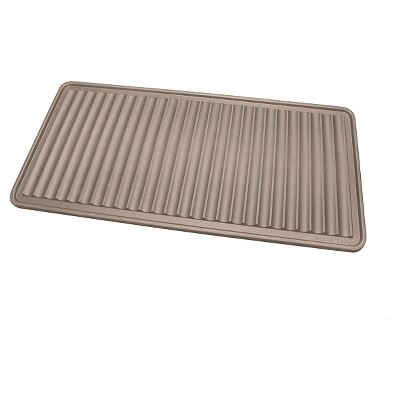
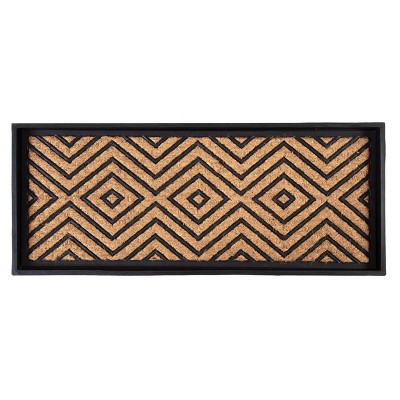
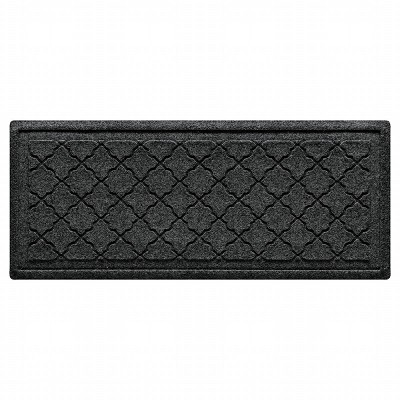
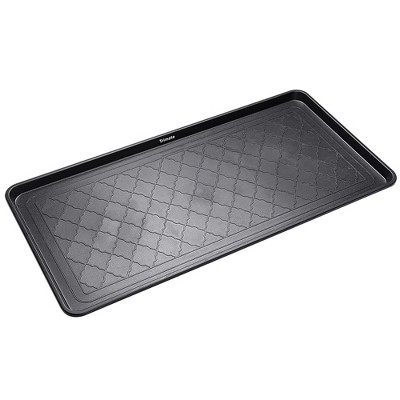
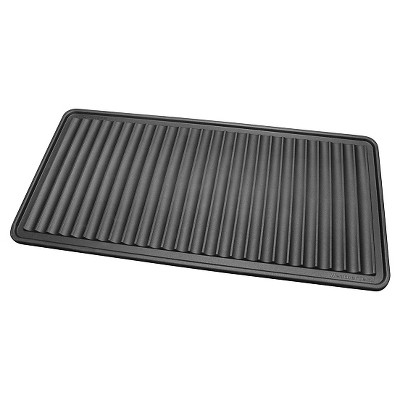
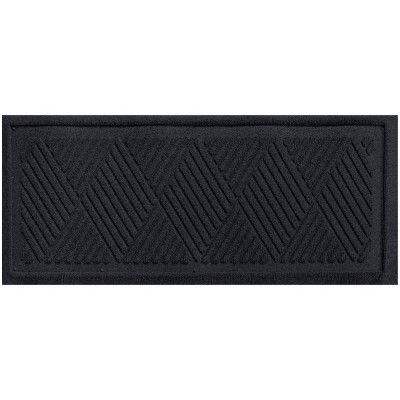
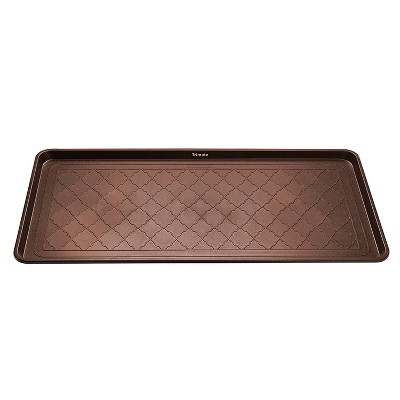
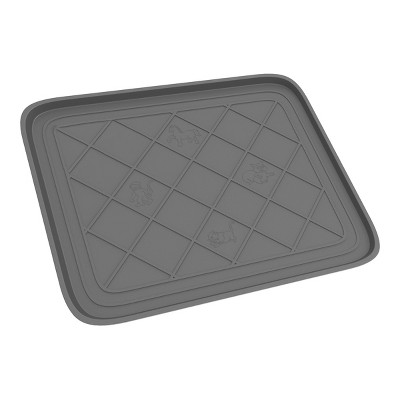
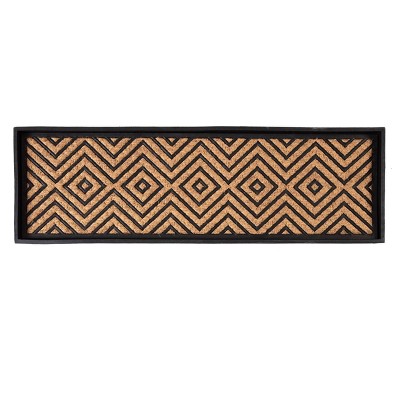
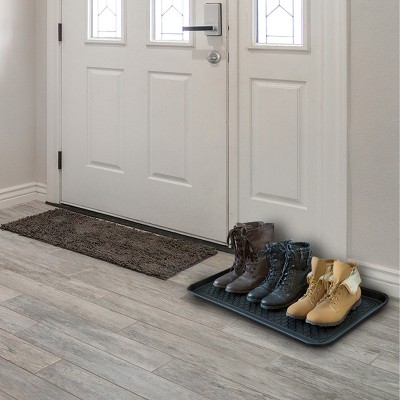
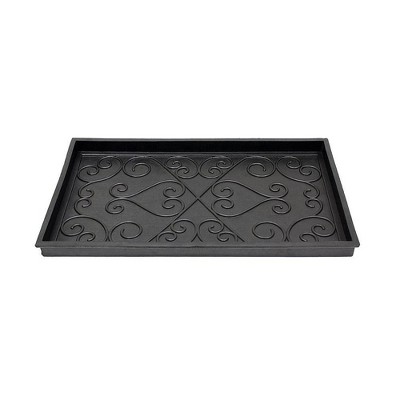
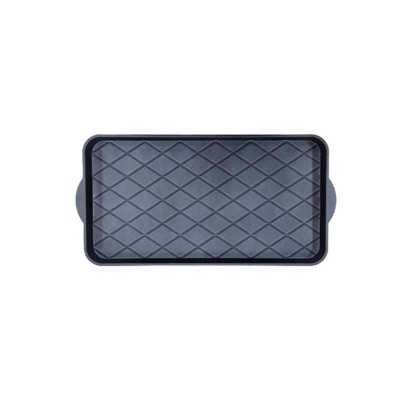
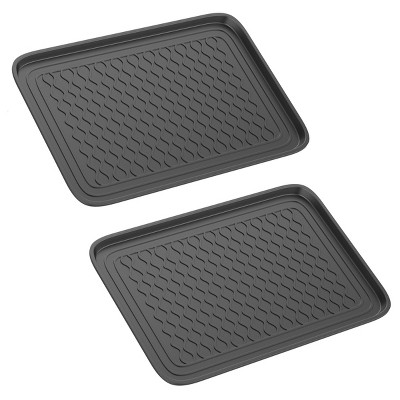
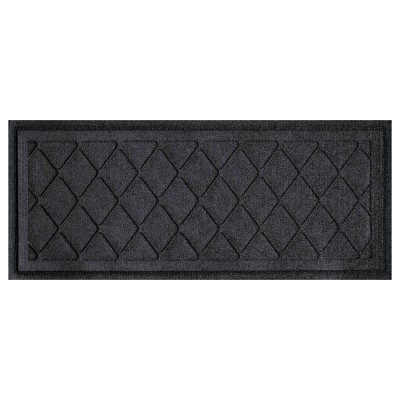
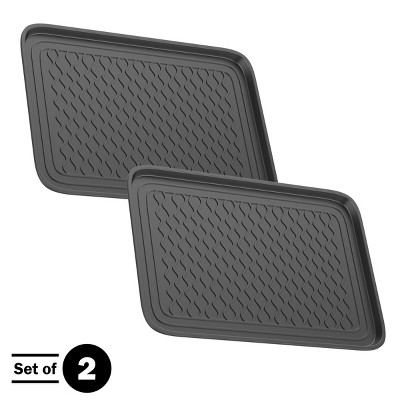
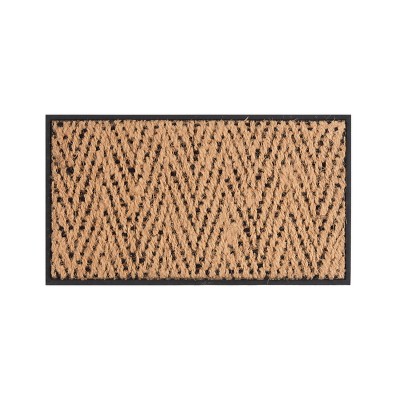
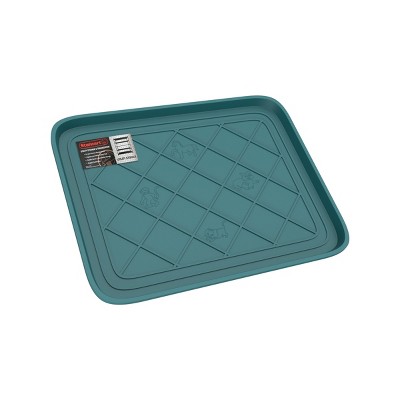
Boot trays commonly come in rectangular sizes — examples include about 30" x 14.5" and 18.9" x 39.37". Most hold roughly 3–6 pairs of shoes: smaller trays often fit 3–4 pairs, while larger models can accommodate up to about 6 pairs.
Many boot trays use waterproof polypropylene construction combined with raised edges or a lip to contain water and dirt. Product descriptions commonly highlight 'waterproof' or 'all‑weather' materials and a raised lip to keep messes inside the tray.
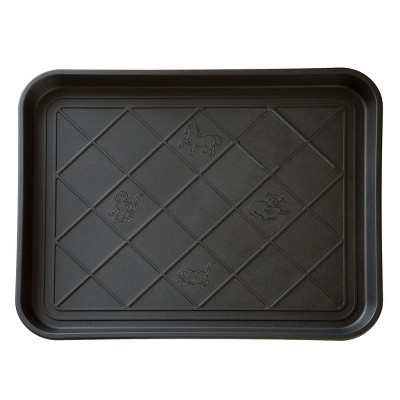
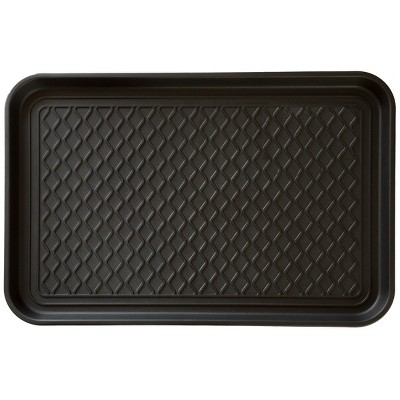
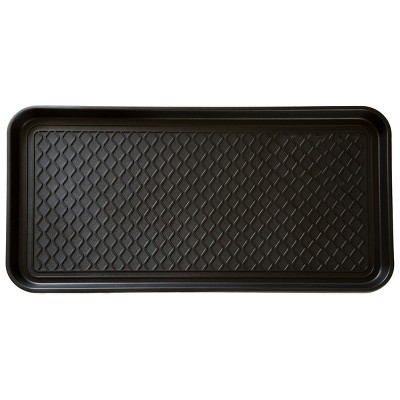
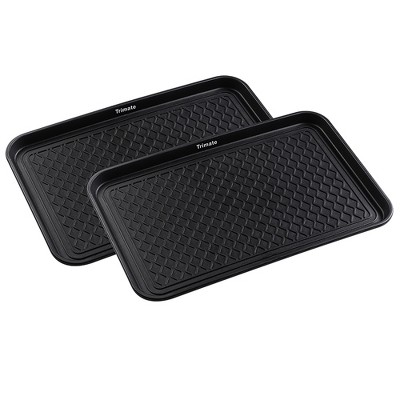
Descriptions often call out raised edges or a raised lip (for example, a 1.25‑inch lip) and sometimes pair these with a grid or textured base. The lip and raised edges help prevent water and debris from spilling out of the tray.
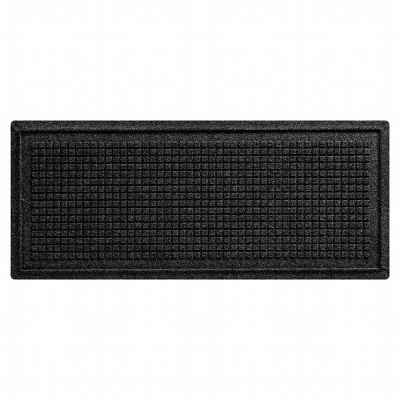
Many trays include a grid or drainage pattern on the base plus raised edges. These features channel water for easier draining or rinsing and provide texture that improves grip when carrying the tray or when wet shoes sit on it.
Product descriptions use terms like "waterproof," "all‑weather," or "weather‑resistant" and emphasize sturdy construction. Reviews frequently note that trays effectively contain water and mud and feel solidly built.
Compact rectangular sizes are commonly offered — roughly 30" x 14.5" up to about 39" x 19" — and reviewers often report these sizes fit well in small entryways or specific doorway areas.
Typical care guidance includes: dusting weekly with a microfiber cloth, cleaning spills promptly with mild soap, and avoiding abrasive tools. Additional recommendations in some descriptions are to rotate stored items periodically and check any wall anchors or fastenings about twice a year. For upholstered benches, descriptions note using wipe‑clean fabric and spot‑cleaning as needed.