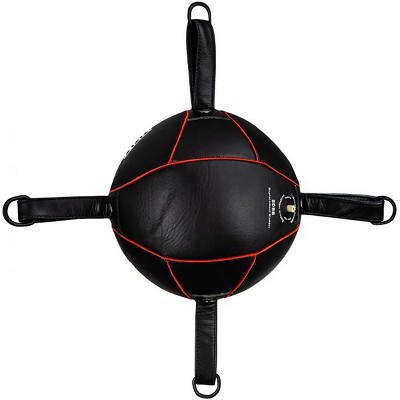
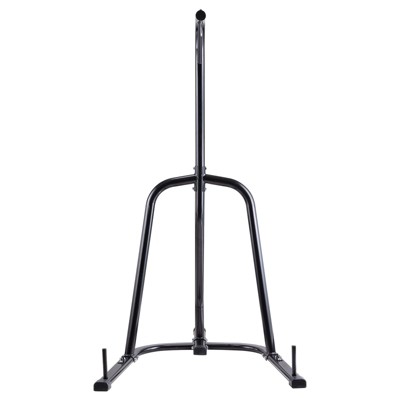
Many speed trainers combine multiple striking targets and movement elements so you can work on speed, accuracy and evasive drills. Common configurations list a high-position speed ball, a side speed ball, a 360° rotating spinning bar and an integrated boxing bag in a single 4‑in‑1 unit.
Outer striking surfaces are commonly PU leather or PVC leather, and some components use ABS. Internal layers typically include high‑density EPE foam, cushioning flannel and fabric buffer; structural parts often use metal or stainless steel.
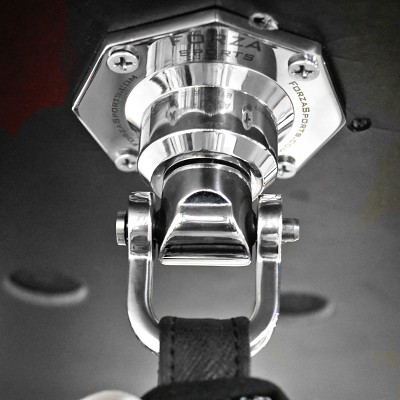
Designs commonly use dedicated shock‑absorbing systems such as dual shock absorbers or multiple springs, plus mute/silencing layers and acoustic damping materials to reduce vibration and noise.
Many freestanding trainers offer multi‑position height adjustment. Speed‑trainer stands often range about 68"–84" with multiple levels (for example 6 positions). Adult freestanding bags commonly offer several preset heights (examples include 55", 57.5", 59" and 62"). Kids' stands typically provide 6 positions with an adjustable range around 37.5"–49.5".
Bases are usually filled with water or sand. Example listed amounts include water volumes such as 11 gallons (≈42 L) and 28 L, and water weights around 100–110 lbs; sand examples include about 70.5 lbs, 110 lbs, 165 lbs (sand/coarse sand) and 220 lbs (silver sand). Some kid sets list much smaller fills (e.g., 12 lbs water or 18 lbs sand).
They rely on fillable weighted bases (water or sand), sometimes combined with suction cups, plus suspension elements such as springs, shock absorbers or damping layers to reduce sway and vibration.
One listing gives explicit spring specs for the speed balls: coil number 8, spring diameter 20 mm and thickness 17 mm. Other listings describe 'high‑quality' or 'high‑strength' springs or multiple elastic springs for quick rebound.
Kids' sets commonly list multi‑level height adjustment (often 6 positions) with an adjustable range around 37.5"–49.5" and are described as suitable for children roughly 5–10 years old.