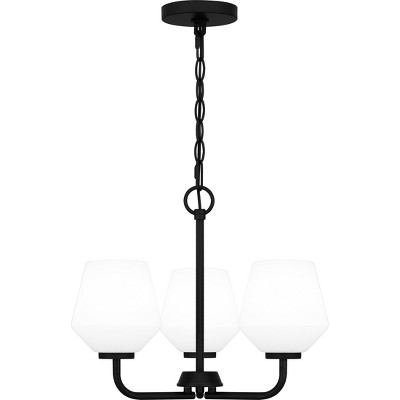
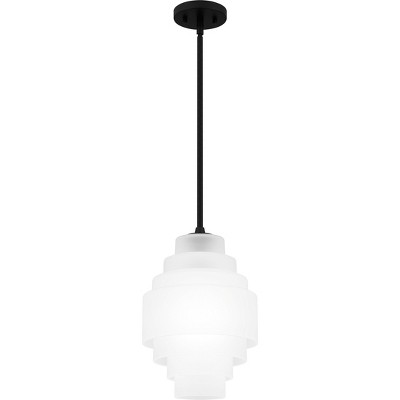
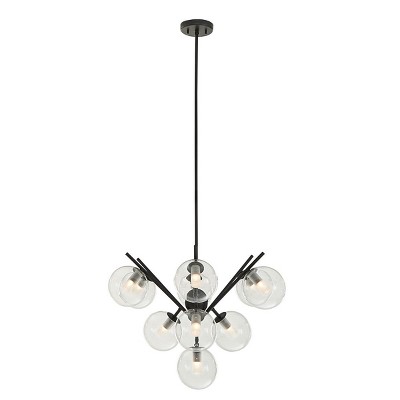
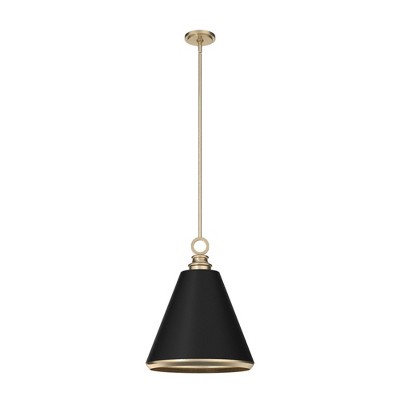
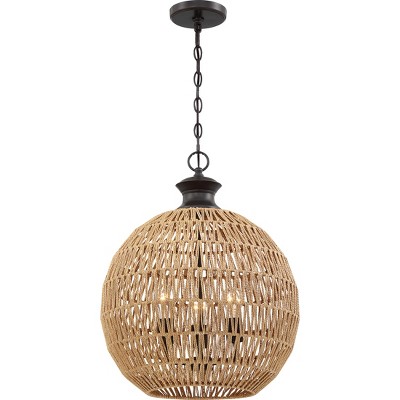
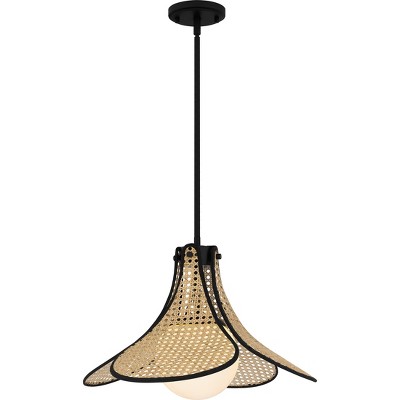
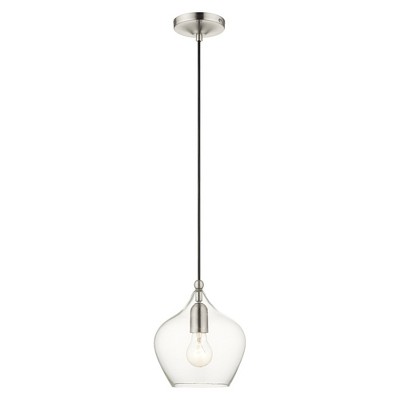
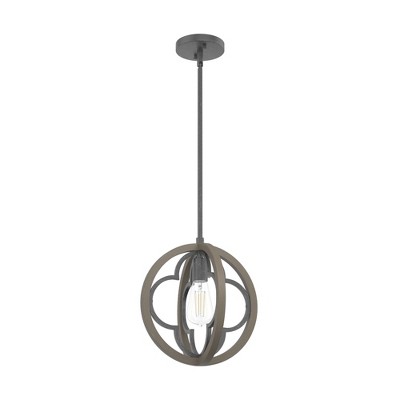
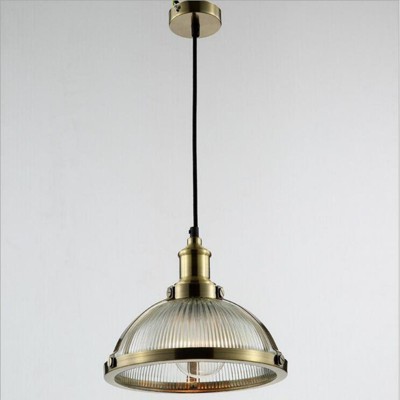
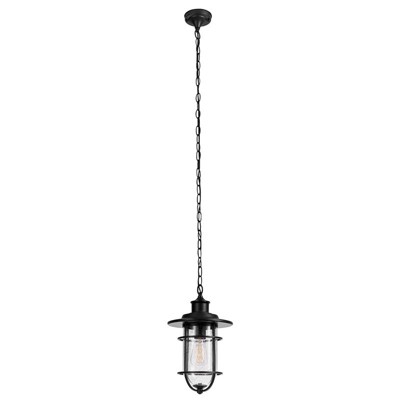
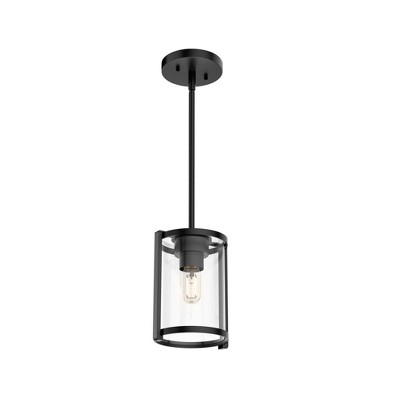
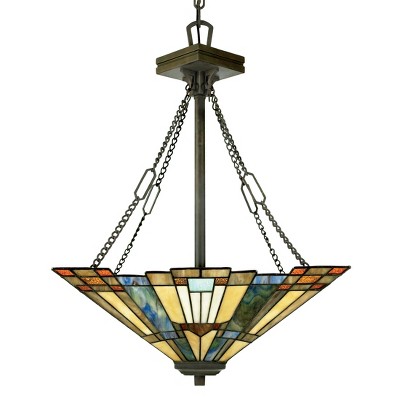
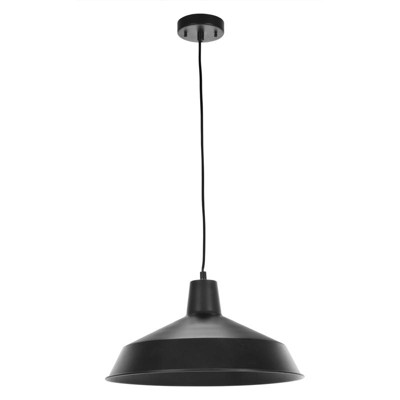
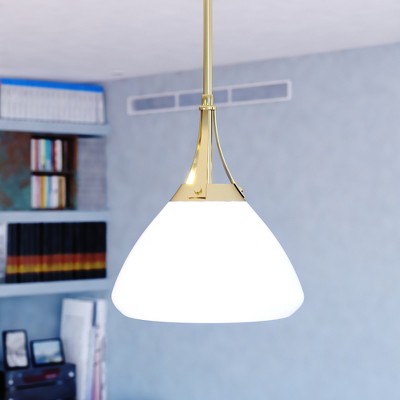
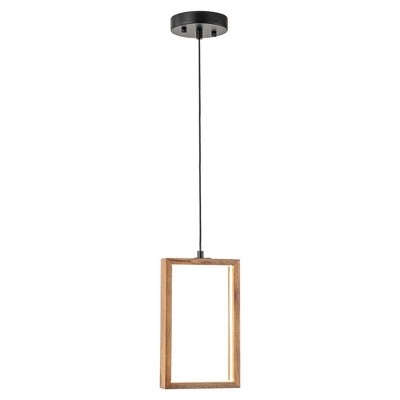
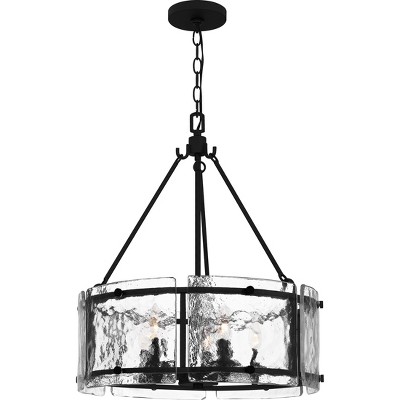
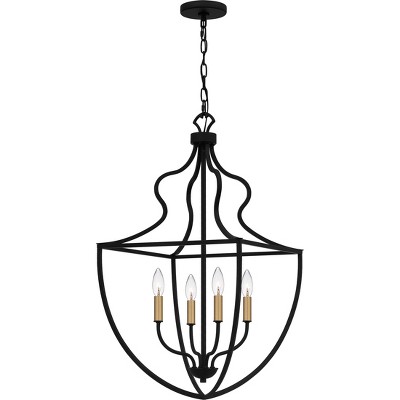
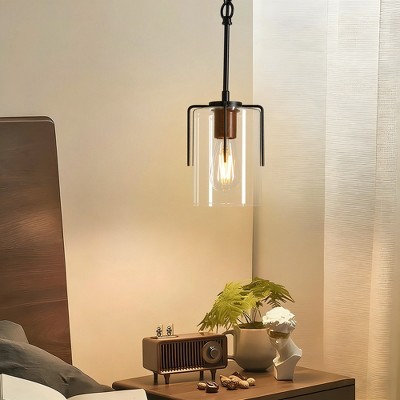
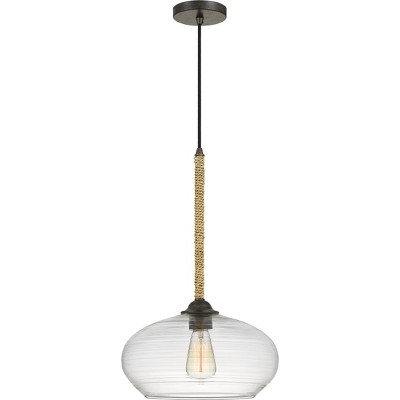
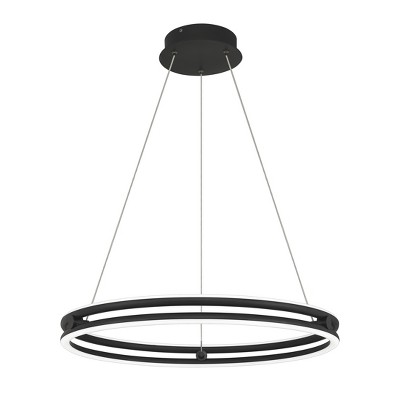
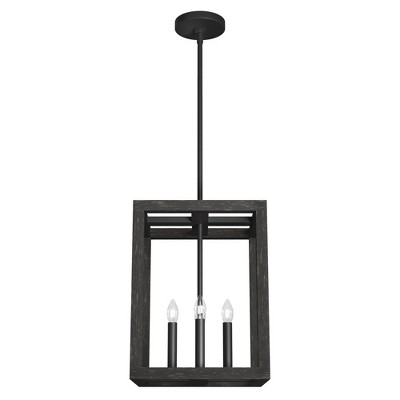
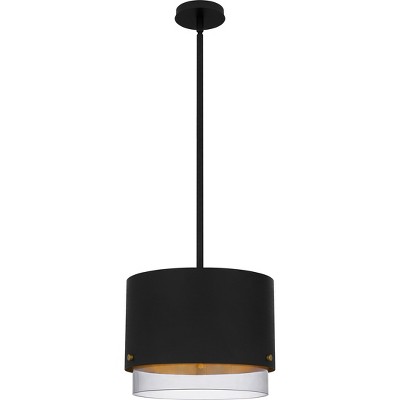
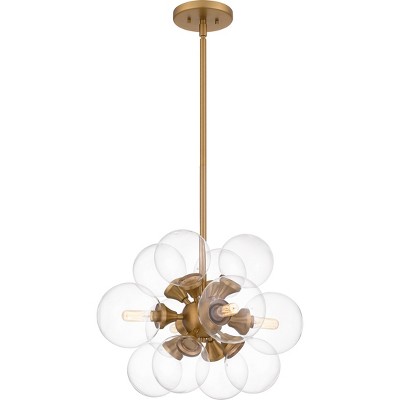
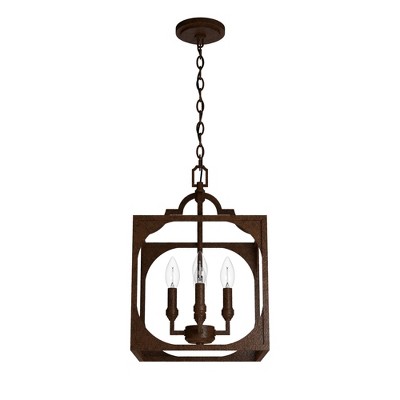
Fixture heights in the results are around 8.5–9.5 inches, while overall hanging (adjustable) height can extend up to about 82 inches. Widths are roughly 5.75–6.13 inches and weights range from approximately 1.43 to 2.56 pounds.
Listings commonly note UL certification, and some models are rated for dry environments. Check the individual product listing for exact certifications and environment ratings.
Many fixtures are hardwired with no on-fixture switch, so switching is handled at the wall. Some listings specify dimmable operation (full range), while others are simple 1-way on/off—confirm dimming capability on the product page.
Assembly typically requires an adult and may require hardwiring; tools are usually not provided. For cleaning, disconnect power and wipe with a soft, dry cloth—avoid chemicals. If electrical work is needed, the listings recommend using a qualified electrician.
Shades are commonly made from metal or glass, and fixture bodies or frames are typically listed as iron or steel.
Most use a standard Edison medium screw base (E26). Maximum bulb wattage varies by model—listings show values from about 7 watts up to 60 watts—so verify the max-rated wattage for the specific fixture before installing a bulb.
These fixtures require hardwired installation and provide adjustable hanging height via cord or rod. Some listings include a 72" cord and specify minimum/maximum hanging heights (for example, 10–82 inches). The product pages generally recommend hiring an electrician for installation.
Some listings include a 9W LED or an incandescent bulb, while others note that bulbs are not included or that the fixture uses integrated LEDs. Compatibility examples from listings include TYPE A (40W), CFL 13W, and LED 9W—check the specific product page to see what’s included and which bulb types are supported.
Finishes include gray and graphite tones, and some designs pair gray shades with brass or brass-plated accents.