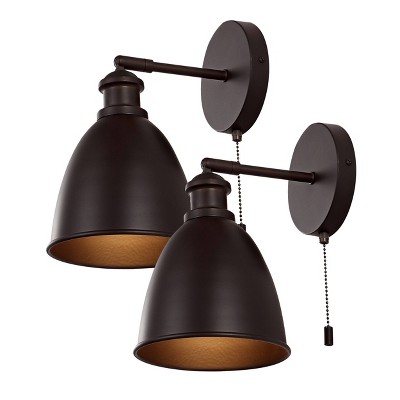
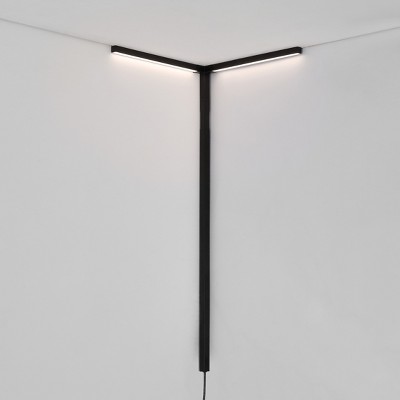
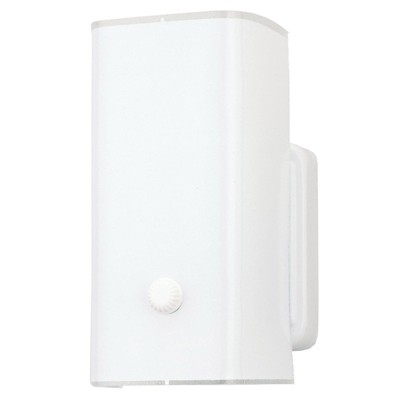
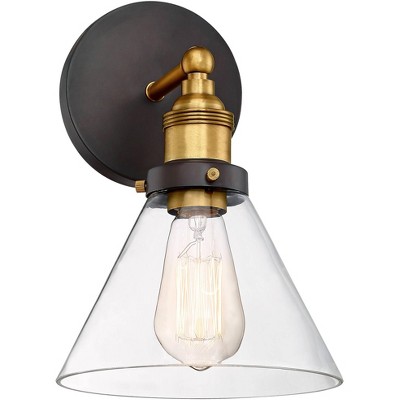
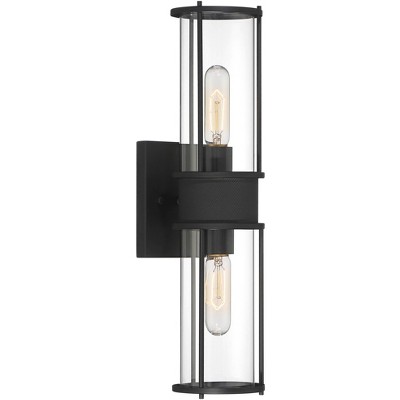
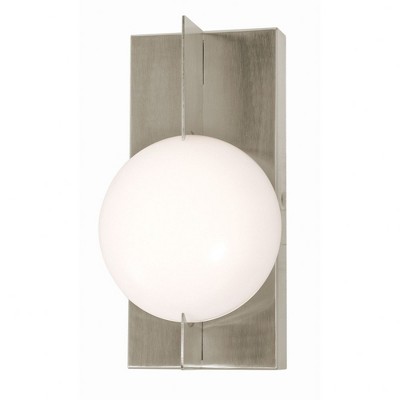
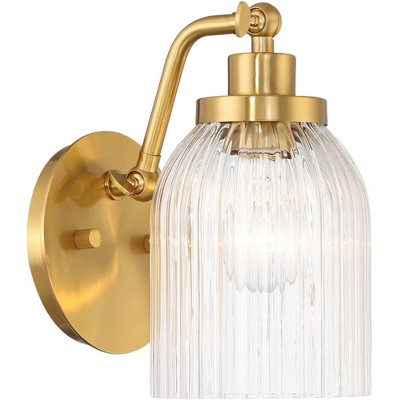
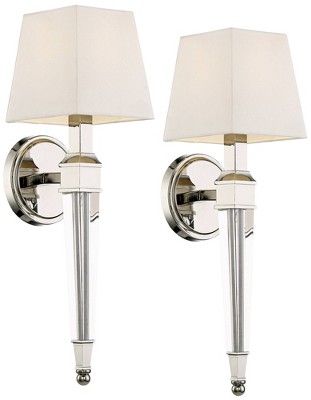
Common control methods include touch-activated sensors (tap to on/off, hold to dim), push-through or toggle socket switches, and rotary/knob switches. Product listings often specify which method is used and whether the control supports dimming or scene selection.
Yes. Many indirect wall lights provide full-range dimming plus selectable color temperatures—commonly three presets such as warm, neutral/daylight, and cool/white—so you can adjust both brightness and tone.
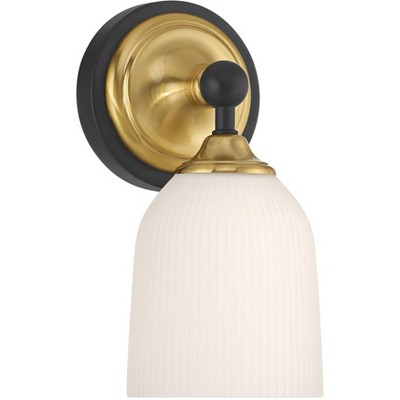
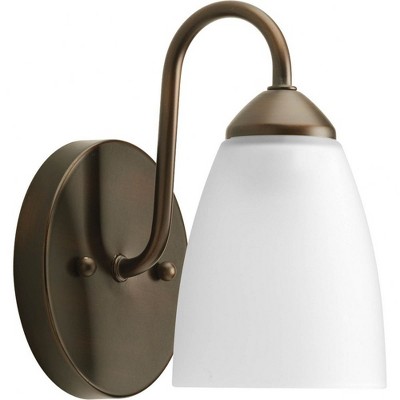
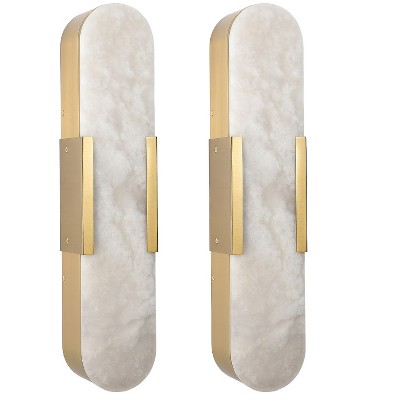
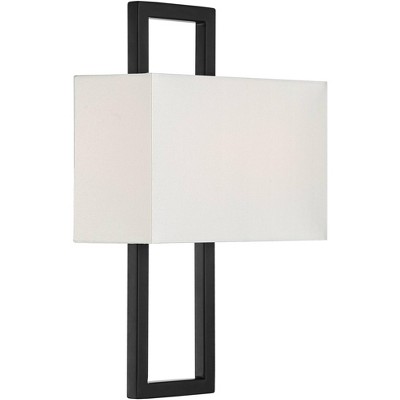
Sizes vary by model. From the examples shown, heights range roughly from 5 inches to about 17.75 inches, widths from about 4.5 inches to 9 inches, and depths from about 6.25 inches to 18 inches. Always check the product dimensions for exact fit.
Many indirect wall lights use integrated, non‑removable LED modules with low maximum wattages (examples show around 3 W) and specified lumen outputs (example: 140 lumens). Some fixtures use a standard replaceable bulb base (e.g., E26) with a higher maximum wattage (example: 40 W). Check the listing for whether the LED is integrated or if a replaceable bulb is required.
Look for features that simplify setup, such as included mounting hardware, magnetic snap‑on/snap‑off backs, and screw fastening that allows stable but removable installation. These make mounting and maintenance faster and less intrusive.
Certification varies across products: some listings show UL or ETL certification, while others explicitly state they have no industry or government certifications. Verify the product listing if certification (e.g., UL/ETL) is important for safety or code compliance.