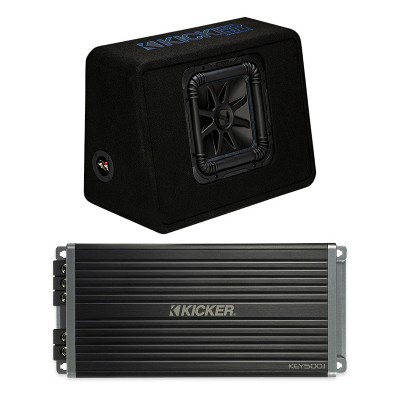
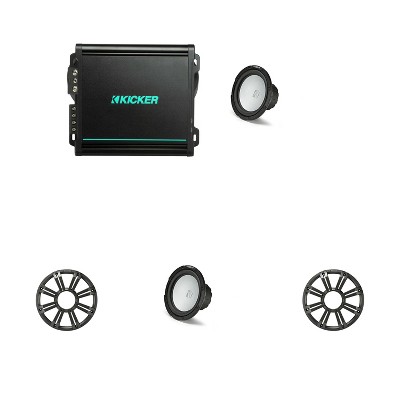
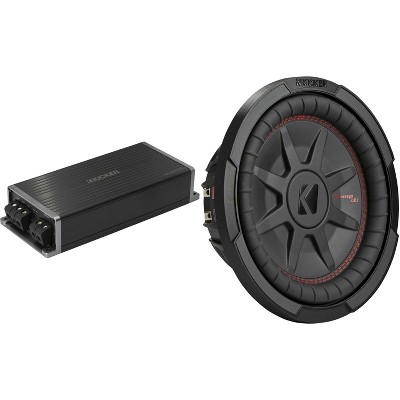
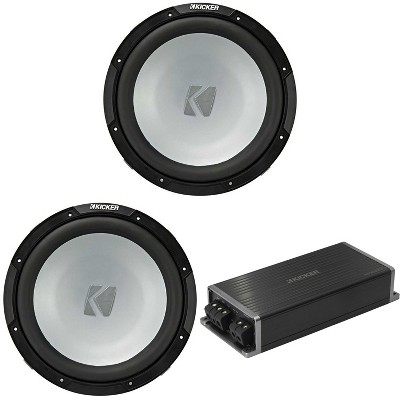
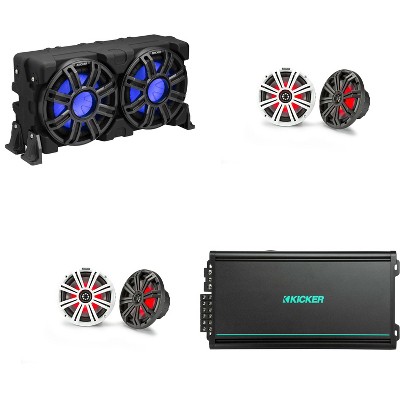
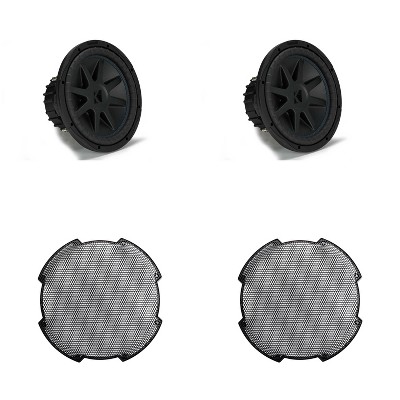
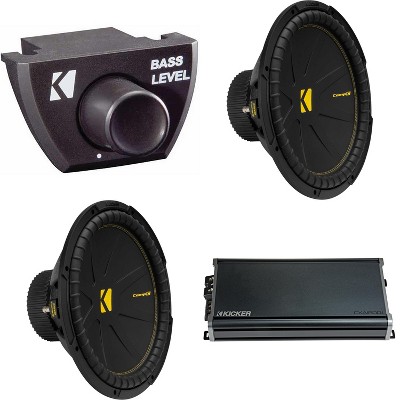
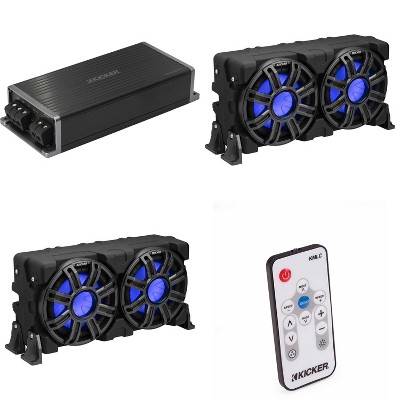
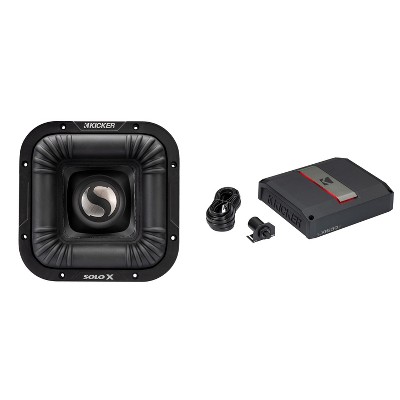
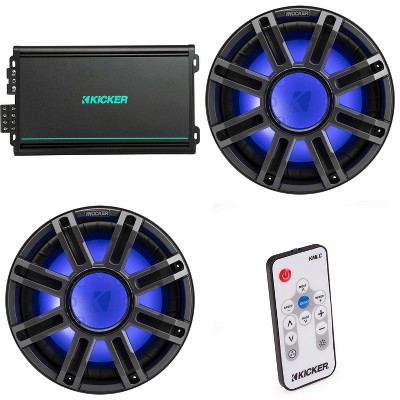
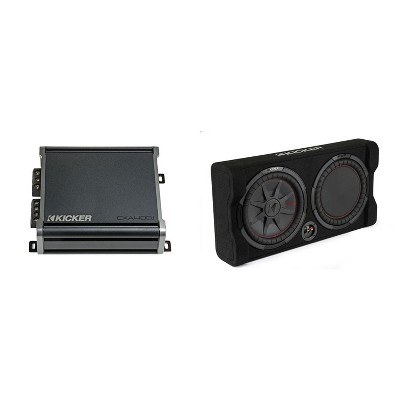
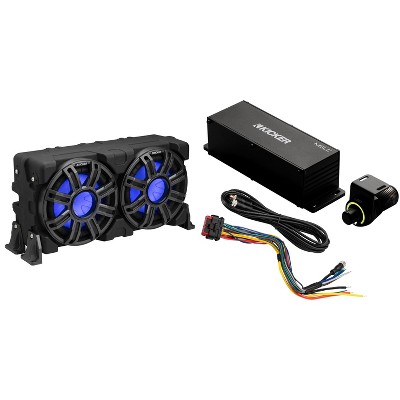
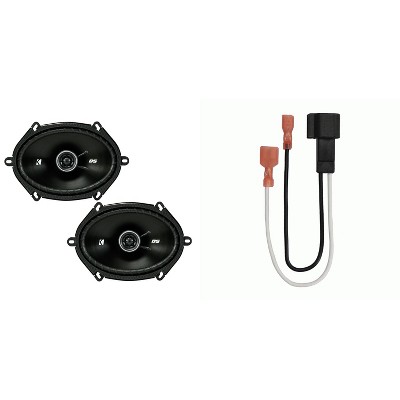
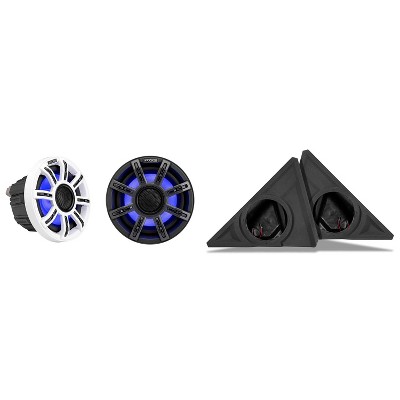
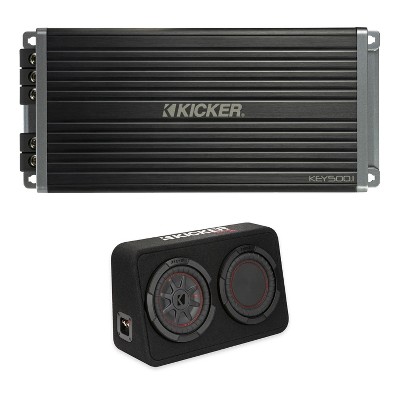
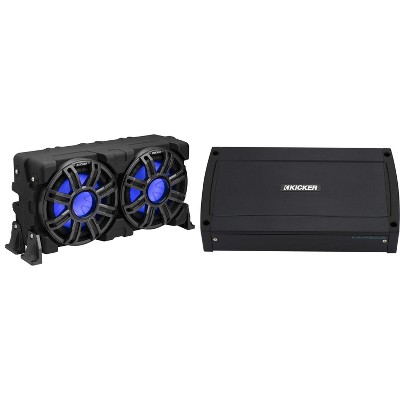
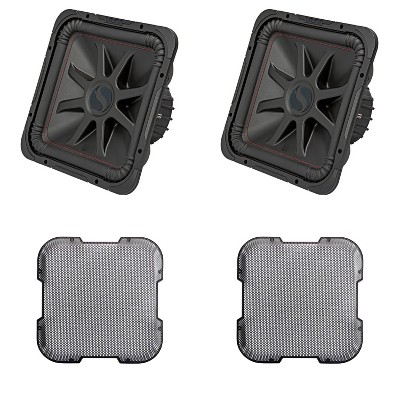
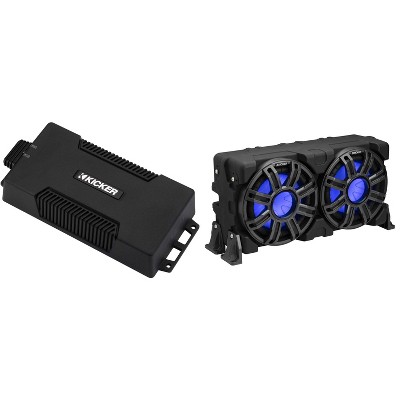
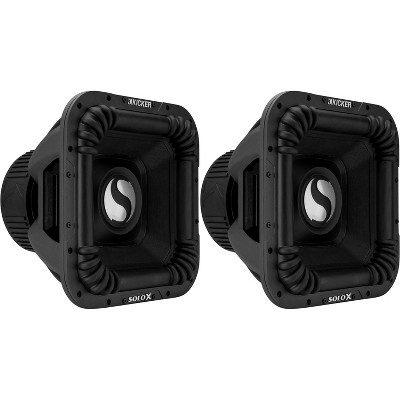
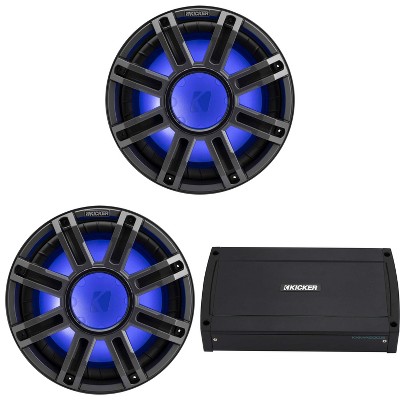
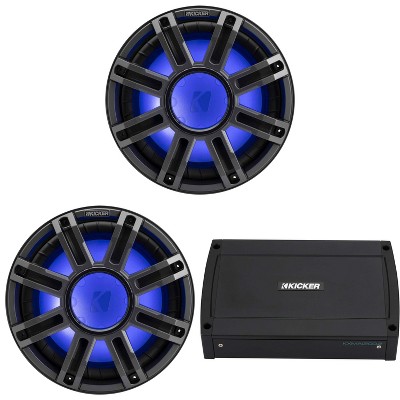
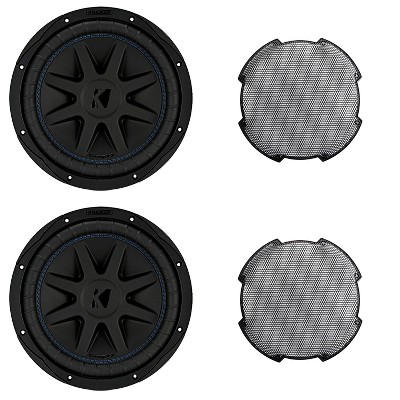
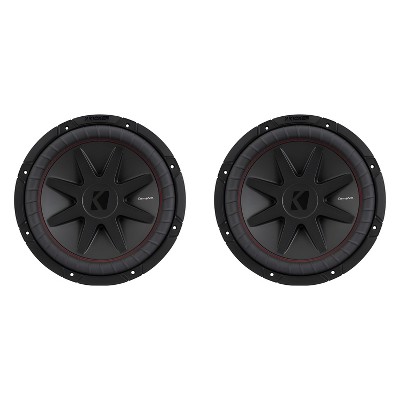
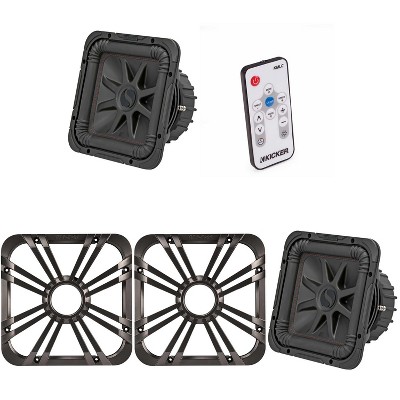
The results list common vehicle subwoofer sizes: 10", 12", 15", and 18".
The listings show dual‑voice‑coil (DVC) configurations and multiple impedance options, including 1‑ohm and 2‑ohm DVC examples.
Subwoofers in these results typically show responses around 18–100 Hz (with some listings extending higher), while the amplifier is listed around 10–160 Hz — giving an overall span of roughly 10–160 Hz across the items.
They offer heavy‑gauge wiring options — examples include single 8 AWG push terminals and dual terminal blocks rated for dual 8 AWG or dual 4 AWG connections.
Both sealed and vented enclosures are recommended depending on model. Examples include: thin/all‑weather subs — sealed about 0.55–2.0 cu ft or small vented ~1.75–2.25 cu ft; mid‑size competition models — vented ≈3.0 cu ft; large competition models — vented up to ≈7.5 cu ft.
Many listings cite Forced Air Cooling (forced‑air) along with motor and structure features that aid heat dissipation — for example, triple‑stacked ferrite magnets, heat‑dissipating motor designs, and heat‑absorbing backplates/pole structures.
Mounting depths range from very shallow thin subs (approximately 3‑3/8" to 3‑3/4") up to deep competition models (around 10–11.6"). Example cutout diameters shown include about 11‑1/16" and 13‑3/4".
The amplifier is listed at 500 W mono at 1 Ω, 300 W mono at 2 Ω, and 150 W mono at 4 Ω. A dynamic power figure of 750 W is also shown.
Some amplifiers are motorcycle‑specific and described as weather‑resistant, and several thin/subcompact subwoofers are labeled all‑weather or weatherproof for bikes, ATVs, and similar powersports applications.