Fiber levels vary by product. Unsweetened options list about 2 g of fiber per cup, while kid-focused varieties typically list about 2–3 g of prebiotic fiber per cup/serving.
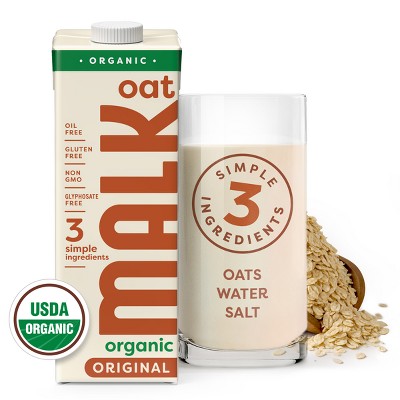
Typical ingredient lists focus on simple, whole-food ingredients: filtered water, organic whole-grain oats, organic vanilla extract, and sea salt. Kid-focused formulas often add plant protein (for example, pea protein), coconut sugar for sweetness, and plant-based DHA from seaweed.
Common formats include single 32 fl oz cartons and multi-packs of 8 fl oz cartons (e.g., 4-pack totaling 32 fl oz). Packaging is typically paper or cardboard beverage cartons.
Whole-oat formulas separate naturally. Shake the carton well before every pour and stir after adding to coffee or tea to recombine. These products are labeled "Ready to Drink," but shaking is recommended for best texture.
Protein amounts vary by product. Many oat milks provide about 4 g of protein per cup, while kid-focused formulas typically list about 8 g of plant-based protein per serving.
Unsweetened protein oat milk options list about 1 g of sugar per cup. Kid-focused varieties are usually sweetened (often with coconut sugar) and their packaging indicates they contain roughly half the sugar of dairy milk per serving, according to the product nutrition labels.
Common package labels include Certified Organic, Certified Non-GMO, Certified Vegan, and Certified Kosher. Some listings also state additional claims such as Certified Glyphosate Free.
They’re recommended for coffee and tea (shake and stir for best texture), smoothies, cereal, and for cooking or baking. Product notes often remind users to shake the carton and stir after pouring into hot beverages.