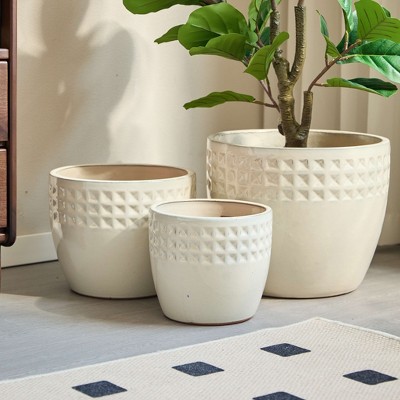
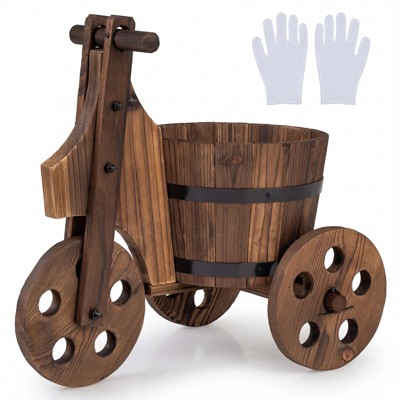
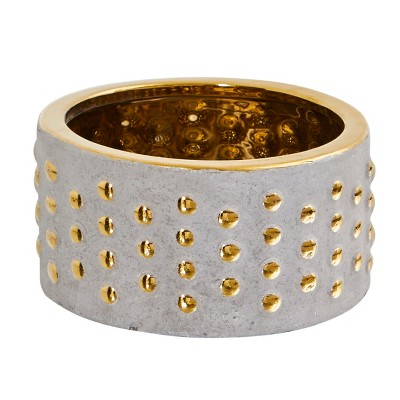
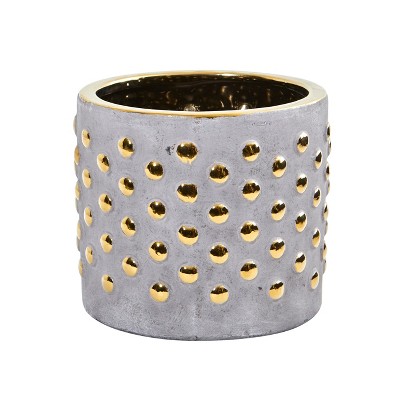
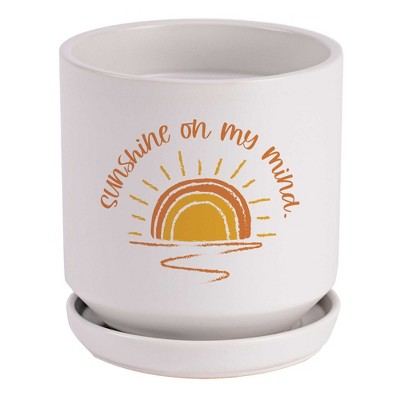
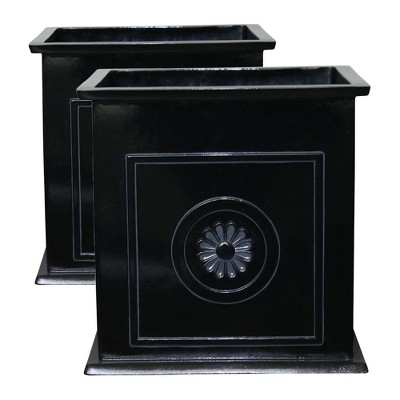
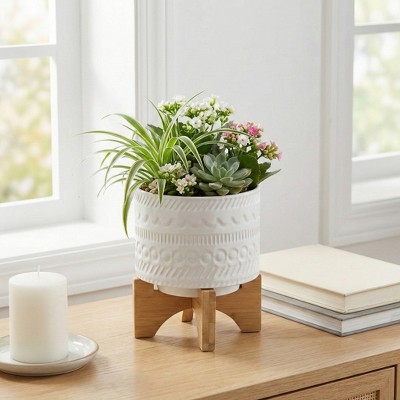
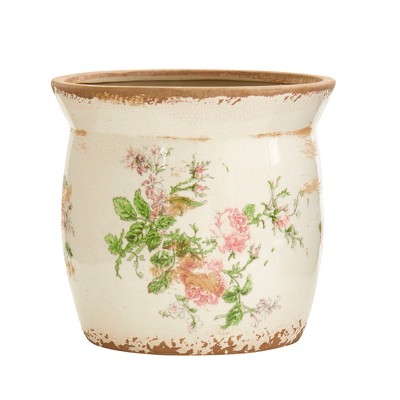
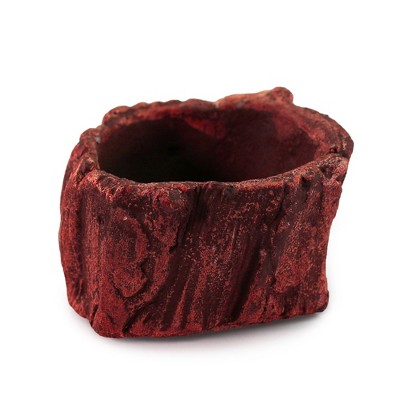
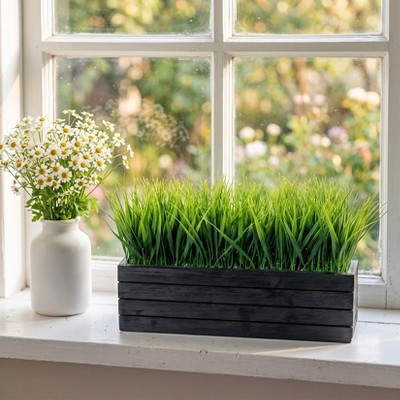
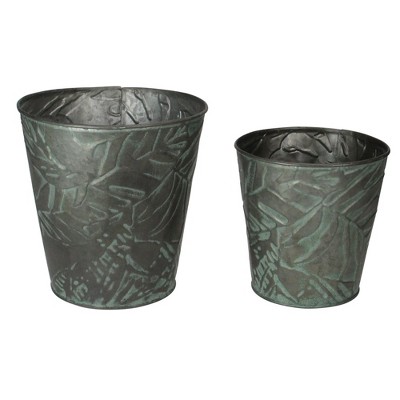
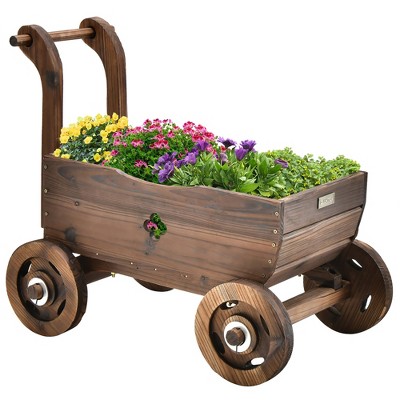
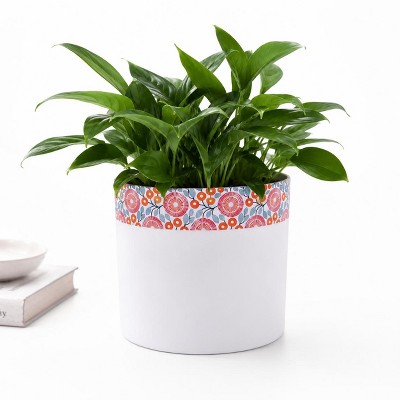
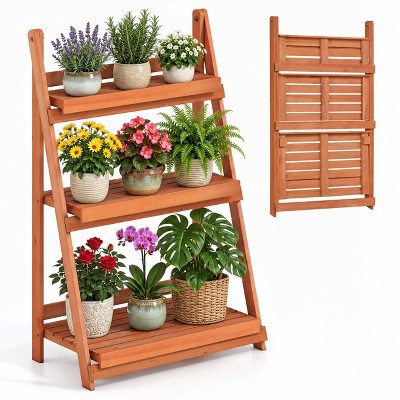
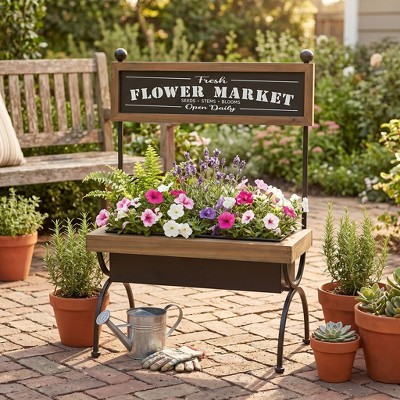
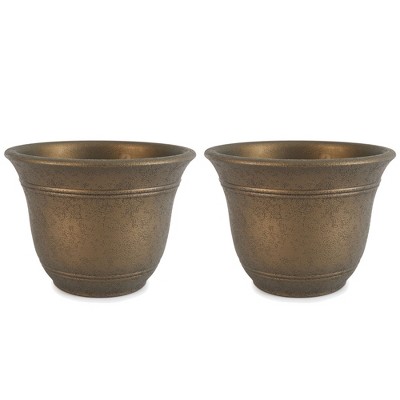
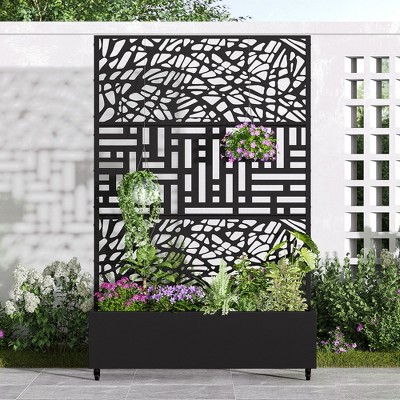
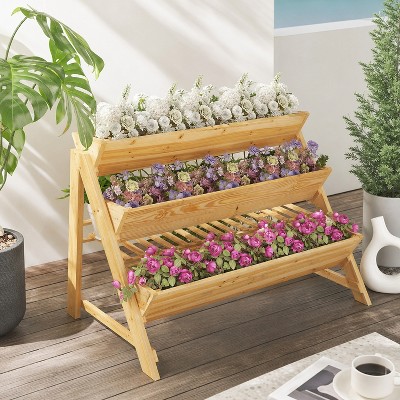
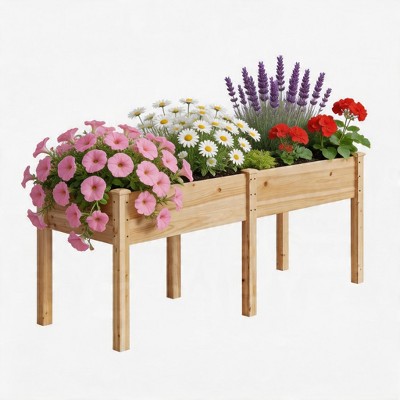
Most are plastic—manufactured from polyresin or linear low-density polyethylene (LLDPE). One option is a wooden wagon-style planter made from carbonized fir wood.
Options vary: some planters have no listed drainage, some include a single factory-drilled drainage hole, and several plastic models have a marked base so you can add a drainage hole yourself (manufacturer guidance notes using a 1/4-inch drill bit and drilling through both walls).
Weather resistance depends on the model. Many plastic planters are described as UV- and frost-resistant—able to resist cracking from cold and damage from sunlight—while the carbonized fir wooden wagon planter is noted as weather-resistant after carbonization. Some items are specified for indoor use only; check the individual product listing for outdoor suitability.
Weights vary by model—examples include about 2.8 lb, 3.31 lb, 6.4 lb, 8 lb, and 11.2 lb—so many options are lightweight and easy to move. Check the specific product’s weight if portability is important.
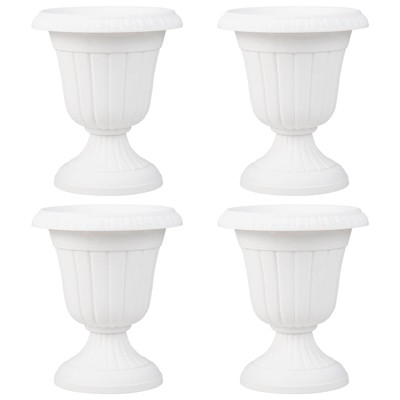
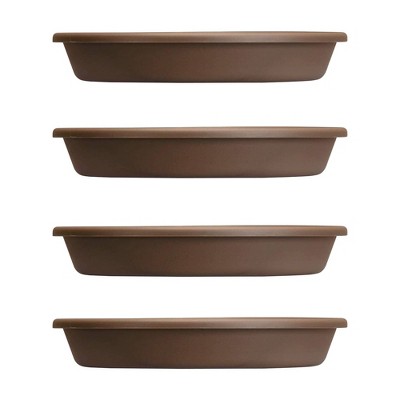
They’re sold as single planters and as multi-packs; listings include single-unit options and multi-packs such as 2-pack and 4-pack configurations.
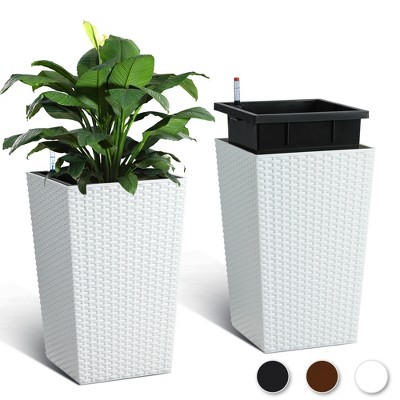
Double-walled planters have an inner and outer wall that can provide root insulation and added stability. The outer cavity can be filled with sand or gravel to increase weight and wind resistance. Some double-walled models also have base markings so a drainage hole can be drilled through both walls.