Power varies by model. Most toys run on standard batteries such as AA or AAA (examples include 2 AA, 3 AA, 4 AA, and 3 AAA), while at least one option requires no batteries. Check the product details for the exact battery type and count for each toy.
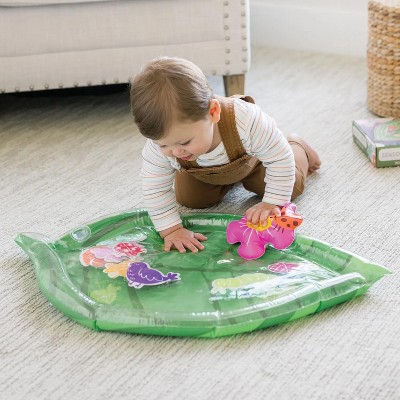
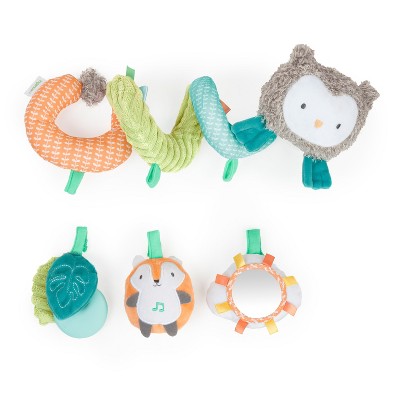
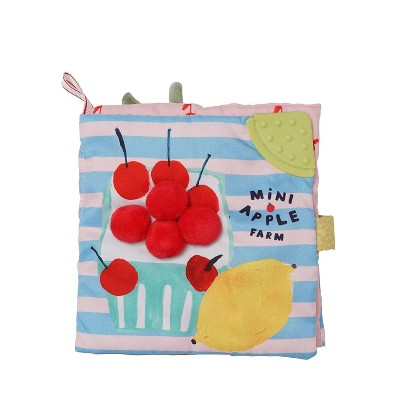
Materials vary across the range. Common materials include molded plastics (often polypropylene) for interactive parts, fabric for soft play spaces, and 100% organic cotton for some Montessori-style balls. Specific material details appear on each product listing.
Activity walkers support progression by combining stability and engaging feedback: wide bases for balance, adjustable or steady-speed wheels and brakes to slow beginners, detachable panels for seated play, and rewards like melodies, lights, and interactive activities that encourage pushing, standing, and taking steps.
Crawling toys use multiple features to prompt movement: staged motion patterns (wobble, tight circular, then more random movement), colorful lights and music, graspable or movable parts for teething and manipulation, and built-in sensors that detect obstacles and adjust or stop motion to keep play engaging.
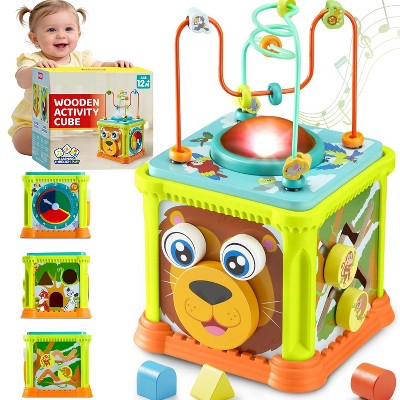
Many toys pair lights with melodies and sound effects. Some list large song libraries (examples in listings include “75+ songs” or “100+ songs”), and certain models offer recording/remix features and multiple audio levels. Check the product description for exact song counts and audio functions.