Sponsored
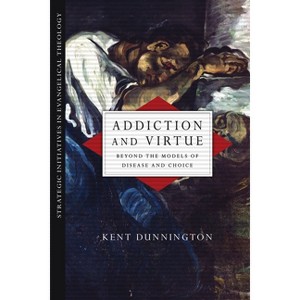
Addiction and Virtue - (Strategic Initiatives in Evangelical Theology) by Kent Dunnington (Paperback)
In Stock
Sponsored
About this item
Highlights
- What is the nature of addiction?
- About the Author: Kent Dunnington is assistant professor of philosophy, Greenville College.
- 199 Pages
- Religion + Beliefs, Ethics
- Series Name: Strategic Initiatives in Evangelical Theology
Description
About the Book
In this interdisciplinary work, Kent Dunnington brings the neglected resources of philosophical and theological analysis to bear on the problem of addiction. Drawing on the insights of Aristotle and Thomas Aquinas, he formulates a compelling alternative to the two dominant models of addiction--addiction as disease and addiction as choice.
Book Synopsis
What is the nature of addiction?
Neither of the two dominant models (disease or choice) adequately accounts for the experience of those who are addicted or of those who are seeking to help them. In this interdisciplinary work, Kent Dunnington brings the neglected resources of philosophical and theological analysis to bear on the problem of addiction. Drawing on the insights of Aristotle and Thomas Aquinas, he formulates an alternative to the usual reductionistic models.
Going further, Dunnington maintains that addiction is not just a problem facing individuals. Its pervasiveness sheds prophetic light on our cultural moment. Moving beyond issues of individual treatment, this groundbreaking study also outlines significant implications for ministry within the local church context.
Review Quotes
"Addiction and Virtue is one of only a few books which use philosophy to unpack the false dilemma limiting addiction to either disease or willful choice. What's more, Dunnington does this from a Christian theological perspective."
--Linda Mercadante, author, Victims Sinners, and professor, The Methodist Theological School in Ohio"Addiction and Virtue sets the stage for a new scene in the church, where she is no longer dulled and distracted by a secular vision of happiness, but is a vibrant, attractive, and welcoming community of 'repentant sinners.'"
--Paul Warhurst, Themelios 37.1"Dunnington's work neither demonizes the addicted person nor excuses the abuse of alcohol and drugs. But it points the way toward compassion for the individual, transformation of the culture (including the church), and recovery through the fullness of the Christian gospel."
--Amy Julia Becker, Christianity Today, September 2011"In Addiction and Virtue Kent Dunnington uses Aristotle, Thomas and the philosophically clarified concept of habit to illuminate addiction. The addicts in our midst emerge as 'contemporary prophets' who, if we can but find the ears to hear them, call society as a whole to profound change and the Christian church in particular to renewal. This valuable book points the way, if we are ever to recover from all our junkie-like 'habits' of personal behavior and social interaction, to turn them into truly sustaining habitats for flourishing human life."
--Francis F. Seeburger, professor of philosophy, University of Denver"Kent Dunnington offers a compelling account of addiction as interpreted through the lens of virtue. A strong theological and philosophical foundation helps the reader to see how the good news of Jesus Christ offers a powerful alternative to the habit of addiction. While some within the addiction treatment community will find Dunnington's arguments controversial, others will experience them as a breath of fresh air. Either way, Addiction and Virtue is a worthwhile read!"
--Virginia T. Holeman, professor of counseling, Asbury Theological Seminary"This would be a good read for those of you who want to explore more deeply the true nature of addiction, are unhappy with the disease or choice models as explanations, and, in the face of the limiations of the recovery movement, want to be encouraged by the veritable contributions of Christianity."
--Linda S. Parker, Dharma Deepika, July-December 2012About the Author
Kent Dunnington is assistant professor of philosophy, Greenville College. He holds the Ph.D. in philosophy from Texas AM, and the M.T.S. in theology from Duke University.
Shipping details
Return details
Frequently bought together



Trending Non-Fiction




Discover more options