Sponsored
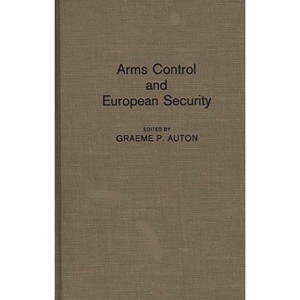
Arms Control and European Security - (Literature; 21) by Graeme P Auton (Hardcover)
In Stock
Sponsored
About this item
Highlights
- In October 1987 on the eve of the Washington summit, the Committee on Atlantic Studies, a group of European and North American scholars established in 1964 to promote transatlantic dialogue, met in Toronto to discuss the implications of the new arms control for European security.
- About the Author: GRAEME P. AUTON is Associate Professor of Political Science at the University of Redlands.
- 211 Pages
- Technology, Military Science
- Series Name: Literature; 21
Description
About the Book
In October 1987 on the eve of the Washington summit, the Committee on Atlantic Studies, a group of European and North American scholars established in 1964 to promote transatlantic dialogue, met in Toronto to discuss the implications of the new arms control for European security. This book is the fruit of that meeting. Incorporating subsequent developments, up to Gorbachev's December 1988 speech to the U.N., it provides a timely assessment of arms control issues from a variety of European and North American perspectives. The contributors to this volume council caution, suggesting that while progress is possible, it will probably be slow.
At a time when arms control has arrived at a significant crossroads, the issues raised in Arms Control and European Security are of critical importance to both Europeans and Americans. This volume stresses the interplay of strategic and regional arms control. It includes analyses of nuclear, conventional, and naval arms control questions and embodies a broader conception of arms control. The book links arms control to such political measures as confidence-building, conflict avoidance and superpower agreement to the neutrality of particular states.
Book Synopsis
In October 1987 on the eve of the Washington summit, the Committee on Atlantic Studies, a group of European and North American scholars established in 1964 to promote transatlantic dialogue, met in Toronto to discuss the implications of the new arms control for European security. This book is the fruit of that meeting. Incorporating subsequent developments, up to Gorbachev's December 1988 speech to the U.N., it provides a timely assessment of arms control issues from a variety of European and North American perspectives. The contributors to this volume council caution, suggesting that while progress is possible, it will probably be slow.
At a time when arms control has arrived at a significant crossroads, the issues raised in Arms Control and European Security are of critical importance to both Europeans and Americans. This volume stresses the interplay of strategic and regional arms control. It includes analyses of nuclear, conventional, and naval arms control questions and embodies a broader conception of arms control. The book links arms control to such political measures as confidence-building, conflict avoidance and superpower agreement to the neutrality of particular states.Review Quotes
?This volume consists of ten essays on various aspects of arms control, and as Otto Pick states in his essay on the Soviet Union and arms control, "at first sight, long-term assessments of Soviet arms-control policy in the Gorbachev era would seem to be a waste of time." Nevertheless, Pick observes (as do others) that although official policies may change, certain fundamentals do not, and although portions of the book have been dated by recent events in Europe, the majority of it is likely to be useful for a great many years. The essays are thoroughly documented and solidly (though somewhat uninspiringly) written, and the book concludes with a capable index. Recommended for academic libraries supporting interests in political science, international affairs and the military sciences.?-Academic Library Book Review
"This volume consists of ten essays on various aspects of arms control, and as Otto Pick states in his essay on the Soviet Union and arms control, "at first sight, long-term assessments of Soviet arms-control policy in the Gorbachev era would seem to be a waste of time." Nevertheless, Pick observes (as do others) that although official policies may change, certain fundamentals do not, and although portions of the book have been dated by recent events in Europe, the majority of it is likely to be useful for a great many years. The essays are thoroughly documented and solidly (though somewhat uninspiringly) written, and the book concludes with a capable index. Recommended for academic libraries supporting interests in political science, international affairs and the military sciences."-Academic Library Book Review
About the Author
GRAEME P. AUTON is Associate Professor of Political Science at the University of Redlands. The co-author of Foreign Policies of West Germany, France, and Britain, he has written numerous articles and contributed to a number of edited volumes on European security.Shipping details
Return details
Trending Computers & Technology Books


Discover more options