Sponsored
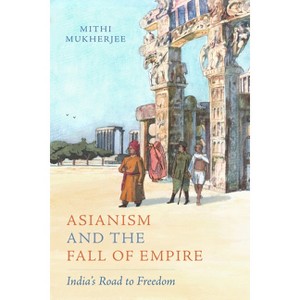
Asianism and the Fall of Empire - (California World History Library) by Mithi Mukherjee
Pre-order
Sponsored
About this item
Highlights
- Offering a new global perspective on modern Indian history, Asianism and the Fall of Empire identifies the rise of Asianism in the early twentieth century as the origin and primary driving force of resistance movements that brought down the British Empire in India.
- About the Author: Mithi Mukherjee is Associate Professor of History at the University of Colorado Boulder and author of India in the Shadows of Empire: A Legal and Political History, 1774-1950.
- 338 Pages
- History, World
- Series Name: California World History Library
Description
About the Book
"Offering a new global perspective on modern Indian history, Asianism and the Fall of Empire identifies the rise of Asianism in the early twentieth century as the origin and primary driving force of resistance movements that brought down the British Empire in India. Mithi Mukherjee ties together into a single sweeping narrative two contrasting, conflicting forms of anticolonialism in India: the emergence of nonviolent resistance movement under Gandhi in South Africa, and the militant movement culminating in the war on British India by the Indian National Army led by Bose in alliance with the Japanese army. Asia emerges in this breakthrough retelling as more than just a geographical category made up of disparate nations, and instead as a singular agent of change in modern world history."-- Provided by publisher.Book Synopsis
Offering a new global perspective on modern Indian history, Asianism and the Fall of Empire identifies the rise of Asianism in the early twentieth century as the origin and primary driving force of resistance movements that brought down the British Empire in India. Mithi Mukherjee ties together into a single sweeping narrative two contrasting, conflicting forms of anticolonialism: the emergence of nonviolent resistance movement under Mahatma Gandhi in South Africa and the militant movement culminating in the war on British India by the Indian National Army under Bose in alliance with the Japanese army. Asia emerges in this breakthrough retelling as more than just a geographical assemblage made up of disparate nations, but instead as a singular agent of change in modern world history.
From the Back Cover
"MIthi Mukherjee makes a compelling case for Asianism to be recognized as a key element in India's anticolonial struggle. Exploring the mutually reinforcing strands of cultural Asianism and geopolitical Asianism, she brilliantly shows how both nonviolent and revolutionary Indian resistance to British imperial rule forged broader solidarities under the sign of Asia."--Sugata Bose, author of Asia after Europe: Imagining a Continent in the Long Twentieth Century
"Mukherjee has skillfully constructed a fascinating transnational history of Asianism as conceived by Indian thinkers in the late nineteenth and early twentieth centuries. In rich detail and with great clarity, Mukherjee's riveting study highlights the philosophical and cultural ties that made Asia one in the eyes of many of its leaders, a sense of commonality open to the possibility of political solidarity as well."--Anand Yang, author of Empire of Convicts: Indian Penal Labor in Colonial Southeast Asia"In this insightful and essential study, Mithi Mukherjee shifts attention from the internal dynamics of Indian nationalism to its global and particularly Asian context. Across these networks of labor, intellectuals, and ideologies, Mukherjee reveals how transnational movements and civilizational discourses shaped India's path to independence. By centering developments often dismissed as peripheral, she redefines the story of decolonization and recovers the overlooked figures who were instrumental to it."--Prasenjit Duara, Oscar Tang Family Distinguished Professor of East Asian Studies, Duke University
"By uncovering the much-neglected role of Asianism in modern India and providing new perspectives on well-known Indian freedom fighters such as Aurobindo Ghose, Mahatma Gandhi, and Subhas Chandra Bose, Mithi Mukherjee's book opens exciting new vistas in transnational Asian studies."--Viren Murthy, author of Pan-Asianism and the Legacy of the Chinese Revolution
"Mukherjee provides a powerful study of transnational Asian political thought inside Indian nationalism, most welcome at a time when transnational Asia is again on the rise and studies of its many histories provide antidotes against ethnonationalist isolationism."--David Ludden, Emeritus Professor of History, New York UniversityAbout the Author
Mithi Mukherjee is Associate Professor of History at the University of Colorado Boulder and author of India in the Shadows of Empire: A Legal and Political History, 1774-1950.Shipping details
Return details
Frequently bought together





Guests also viewed




Discover more options