Return this item by mail or in store within 90 days for a full refund.
Eligible for registries and wish lists
About this item
Highlights
Over the last decade, technical advances have allowed genomic testing which provides a great opportunity for diagnosis but also an increased chance of uncertain or unexpected findings.
About the Author: David Bourn, Ph.D., FRCPath, is a UK-based state registered clinical scientist and the head of an NHS Regional Genetics laboratory, who has worked in the NHS for more than 25 years.
131 Pages
Medical, Genetics
Description
Book Synopsis
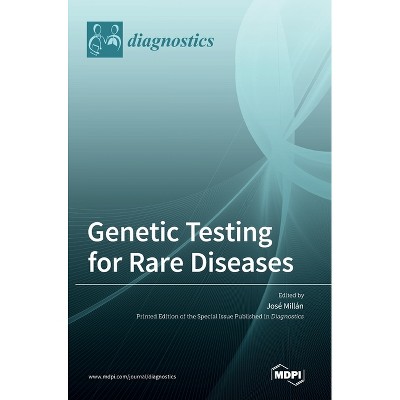
Over the last decade, technical advances have allowed genomic testing which provides a great opportunity for diagnosis but also an increased chance of uncertain or unexpected findings. This book addresses many of the questions that arise in this context and summarizes the essential concepts in diagnostic genetic testing in an easy-to-read manner. It also covers some broad context for the practical and ethical implications of examining human DNA sequences.
The book starts with a general introduction to the field, providing enough background to allow readers without any previous education in genetics to comprehend the material in the subsequent chapters. The main part explores differing aspects of human genetics and the wider implications of testing in these areas. The author covers not only single gene inheritance, but also genetic testing of cancers and how testing benefits the patients. Special emphasis is also given to the questions of genetics and identity. The concluding part then draws the main themes together and summarises the wider significance of genetics. It also explores the gap between promises made for the impact of advances in genetics, and the actual benefits to patients.
The book is written for everyone interested to learn about the process of genetic testing and the broader implications. Moreover, it is aimed at health professionals with an interest in genetics, at students or scientific trainees looking for an introduction to diagnostic genetics, and at professionals in health policy or health journalism.
From the Back Cover
Over the last decade, technical advances have allowed genomic testing which provides a great opportunity for diagnosis but also an increased chance of uncertain or unexpected findings. This book addresses many of the questions that arise in this context and summarizes the essential concepts in diagnostic genetic testing in an easy-to-read manner. It also covers some broad context for the practical and ethical implications of examining human DNA sequences.
The book starts with a general introduction to the field, providing enough background to allow readers without any previous education in genetics to comprehend the material in the subsequent chapters. The main part explores differing aspects of human genetics and the wider implications of testing in these areas. The author covers not only single gene inheritance, but also genetic testing of cancers and how testing benefits the patients. Special emphasis is also given to the questions of genetics and identity. The concludingpart then draws the main themes together and summarises the wider significance of genetics. It also explores the gap between promises made for the impact of advances in genetics, and the actual benefits to patients.
The book is written for everyone interested to learn about the process of genetic testing and the broader implications. Moreover, it is aimed at health professionals with an interest in genetics, at students or scientific trainees looking for an introduction to diagnostic genetics, and at professionals in health policy or health journalism.
About the Author
David Bourn, Ph.D., FRCPath, is a UK-based state registered clinical scientist and the head of an NHS Regional Genetics laboratory, who has worked in the NHS for more than 25 years. Prior to his involvement in diagnostic genetics, he spent some years in research, with his Ph.D. and the bulk of his postdoctoral work in the field of human molecular genetics. His links with Human Genetics Departments go back to the 1980s and in addition to his familiarity with the evolution of genetic testing over the past three decades, he has an enduring interest in the wider implications of this testing.
Dimensions (Overall): 9.21 Inches (H) x 6.14 Inches (W) x .33 Inches (D)
Weight: .5 Pounds
Suggested Age: 22 Years and Up
Number of Pages: 131
Genre: Medical
Sub-Genre: Genetics
Publisher: Springer
Format: Paperback
Author: David Bourn
Language: English
Street Date: November 14, 2022
TCIN: 1009788059
UPC: 9783030855123
Item Number (DPCI): 247-10-4613
Origin: Made in the USA or Imported
If the item details aren’t accurate or complete, we want to know about it.
Shipping details
Estimated ship dimensions: 0.33 inches length x 6.14 inches width x 9.21 inches height
Estimated ship weight: 0.5 pounds
We regret that this item cannot be shipped to PO Boxes.
This item cannot be shipped to the following locations: American Samoa (see also separate entry under AS), Guam (see also separate entry under GU), Northern Mariana Islands, Puerto Rico (see also separate entry under PR), United States Minor Outlying Islands, Virgin Islands, U.S., APO/FPO
Return details
This item can be returned to any Target store or Target.com.
This item must be returned within 90 days of the date it was purchased in store, delivered to the guest, delivered by a Shipt shopper, or picked up by the guest.