Sponsored
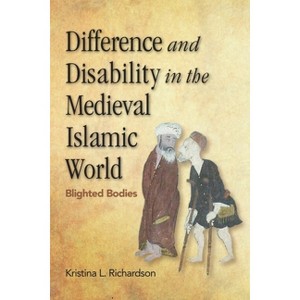
Difference and Disability in the Medieval Islamic World - by Kristina Richardson (Paperback)
In Stock
Sponsored
About this item
Highlights
- Did you know that blue eyes, baldness, bad breath and boils were all considered bodily 'blights' by Medieval Arabs, as were cross eyes, lameness and deafness?
- About the Author: Kristina L. Richardson is an Assistant Professor of History at Queens College, City University of New York, and has held postdoctoral fellowships at the Universities of Münster and Bonn in Germany.
- 168 Pages
- History, Middle East
Description
About the Book
A revealing portrait of Medieval Arab notions of physical difference, this book uses close analysis of primary sources to bring to light cultural views and lived experiences of disability and difference.
Book Synopsis
Did you know that blue eyes, baldness, bad breath and boils were all considered bodily 'blights' by Medieval Arabs, as were cross eyes, lameness and deafness? What assumptions about bodies influenced this particular vision of physical difference? How did blighted people view their own bodies? Through close analyses of anecdotes, personal letters, (auto)biographies, erotic poetry, non-binding legal opinions, diaristic chronicles and theological tracts, the cultural views and experiences of disability and difference in the medieval Islamic world are brought to life.
From the Back Cover
'Richardson has written an original and highly learned first book that reveals much about the cultural construction of difference and disability and about scholarly friendships and communities that shaped that culture.' H-Disabaility, H-Net Reviews Outlines the complex significance of bodies in the late medieval central Arab Islamic lands Medieval Arab notions of physical difference can feel singularly arresting for modern audiences. Did you know that blue eyes, baldness, bad breath and boils were all considered bodily 'blights', as were cross eyes, lameness and deafness? What assumptions about bodies influenced this particular vision of physical difference? How did blighted people view their own bodies? Through close analyses of anecdotes, personal letters, (auto)biographies, erotic poetry, non-binding legal opinions, diaristic chronicles and theological tracts, the cultural views and experiences of disability and difference in the medieval Islamic world are brought to life. Key Features - Investigates the place of physically different, disabled and ill individuals in medieval Islam - Centres on the lives and works of six Muslim men, each highlighting a different aspect of bodily difference - Addresses broad cultural questions relating to social class, religious orthodoxy, moral reputation, drug use, male homoeroticism and self-representation in the public sphere - Moves towards a coherent theory of medieval disability and bodily aesthetics in Islamic cultural traditions Kristina L. Richardson is an Assistant Professor of History at Queens College, City University of New York, and has held postdoctoral fellowships at the Universities of Münster and Bonn in Germany. Jacket image: a detail of an Ottoman miniature painting from 1595 depicting the Martyrdom of Mansur al-Hallaj (c) CBL T 474.79. Jacket design: [insert logo file] www.euppublishing.com ISBN 978-0-7486-4507-7 [please add in the white area above the barcode] BarcodeReview Quotes
Kristina L. Richardson offers us invaluable insight [in her new book] which discusses disability, friendship, drug abuse, scholarly scandal, and love.--Taraneh Wilkinson "LA Review of Books"
Richardson has written an original and highly learned first book that reveals much about the cultural construction of difference and disability and about scholarly friendships and communities that shaped that culture.-- "H-Disability, H-Net Reviews"
This book provides a plethora of information about Islamic attitudes to people with disabilities...Although written within a specific historical framework, Kristina Richardson's book transcends these boundaries and provides the reader with new data on the literary, legal, and theological debates on the roles that people with disabilities could hold in society and in the religious life of their communities, beyond the Mamluk and Ottoman eras.--Vardit Rispler-Chaim, University of Haifa "Journal of the American Oriental Society"
With few exceptions, we hardly have any scholarly treatment of the historically nuanced social and cultural condition of physical and mental impairment...This is why Richardson's Difference and Disability in The Medieval Islamic World is so important. It is an indication of the growing field of disability history, and its expansion beyond mainly Western concerns.'- Miri Shefer-Mossensohn, Tel Aviv University, Review of Middle East Studies--Miri Shefer-Mossensohn, Tel Aviv University "Review of Middle East Studies"
About the Author
Kristina L. Richardson is an Assistant Professor of History at Queens College, City University of New York, and has held postdoctoral fellowships at the Universities of Münster and Bonn in Germany.
Shipping details
Return details
Trending Non-Fiction