Sponsored
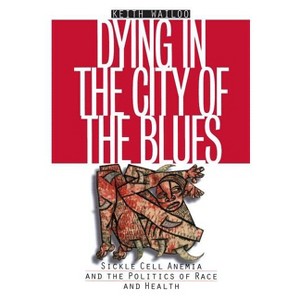
Dying in the City of the Blues - (Studies in Social Medicine) by Keith Wailoo (Paperback)
In Stock
Sponsored
About this item
Highlights
- This groundbreaking book chronicles the history of sickle cell anemia in the United States, tracing its transformation from an "invisible" malady to a powerful, yet contested, cultural symbol of African American pain and suffering.Set in Memphis, home of one of the nation's first sickle cell clinics, Dying in the City of the Blues reveals how the recognition, treatment, social understanding, and symbolism of the disease evolved in the twentieth century, shaped by the politics of race, region, health care, and biomedicine.
- Lillian Smith Book Awards (Fiction) 2002 3rd Winner
- About the Author: Author of the award-winning "Drawing Blood: Technology and Disease Identity in Twentieth-Century America," Keith Wailoo is Martin Luther King Professor of History, jointly appointed in the Institute for Health, Health Care Policy, and Aging Research, at Rutgers University.
- 360 Pages
- Medical, History
- Series Name: Studies in Social Medicine
Description
About the Book
Dying in the City of the Blues: Sickle Cell Anemia and the Politics of Race and HealthBook Synopsis
This groundbreaking book chronicles the history of sickle cell anemia in the United States, tracing its transformation from an "invisible" malady to a powerful, yet contested, cultural symbol of African American pain and suffering.
Set in Memphis, home of one of the nation's first sickle cell clinics, Dying in the City of the Blues reveals how the recognition, treatment, social understanding, and symbolism of the disease evolved in the twentieth century, shaped by the politics of race, region, health care, and biomedicine. Using medical journals, patients' accounts, black newspapers, blues lyrics, and many other sources, Keith Wailoo follows the disease and its sufferers from the early days of obscurity before sickle cell's "discovery" by Western medicine; through its rise to clinical, scientific, and social prominence in the 1950s; to its politicization in the 1970s and 1980s. Looking forward, he considers the consequences of managed care on the politics of disease in the twenty-first century.
A rich and multilayered narrative, Dying in the City of the Blues offers valuable new insight into the African American experience, the impact of race relations and ideologies on health care, and the politics of science, medicine, and disease.
Review Quotes
"A compelling demonstration of how powerful and significant [the] underappreciated interaction between illness and race has been. . . . This unassuming masterpiece of revelation focuses a new, more precise lens on the intersection of race, illness and politics." -- Publishers Weekly, starred review
"A well-documented, sophisticated study by an important scholar in the field of race and American medicine. . . . This first-rate study of how a disease discourse reflects social relations beautifully demonstrates the significance of the politics of race and health to American history and the contributions that historical analysis can make to contemporary health care debates." -- Journal of American History
"An important contribution to the larger project of documenting the health history of black people in the United States." -- Bulletin of the History of Medicine##
"An informative, though unsettling, scholarly account of the African American life experience throughout the 20th century. . . . [Wailoo] has provided great insight to the history of race relations in this country and its impact on health care." -- CHOICE
"Resonates well beyond blacks, Memphis, and sickle cell anemia to speak directly to America's current heath care crisis." -- Texas Observer
"The power of black bodies and their afflictions to 'tell a moral tale' about changing racial relations in US society is bound to fascinate, infuriate and inspire reads of Dying in the City of the Blues . . . . This remarkable text on the social construction of the illness speaks of how ancient, bloody, brutal and enduring the facts of racial disparity in health and care really are in the American experience . . . . What makes this book such an achievement is the author's eye and ear for luminous detail." -- Nature
"Wailoo emphasizes that medical history should attend to the experience of illness by people as much as it explains diseases and their cures." -- Virginia Quarterly Review
"Wailoo's comprehensive telling . . . is the definitive story of race and health in the United States." -- Library Journal
"Wailoo's trenchant analysis will fascinate anyone interested in southern, medical, or African American history, or intrigued by the rise of identity politics and the power of disease-based political interest groups. . . . An important book. Wailoo reminds us that all knowledge is socially constructed, that local studies can offer insights into national issues, and that the personal is political in America." -- Journal of Southern History
"When one finishes the book and reflects back on its contents one realizes just how rich Wailoo's approach to his subject is, how much he has covered, how skillfully he has informed, and how nicely he has used the story of [sickle cell anemia] to tell the stories of race, politics, and health in twentieth-century American society." -- Medical History
About the Author
Author of the award-winning "Drawing Blood: Technology and Disease Identity in Twentieth-Century America," Keith Wailoo is Martin Luther King Professor of History, jointly appointed in the Institute for Health, Health Care Policy, and Aging Research, at Rutgers University. In 1999 he received the prestigious James S. McDonnell Centennial Fellowship in the History of Science.Shipping details
Return details
Frequently bought together





Trending Non-Fiction






Discover more options