Sponsored
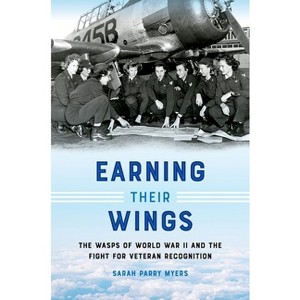
Earning Their Wings - by Sarah Parry Myers (Paperback)
In Stock
Sponsored
About this item
Highlights
- Established by the Army Air Force in 1943, the Women's Airforce Service Pilots (WASP) program opened to civilian women with a pilot's license who could afford to pay for their own transportation, training, and uniforms.
- Author(s): Sarah Parry Myers
- 256 Pages
- History, Military
Description
About the Book
"Established by the Army Air Force in 1943, the Women's Airforce Service Pilots (WASP) program opened to civilian women with a pilot's license who could afford to pay for their own transportation, training, and uniforms. Despite their highly developed skill set, rigorous training, and often dangerous work, the women of WASP were not granted military status until 1977, denied over three decades of Army Air Force benefits as well as the honor and respect given to male and female World War II veterans of other branches. Sarah Parry Myers not only offers a history of this short-lived program but considers its long-term consequences for the women who participated and subsequent generations of servicewomen and activists. Myers shows us how those in the WASP program bonded through their training, living together in barracks, sharing the dangers of risky flights, and struggling to be recognized as military personnel, and the friendships they forged lasted well after the Army Air Force dissolved the program. Despite the WASP program's short duration, its fliers formed activist networks and spent the next thirty years lobbying for recognition as veterans. Their efforts were finally recognized when President Jimmy Carter signed a bill into law granting WASP participants retroactive veteran status, entitling them to military benefits and burials"--Book Synopsis
Established by the Army Air Force in 1943, the Women's Airforce Service Pilots (WASP) program opened to civilian women with a pilot's license who could afford to pay for their own transportation, training, and uniforms. Despite their highly developed skill set, rigorous training, and often dangerous work, the women of WASP were not granted military status until 1977, denied over three decades of Army Air Force benefits as well as the honor and respect given to male and female World War II veterans of other branches. Sarah Parry Myers not only offers a history of this short-lived program but considers its long-term consequences for the women who participated and subsequent generations of servicewomen and activists.
Myers shows us how those in the WASP program bonded through their training, living together in barracks, sharing the dangers of risky flights, and struggling to be recognized as military personnel, and the friendships they forged lasted well after the Army Air Force dissolved the program. Despite the WASP program's short duration, its fliers formed activist networks and spent the next thirty years lobbying for recognition as veterans. Their efforts were finally recognized when President Jimmy Carter signed a bill into law granting WASP participants retroactive veteran status, entitling them to military benefits and burials.
Review Quotes
"[Earning Their Wings] is a good historical narrative that educates the reader on the role of [Women's Air Force Service Pilots] and their contribution to the larger historical argument: who is a veteran?"--H-War
"A valuable contribution to the history of women in uniform during World War II. . . . Myers's attention to how [Women's Air Force Service Pilots] fought for veteran status is noteworthy."--Journal of American History
"An excellent contribution to women's history, aviation history, and military history."--Lynn Dumenil, author of The Second Line of Defense: American Women and World War I
"An inspiring story of women who, though dismissed by many as mere novelties, combatted public suspicions and fears, subterfuge, and congressional resistance as they demanded an opportunity to serve in World War II and then waged an even longer war to be recognized as veterans. [This book] returns a fierce group of women pilots to their rightful place in history, at the center of vital questions about the meanings of women's wartime service."--Kara Dixon Vuic, author of The Girls Next Door: Bringing the Home Front to the Front Lines
"Myers . . . has written an engaging, well-documented book, taking the reader from the dusty desert training facility of Sweetwater, Texas, to the passage of the Congressional Militarization Bill of 1977."--Journal of America's Military Past
"Myers's work illustrates that servicewomen today are the latest generation of women in the air, and their position has been strengthened by the work that WASPs undertook to achieve recognition of their roles."--Tanya L. Roth, author of Her Cold War: Women in the U.S. Military, 1945-1980
Shipping details
Return details
Frequently bought together






Trending Non-Fiction






Discover more options