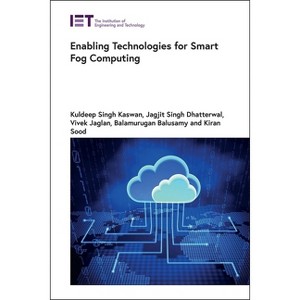
Fog computing is a decentralized computing infrastructure in which computing resources are located between the data source and the cloud or any other data centers.
The authors present a comprehensive review of fog computing systems including energy efficiency and quality of service issues, reliability and fault tolerance, load balancing, and scheduling, utilizing mobile edge computing, internet of things, resource estimation and virtualization in fog computing environments for smart applications.
Book Synopsis
Fog computing is a decentralized computing infrastructure in which computing resources are located between the data source and the cloud or any other data centers. The word "fog" refers to its cloud-like properties, which are closer to the "ground", using edge devices that carry out locally computation, storage and communication tasks. An additional benefit is that the processed data is likely to be needed by the same devices that generated the data. By processing locally rather than remotely, the latency between input and response are minimized. This technology has countless application domains such as industrial process control, smart cities, transportation, healthcare and agriculture.
In this book, all the important topics in fog computing systems are covered, including energy efficiency, quality of service (QoS) issues, reliability and fault tolerance, load balancing, and scheduling. Special attention is devoted to emerging trends and industry needs associated with utilizing mobile edge computing, internet of things (IoT), resource estimation as well as virtualization in the fog computing environment. Current research on automation, robotics, data privacy, security and trust in fog computing is explored in depth. The book also discusses emerging techniques including deep learning, mobile edge computing, smart grid and intelligent transportation systems beyond theoretical and foundational concepts for smart applications including real time traffic surveillance, interoperability of fog computing architecture and smart homes and smart cities.
Intended for an audience of researchers from academia and industry, as well as lecturers, engineers and advanced students, Enabling Technologies for Smart Fog Computing offers valuable insights for those with an interest in the field.
Dimensions (Overall): 9.21 Inches (H) x 6.14 Inches (W) x .94 Inches (D)
Weight: 1.67 Pounds
Suggested Age: 22 Years and Up
Number of Pages: 418
Genre: Computers + Internet
Sub-Genre: Networking
Series Title: Computing and Networks
Publisher: Institution of Engineering & Technology
If the item details aren’t accurate or complete, we want to know about it.
Shipping details
Estimated ship dimensions: 0.94 inches length x 6.14 inches width x 9.21 inches height
Estimated ship weight: 1.67 pounds
We regret that this item cannot be shipped to PO Boxes.
Return details
This item can be returned to any Target store or Target.com.
This item must be returned within 90 days of the date it was purchased in store, delivered to the guest, delivered by a Shipt shopper, or picked up by the guest.