Sponsored
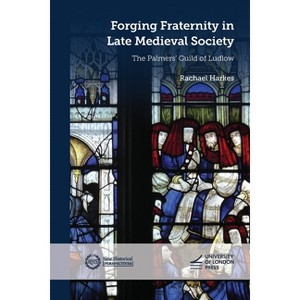
Forging Fraternity in Late Medieval Society - (New Historical Perspectives) by Rachael Harkes (Paperback)
Pre-order
Sponsored
About this item
Highlights
- The untold story of how a medieval guild united the worlds of commerce and religion and changed local life and international influence on the eve of the Reformation.
- About the Author: Rachael Harkes is a postdoctoral research associate on the ERC-UKRI project, MOWLIT: The Medieval March of Wales, 1282-1550: Mapping Literary Geography in a British Border Region.
- 250 Pages
- History, Europe
- Series Name: New Historical Perspectives
Description
Book Synopsis
The untold story of how a medieval guild united the worlds of commerce and religion and changed local life and international influence on the eve of the Reformation. Forging Fraternity in Late Medieval Society is the first major study of a national guild and its far-reaching influence. Rachael Harkes outlines the intricate role of the Palmers' Guild of Ludlow, showing how its membership extended beyond urban centers into rural life and shaped local and regional governance on the eve of the Reformation. Through meticulous analysis of guild records and non-guild sources, this book confronts preconceived notions about these understudied institutions, demonstrating how they functioned as social and political networks that connected villages, households, city officials, and even the Crown. By shedding light on the complex intersections of faith and community, Forging Fraternity in Late Medieval Society sheds new light on the forces that shaped late medieval England and Wales at a moment when traditional structures of power and belief were on the brink of transformation.Review Quotes
This book gets to the heart of why guilds were so successful in building community and connection in late medieval England and Wales. Rachael Harkes achieves a tremendous blend of analysis and insight through meticulous document research that reveals the full picture of how the Palmers Guild built its ethos and interests through cultivation of a public role that involved a cross section of English and Welsh people, from beggars to nobles, across three hundred years of life on the Marches. This well-structured and engaging account unveils important new evidence of the mechanics of late medieval urban life and in doing so takes us closer to understanding how the interactions of community in pre-Reformation England and Wales truly worked.
- Sean Cunningham, Head of Medieval Records, The National Archives, UK
About the Author
Rachael Harkes is a postdoctoral research associate on the ERC-UKRI project, MOWLIT: The Medieval March of Wales, 1282-1550: Mapping Literary Geography in a British Border Region. She has published articles in Urban History and the Journal of British Studies.Shipping details
Return details
Trending Non-Fiction






Discover more options