Sponsored
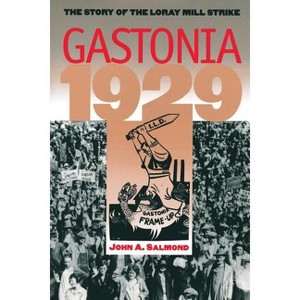
Gastonia 1929 - by John a Salmond (Paperback)
In Stock
Sponsored
About this item
Highlights
- Of the wave of labor strikes that swept through the South in 1929, the one at the Loray Mill in Gastonia, North Carolina, is perhaps the best remembered.
- About the Author: John A. Salmond is professor of history at La Trobe University in Australia.
- 240 Pages
- Political Science, Labor & Industrial Relations
Description
About the Book
Gastonia 1929: The Story of the Loray Mill StrikeBook Synopsis
Of the wave of labor strikes that swept through the South in 1929, the one at the Loray Mill in Gastonia, North Carolina, is perhaps the best remembered. In Gastonia 1929 John Salmond provides the first detailed account of the complex events surrounding the strike at the largest textile mill in the Southeast. His compelling narrative unravels the confusing story of the shooting of the town's police chief, the trials of the alleged killers, the unsolved murder of striker Ella May Wiggins, and the strike leaders' conviction and subsequent flight to the Soviet Union. Describing the intensifying climate of violence in the region, Salmond presents the strike within the context of the southern vigilante tradition and as an important chapter in American economic and labor history in the years after World War I. He draws particular attention to the crucial role played by women as both supporters and leaders of the strike, and he highlights the importance of race and class issues in the unfolding of events.
Review Quotes
"[A] briskly told study. . . . [of how] Gastonia took on mythic proportions. . . . The fact that [the strikers] were willing to risk livelihoods and lives -- under whatever fallible leadership presented itself to them at the time -- stands only to their credit." -- Maurice Isserman, New York Times Book Review
"[A] short, well-written, and highly readable account." -- Labor History
"[Salmond] has written a fair, dispassionate book." -- Washington Post
"[This] solid contribution to the historiography . . . adds a new dimension to our understanding of those troubling days. . . . Gastonia is compellingly told and well written." -- Mississippi Quarterly
"A fascinating narrative of this famous textile mill strike in North Carolina." -- CHOICE
"A thoroughly researched and evenhanded account. . . . A work of careful scholarship, it is also accessible to a wide audience. . . . The book will serve as a standard account of the strike and an important refutation of accounts of southern mill life as a harmonious single culture." -- Journal of Southern History
"A well-written, compact account of the infamous strike that brought the first Communist organizers to the southern textile industry." -- Journal of American History
"Salmond does more than present a superbly written narrative that uses oral history, memoirs, trial documents, newspapers, and older accounts to make the story for the first time persuasively complete." -- American Historical Review
"The most comprehensive narrative history of what happened in Gastonia the year of the strike." -- Our State
"This tight, fast-paced, well-written narrative offers a powerful commentary on the vulnerability of the American judicial system to the basic cultural forces within the communities in which it operates." -- Law and History Review
About the Author
John A. Salmond is professor of history at La Trobe University in Australia. His books include A Southern Rebel: The Life and Times of Aubrey Willis Williams, 1890-1965.
Shipping details
Return details
Frequently bought together



Guests also viewed


Discover more options