Sponsored
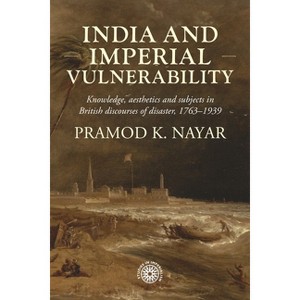
India and Imperial Vulnerability - (Studies in Imperialism) by Pramod K Nayar (Hardcover)
New at target
$130.00
Pre-order
Eligible for registries and wish lists
Sponsored
About this item
Highlights
- This study of famines, earthquakes and cyclones in British India, 1770-1934, moves from the aesthetics of representation through the knowledge cultures that sprang up around the disasters and finally the construction of the helpless native and the labouring Englishman.
- About the Author: Pramod K Nayar is Senior Professor of English and holder of the UNESCO Chair in Vulnerability Studies at the University of Hyderabad, India.
- 240 Pages
- Political Science, Imperialism
- Series Name: Studies in Imperialism
Description
About the Book
This is a study of disasters - cyclones, earthquakes and famines - in British India, 1770-1934, through a reading of a vast archive of colonial texts.Book Synopsis
This study of famines, earthquakes and cyclones in British India, 1770-1934, moves from the aesthetics of representation through the knowledge cultures that sprang up around the disasters and finally the construction of the helpless native and the labouring Englishman. It studies the creation of imperial networks of knowledge acquisition, codification and training, as well as the employment of certain aesthetic modes when speaking of the land's disasters. It pays attention to the categorization of the disaster victims and the work of the Englishman in understanding and helping the native. The study shows how the disasters were shaped and were shaped by imperial discourses of knowledge and learning, aesthetics of fright and horror and the labouring English.From the Back Cover
[Final] India and imperial vulnerability explores how British writings on floods, cyclones, earthquakes and famines - spanning the seventeenth to early twentieth centuries - cast India as a natural laboratory for the study of these phenomena. In these accounts, the subcontinent emerged as a space of endemic disaster, enabling the production of imperial knowledge and and as the site of humanitarian labour by the English.
Drawing on a wide range of primary sources - from eyewitness testimonies, official reports, memoirs and scientific treatises - the book investigates the writing of disaster, knowledge-practices and relief. It examines the rhetorical and epistemic frameworks through which both environmental and human suffering were rendered legible: from methods of data collection and narrative organization to the aesthetic portrayal of devastated landscapes and broken bodies. Colonial disaster writing not only reiterated familiar stereotypes, such as the irrational or superstitious native, but also generated new figures: the dignified yet deserving famine victim, and the stoic Englishman, committed to the labour of imperial humanitarianism. Disaster writing and its rhetorical modes constructed various categories of victim-subjects deserving or not of humanitarian aid. It also concomitantly constructed the figure of imperial authority, the humanitarian and the scientifically minded observer, where the Englishman was the ameliorative force in a land the writings defined as disaster-prone. 'Imperial vulnerability', this book argues, was central to the imagining and representation of the multiple roles of the Englishman, from observer to relief-provider.About the Author
Pramod K Nayar is Senior Professor of English and holder of the UNESCO Chair in Vulnerability Studies at the University of Hyderabad, India.Dimensions (Overall): 9.21 Inches (H) x 6.14 Inches (W)
Suggested Age: 22 Years and Up
Number of Pages: 240
Genre: Political Science
Sub-Genre: Imperialism
Series Title: Studies in Imperialism
Publisher: Manchester University Press
Format: Hardcover
Author: Pramod K Nayar
Language: English
Street Date: May 5, 2026
TCIN: 1007714023
UPC: 9781526178114
Item Number (DPCI): 247-37-6883
Origin: Made in the USA or Imported
If the item details aren’t accurate or complete, we want to know about it.
Shipping details
Estimated ship dimensions: 1 inches length x 6.14 inches width x 9.21 inches height
Estimated ship weight: 1 pounds
We regret that this item cannot be shipped to PO Boxes.
This item cannot be shipped to the following locations: American Samoa (see also separate entry under AS), Guam (see also separate entry under GU), Northern Mariana Islands, Puerto Rico (see also separate entry under PR), United States Minor Outlying Islands, Virgin Islands, U.S., APO/FPO
Return details
This item can be returned to any Target store or Target.com.
This item must be returned within 90 days of the date it was purchased in store, shipped, delivered by a Shipt shopper, or made ready for pickup.
See the return policy for complete information.
Trending Non-Fiction


$19.31
was $20.98 New lower price
4 out of 5 stars with 62 ratings


$4.59
MSRP $7.99
Save $5 when you spend $20 on select books
4.8 out of 5 stars with 121 ratings

$6.20
MSRP $10.95
Save $5 when you spend $20 on select books
4.8 out of 5 stars with 33 ratings

$7.09
MSRP $9.99
Save $5 when you spend $20 on select books
4.9 out of 5 stars with 46 ratings