Sponsored
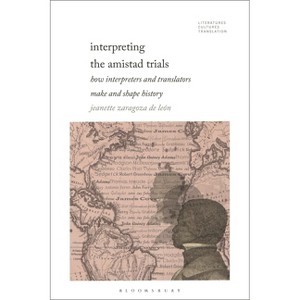
Interpreting the Amistad Trials - (Literatures, Cultures, Translation) by Jeanette Zaragoza-de León (Hardcover)
In Stock
Sponsored
About this item
Highlights
- Interpreting The Amistad Trials traces the signal importance of interpreters and translators in the famous 19th-century Amistad case and discusses how race, ethnicity, slavery, and colonialism shaped this story.
- About the Author: Jeanette Zaragoza De León is Assistant Professor in the Graduate Translation Program and is coordinator of the first academic program in interpreting studies in Puerto Rico at the University of Puerto Rico.
- 272 Pages
- Language + Art + Disciplines, Translating & Interpreting
- Series Name: Literatures, Cultures, Translation
Description
About the Book
"Interpreting The Amistad Trials traces the signal importance of interpreters and translators in the famous 19th-century Amistad case and discusses how race, ethnicity, slavery, and colonialism shaped this story. From the recruitment process to the various oral to sign languages that mediated linguistically in the Africans' life inside and outside the courtroom, and from evidentiary documents to fraudulent translations to credible testimonies, this book demonstrates the crucial importance of translation and interpretation in the Amistad plot and outcome"--Book Synopsis
Interpreting The Amistad Trials traces the signal importance of interpreters and translators in the famous 19th-century Amistad case and discusses how race, ethnicity, slavery, and colonialism shaped this story.
From the recruitment process to the various oral to sign languages that mediated linguistically in the Africans' life inside and outside the courtroom, and from evidentiary documents to fraudulent translations to credible testimonies, Jeanette Zaragoza-De León demonstrates the crucial importance of translation and interpretation in the Amistad plot and outcome. De León examines handwritten letters, pamphlets, newspapers, and judicial files, and adopts a critical race theory and postcolonial lens to analyze these materials. Although these critical interpretations and translations travelled transatlantically via Europe, Africa, the Caribbean, and the United States, De León highlights the common thread which also geographically unites Venezuela, Puerto Rico, and the Dominican Republic as part of the Amistad story.
Review Quotes
"This is a fascinating case-study in how translation and interpreting shape macro and microhistories. The book is a clarion call to understand power, agency, and human rights as radically dependent on language and linguistic mediation." --Hilary Footitt, Professor, Institute of Languages, Cultures, and Societies, University of London, UK
"Zaragoza-De León leaves no stone unturned in her exploration of the Amistad trials, taking the reader by the hand to uncover information which has changed the course of history, as well as the lives of hundreds of people. If you want to know more about the influence of interpretation and translation throughout history, Interpreting the Amistad Trials is the book for you." --Claudia V. Angelelli, Professor and Chair in Multilingualism and Communication, Heriot-Watt University, UK "Zaragoza-De León's recovery of the archival record and careful examination of the role of interpreters in the Amistad case elucidates the legal processes, imperial conflict, and impact of language understanding through interpreting the cultural history of memory and violent erasures of racialized trauma. This book is an invitation to rethink the relationship between dominance, the law, and the pivotal role of language in the transoceanic history of African slavery." --Santa Arias, Professor of Spanish and Portuguese, University of Arizona, USAAbout the Author
Jeanette Zaragoza De León is Assistant Professor in the Graduate Translation Program and is coordinator of the first academic program in interpreting studies in Puerto Rico at the University of Puerto Rico. With more than 15 years of experience as an interpreter and translator, her historical research centers around interpreters and translators in the 19th-century transatlantic world.Shipping details
Return details
Trending Non-Fiction





Discover more options