Sponsored
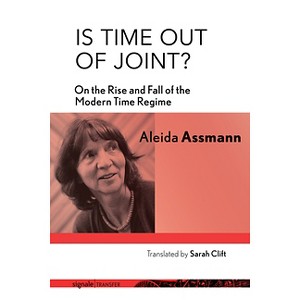
Is Time Out of Joint? - (Signaletransfer: German Thought in Translation) by Aleida Assmann (Hardcover)
In Stock
Sponsored
About this item
Highlights
- Is, as Hamlet once complained, time out joint?
- About the Author: Aleida Assmann was until 2014 Chair of English Literature and Literary Theory at the University of Konstanz.
- 264 Pages
- Literary Criticism, Semiotics & Theory
- Series Name: Signaletransfer: German Thought in Translation
Description
About the Book
"Is, as Hamlet once feared, the time out of joint? What has happened to our relation to the past and the future? The past has returned in various shapes: as nostalgia, as traumatic impact, and as historical origin or key event for the purposes of nation building. The future, meanwhile, has lost much of its glamor, too. The notion of progress and a utopian future have been eroded a growing ecological crisis. The seemingly solid moorings of our temporal orientation have collapsed within the time span of a generation. In order to better understand our temporal crisis, we must start by reconstructing what has just disappeared. In this book, Aleida Assmann tracks the rise and fall of what she calls "the time regime of modernity," explaining what we have both gained and lost in this profound transformation of our cultural values and premises"--Book Synopsis
Is, as Hamlet once complained, time out joint? Have the ways we understand the past and the future--and their relationship to the present--been reordered? The past, it seems, has returned with a vengeance: as aggressive nostalgia, as traumatic memory, or as atavistic origin narratives rooted in nation, race, or tribe. The future, meanwhile, has lost its utopian glamor, with the belief in progress and hope for a better future eroded by fears of ecological collapse.
In this provocative book, Aleida Assmann argues that the apparently solid moorings of our temporal orientation have collapsed within the span of a generation. To understand this profound cultural crisis, she reconstructs the rise and fall of what she calls "time regime of modernity" that underpins notions of modernization and progress, a shared understanding that is now under threat. Is Time Out of Joint? assesses the deep change in the temporality of modern Western culture as it relates to our historical experience, historical theory, and our life-world of shared experience, explaining what we have both gained and lost during this profound transformation.
Review Quotes
Aleida Assmann's Is Time out of Joint? has already become a classic in its national academic environment (and in segments of global humanities that can access German speaking scholarship). There is little doubt that the book will now quickly become a standard reference point in a far broader conversation about the temporal constitution of present societies.
-- "Memory Studies"Aleida Assmann's study tells an expansive story of the shifting forms of time consciousness since the eighteenth century, representing both a culmination of her previous work on cultural memory and a bold intervention into contemporary debates on modern temporality. In doing so, Is Time Out of Joint? combines pithiness with creativity.
-- "International Journal of Politics, Culture, and Society"Assmann's book stands not only as a forensic examination of the emergence and demise of the 'Modern Time Regime', but also as a thorough survey and critique of theorizations of time predominantly in Germanophone philosophy and literature
-- "Journal of European Studies"Superbly translated by Sarah Clift, Is Time out of Joint? produces an evocative picture of the temptations and vices of modern historical time, assembled from an intriguingly wide and eclectic range of cultural sources.
-- "Cambridge University Press"About the Author
Aleida Assmann was until 2014 Chair of English Literature and Literary Theory at the University of Konstanz. She is the author of several books that have been translated into English, including most recently, Cultural Memory and Western Civilization. With her husband Jan, she was awarded the prestigious 2017 Balzan Prize for Collective Memory and the 2018 Peace Prize of the German Book Trade.
Sarah Clift is Assistant Professor of Contemporary Studies at the University of King's College, Halifax.
Shipping details
Return details
Trending Book Deals





Discover more options