Sponsored
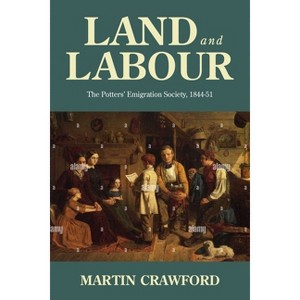
Land and Labour - by Martin Crawford (Paperback)
Pre-order
Sponsored
About this item
Highlights
- This book is a history of the Potters' Emigration Society from its founding in 1844 to its dissolution in early 1851.
- About the Author: Martin Crawford is Emeritus Professor of Anglo-American History at Keele University
- 272 Pages
- Social Science, Emigration & Immigration
Description
About the Book
This book is a history of the Potters' Emigration Society from its founding in 1844 to its dissolution in early 1851.
Book Synopsis
This book is a history of the Potters' Emigration Society from its founding in 1844 to its dissolution in early 1851. The Society, which became a national organisation after 1848, sought to solve the problems of surplus labour by turning workers into frontier farmers. It was the most significant industrial emigration scheme of its period.From the Back Cover
Land and labour provides the first full-length history of the Potters' Emigration Society, the controversial trade union scheme designed to solve the problems of surplus labour by changing workers into farmers on land acquired on the Wisconsin frontier.
The brainchild of Welsh-born trade unionist and editor William Evans, the Potters' Emigration Society was the most widely discussed project of its kind in the era of mass migration. This book examines the industrial background to the emigration scheme, and the establishment of the first settlement in America, the duly named Pottersville. Short of funds and facing competition from Feargus O'Connor's Chartist Land Plan, in 1848 it widened its membership to other trades and regions, opening branches in Lancashire, Scotland and London and other industrial communities. Over-ambition, relentless criticism and the inherent difficulties of long-distance colonisation brought about its collapse by the beginning of 1851. While many emigrant families remained and prospered, others found less success, with an undetermined number returning to Britain. Despite its failure, the Potters' emigration scheme was not an unrealistic response to the anxieties and displacements wrought by industrialisation. Its history offers unique insight into working-class dreams of landed independence in the American West and significantly contributes to understanding of the complex and contingent character of transatlantic emigration in the nineteenth century.Review Quotes
'This is top-notch research on an important topic in English and American history, full of well-told and fascinating stories. It takes a refreshing look at both industrial and agricultural history in England and America and illustrates how their cultural and economic relationship took many forms in the nineteenth century.'
William E. Van Vugt, Calvin University
About the Author
Martin Crawford is Emeritus Professor of Anglo-American History at Keele UniversityShipping details
Return details
Trending Non-Fiction






Discover more options