Sponsored
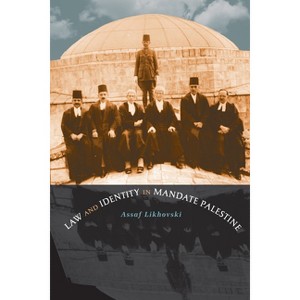
Law and Identity in Mandate Palestine - (Studies in Legal History) by Assaf Likhovski (Paperback)
In Stock
Sponsored
About this item
Highlights
- One of the major questions facing the world today is the role of law in shaping identity and in balancing tradition with modernity.
- Author(s): Assaf Likhovski
- 328 Pages
- Freedom + Security / Law Enforcement, Legal History
- Series Name: Studies in Legal History
Description
About the Book
Likhovski examines the legal history of Mandate Palestine, showing how law and identity interacted in a complex colonial society in which British rulers and Jewish and Arab subjects lived together. British officials, Jewish lawyers, and Arab scholars all turned to the law in their search for their identities and all used it to create and disseminate a hybrid culture in which Western and non-Western norms existed simultaneously. Likhovski's analysis suggests a new approach to both the legal history of Mandate Palestine and colonial societies in general.Book Synopsis
One of the major questions facing the world today is the role of law in shaping identity and in balancing tradition with modernity. In an arid corner of the Mediterranean region in the first decades of the twentieth century, Mandate Palestine was confronting these very issues. Assaf Likhovski examines the legal history of Palestine, showing how law and identity interacted in a complex colonial society in which British rulers and Jewish and Arab subjects lived together.
Law in Mandate Palestine was not merely an instrument of power or a method of solving individual disputes, says Likhovski. It was also a way of answering the question, "Who are we?" British officials, Jewish lawyers, and Arab scholars all turned to the law in their search for their identities, and all used it to create and disseminate a hybrid culture in which Western and non-Western norms existed simultaneously. Uncovering a rich arsenal of legal distinctions, notions, and doctrines used by lawyers to mediate between different identities, Likhovski provides a comprehensive account of the relationship between law and identity. His analysis suggests a new approach to both the legal history of Mandate Palestine and colonial societies in general.
Review Quotes
"Law and Identity in Mandate Palestine is a pioneer in applying an identity-based focus . . . .Likhovski's book will undoubtedly become the leading work on the legal history of mandate Palestine."--Law & Social Inquiry
"A prodigious and important work of scholarship by an extremely erudite and gifted young scholar." -- Israel Studies Forum
"Convincing. . . . [Likhovski] writes on a complex subject in an engaging style, and he brings a wealth of information and understanding to this subject." -- Journal of British Studies
"Interesting and complex. . . . Well written, engaging, and intelligently argued." -- International Journal of Middle East Studies
"Intriguing. . . . Likhovski's excellent study is another example of Israeli legal history's coming of age." -- Law and History Review
"Likhovski's work is a rich and most welcome contribution. . . . Law and Identity in Mandate Palestine has an assured place in every library on the history of the Palestine Mandate." -- Journal of Israeli History
"Specialized [and] innovative. . . . A welcome, discursively stimulating contribution on the Mandate period." -- History
"This is a bold, rich, and intellectually pathbreaking study of the interaction between law and identity in mandatory Palestine. Through a deep immersion in the legal history of all the actors involved, Likhovski brings to life the complexities and contradictions of a fascinating historical reality often treated only through polemical lenses." -- Michael Stanislawski, Columbia University
"This is a fascinating, engaging, accessible and evocative book, which takes the study of Mandate Palestine into a new direction." -- Modern Law Review
"Worth reading for its unique discussion of some of the important underexplored issues with which the country's British and Jewish elite grappled during this formative period." -- Journal of Palestine Studies
Shipping details
Return details
Frequently bought together





Guests also viewed

Discover more options