Sponsored
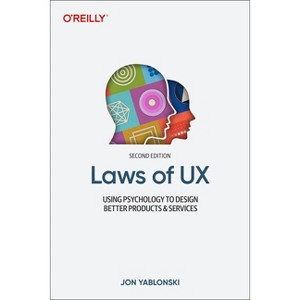
Laws of UX - 2nd Edition by Jon Yablonski (Paperback)
In Stock
Sponsored
About this item
Highlights
- An understanding of psychology-specifically the psychology behind how users behave and interact with digital interfaces-is perhaps the single most valuable nondesign skill a designer can have.
- Author(s): Jon Yablonski
- 183 Pages
- Computers + Internet, User Interfaces
Description
About the Book
"An understanding of psychology--specifically the psychology behind how users behave and interact with digital interfaces--is perhaps the single most valuable nondesign skill a designer can have. The most elegant design can fail if it forces users to conform to the design instead of working within the 'blueprint' of how humans perceive and process the world around them. This practical guide explains how you can apply key principles of psychology to build products and experiences that are more human-centered and intuitive. Author Jon Yablonski deconstructs familiar apps and experiences to provide clear examples of how UX designers can build interfaces that adapt to how users perceive and process digital interfaces"--Provided by publisher.Book Synopsis
An understanding of psychology-specifically the psychology behind how users behave and interact with digital interfaces-is perhaps the single most valuable nondesign skill a designer can have. The most elegant design can fail if it forces users to conform to the design instead of working within the "blueprint" of how humans perceive and process the world around them.
This practical guide explains how you can apply key principles of psychology to build products and experiences that are more human-centered and intuitive. Author Jon Yablonski deconstructs familiar apps and experiences to provide clear examples of how UX designers can build interfaces that adapt to how users perceive and process digital interfaces.
You'll learn:
- How aesthetically pleasing design creates positive responses
- The principles of psychology most useful for designers
- How these psychology principles relate to UX heuristics
- Predictive models including Fitts's law, Jakob's law, and Hick's law
- Ethical implications of using psychology in design
- A practical framework for applying principles of psychology in your design process
This updated edition includes an even deeper connection to the underlying psychological concepts that govern the principles explored in the book, along with accompanying UX methods and techniques. Examples have been updated to ensure the deconstructed apps and experiences remain familiar and relevant.
Shipping details
Return details
Frequently bought together






Guests also viewed

Discover more options