Sponsored
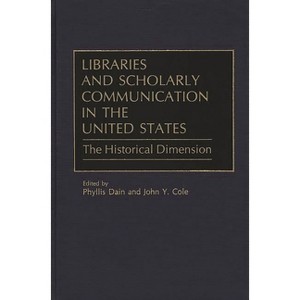
Libraries and Scholarly Communication in the United States - (Beta Phi Mu Monograph) by Phyllis Dain & John Y Cole (Hardcover)
In Stock
Sponsored
About this item
Highlights
- This is a selection of papers from a 1987 conference of the same title.
- About the Author: PHYLLIS DAIN is Professor of Library Service at the School of Library Service, Columbia University.
- 164 Pages
- Language + Art + Disciplines, Library & Information Science
- Series Name: Beta Phi Mu Monograph
Description
About the Book
This is a selection of papers from a 1987 conference of the same title. While the emphasis is on academic libraries, we are reminded of the crucial role of public and private libraries. Included are a survey of past research and stimulating ideas for future work, by Phyllis Dain; Wayne Wiegand's look at the role an ideology of reading played in the slow entry of academic libraries into scholarly communication in the 19th century; and a case study by Mary Niles Maack on the impact on African studies of collection inadequacies in U.S. and African libraries. Insightful reading for librarians working with research collections. Recommended. Library Journal
This book does a fine job of identifying the formal contributions of U.S. libraries to scholary communication since the middle of the nineteenth century. Several chapters go a step beyond that by capturing in lucid articulation library and scholarly phenomena that too often are elusive and ambiguous. Library Quarterly
In recent years, scholarly communication has become a concern of historians and sociologists interested in ideas and intellectual systems and in the social and institutional contexts in which ideas originate and are diffused. In this new intellectual history, attention id focused on the librarians who, in their effort to adapt to a new world of information technology and information overload, are inescapably aware of their historical legacy of buildings, collections, catalogs, methods of operation, and intellectual assumptions. Study of the historical dimension of the role of libraries and librarianship in the scholarly enterprise offers insights into the genesis of current problems and can inform plans for the future. Although library historians have created a growing body of useful works, including books and articles that relate library history to the mainstream of social and intellectual history, many questions remain to be investigated.
The papers in this volume, which present the results of such inquiry by senior scholars in the field, were selected from presentations at an interdisciplinary conference held at the Library of Congress, Libraries and Scholarly Communication in the United States: The Historical Dimension, at which library historians and practitioners, social historians, and others concerned with the creation and communication of knowledge were brought together to reflect upon some of these questions. The conference was organized to consider the contributions of libraries and bibliographic enterprises to the processes of scholarly communication; reexamine the intellectual and cultural assumptions upon which scholarly resources and bibliographic services have developed; and analyze the scholarly library as a social and cultural institution. The contributors investigate aspects of scholarly communication such as institutional structures and functions, the nature and dissemination of scholarly resources in the humanities, sciences, and social sciences; and concepts of special collections, cultural property, and the uses of knowledge. Several focus on the United States; others take a comparative approach or deal with relationships between the United States and publishing and scholarship abroad, including the third world. Although varied in approach and scope, the papers are linked by a common interest in probing the nature of scholarly communication and its institutional and material manifestations and by the view that libraries and librarianship are social creations and social systems. The diversity of the papers and their combination of conceptual and empirical modes point up the complexity and richness of such investigation. Thus these essays, themselves substantial contributions to knowledge, also point the way to future research and discussion on themes of increasing importance to those concerned with scholarship, libraries, and the life of the mind.
Book Synopsis
This is a selection of papers from a 1987 conference of the same title. While the emphasis is on academic libraries, we are reminded of the crucial role of public and private libraries. Included are a survey of past research and stimulating ideas for future work, by Phyllis Dain; Wayne Wiegand's look at the role an ideology of reading played in the slow entry of academic libraries into scholarly communication in the 19th century; and a case study by Mary Niles Maack on the impact on African studies of collection inadequacies in U.S. and African libraries. Insightful reading for librarians working with research collections. Recommended. Library Journal
This book does a fine job of identifying the formal contributions of U.S. libraries to scholary communication since the middle of the nineteenth century. Several chapters go a step beyond that by capturing in lucid articulation library and scholarly phenomena that too often are elusive and ambiguous. Library Quarterly In recent years, scholarly communication has become a concern of historians and sociologists interested in ideas and intellectual systems and in the social and institutional contexts in which ideas originate and are diffused. In this new intellectual history, attention id focused on the librarians who, in their effort to adapt to a new world of information technology and information overload, are inescapably aware of their historical legacy of buildings, collections, catalogs, methods of operation, and intellectual assumptions. Study of the historical dimension of the role of libraries and librarianship in the scholarly enterprise offers insights into the genesis of current problems and can inform plans for the future. Although library historians have created a growing body of useful works, including books and articles that relate library history to the mainstream of social and intellectual history, many questions remain to be investigated. The papers in this volume, which present the results of such inquiry by senior scholars in the field, were selected from presentations at an interdisciplinary conference held at the Library of Congress, Libraries and Scholarly Communication in the United States: The Historical Dimension, at which library historians and practitioners, social historians, and others concerned with the creation and communication of knowledge were brought together to reflect upon some of these questions. The conference was organized to consider the contributions of libraries and bibliographic enterprises to the processes of scholarly communication; reexamine the intellectual and cultural assumptions upon which scholarly resources and bibliographic services have developed; and analyze the scholarly library as a social and cultural institution. The contributors investigate aspects of scholarly communication such as institutional structures and functions, the nature and dissemination of scholarly resources in the humanities, sciences, and social sciences; and concepts of special collections, cultural property, and the uses of knowledge. Several focus on the United States; others take a comparative approach or deal with relationships between the United States and publishing and scholarship abroad, including the third world. Although varied in approach and scope, the papers are linked by a common interest in probing the nature of scholarly communication and its institutional and material manifestations and by the view that libraries and librarianship are social creations and social systems. The diversity of the papers and their combination of conceptual and empirical modes point up the complexity and richness of such investigation. Thus these essays, themselves substantial contributions to knowledge, also point the way to future research and discussion on themes of increasing importance to those concerned with scholarship, libraries, and the life of the mind.Review Quotes
?. . . Most of the essays in this collection are readable and will assist librarians interested in the historical background to research collections and scholarly communications.?-College & Research Libraries
?. . . This book does a fine job of identifying the formal contributions of U.S. libraries to scholary communication since the middle of the nineteenth century. Several chapters go a step beyond that by capturing in lucid articulation library and scholarly phenomena that too often are elusive and ambiguous.?-Library Quarterly
?The papers in this book, which present the results of such inquiry by senior scholars in the field, were selected from presentations at an interdisciplinary conference held at the Library of Congress, Libraries and Scholarly Communication in the United States: The Historical Dimension.' Library historians and practitioners, social historians and others concerned with the creation and communication of knowledge were brought together to reflect upon some of these questions.?-Recent Publications on Government Problems
?This is a selection of papers from a 1987 conference of the same title. While the emphasis is on academic libraries, we are reminded of the crucial role of public and private libraries. Included are a survey of past research and stimulating ideas for future work, by Phyllis Dain; Wayne Weigand's look at the role an ideology of reading played in the slow entry of academic libraries into scholarly communication in the 19th century; and a case study by Mary Niles Maack on the impact on African studies of collection inadequacies in U.S. and African libraries. Insightful reading for librarians working with research collections. Recommended.?-Library Journal
." . . Most of the essays in this collection are readable and will assist librarians interested in the historical background to research collections and scholarly communications."-College & Research Libraries
." . . This book does a fine job of identifying the formal contributions of U.S. libraries to scholary communication since the middle of the nineteenth century. Several chapters go a step beyond that by capturing in lucid articulation library and scholarly phenomena that too often are elusive and ambiguous."-Library Quarterly
"The papers in this book, which present the results of such inquiry by senior scholars in the field, were selected from presentations at an interdisciplinary conference held at the Library of Congress, Libraries and Scholarly Communication in the United States: The Historical Dimension.' Library historians and practitioners, social historians and others concerned with the creation and communication of knowledge were brought together to reflect upon some of these questions."-Recent Publications on Government Problems
"This is a selection of papers from a 1987 conference of the same title. While the emphasis is on academic libraries, we are reminded of the crucial role of public and private libraries. Included are a survey of past research and stimulating ideas for future work, by Phyllis Dain; Wayne Weigand's look at the role an ideology of reading played in the slow entry of academic libraries into scholarly communication in the 19th century; and a case study by Mary Niles Maack on the impact on African studies of collection inadequacies in U.S. and African libraries. Insightful reading for librarians working with research collections. Recommended."-Library Journal
About the Author
PHYLLIS DAIN is Professor of Library Service at the School of Library Service, Columbia University. She is the author of The New York Public Library: A History of Its Founding and Early Years, and co-editor of two Library Trends issues: Libraries and Society: Research and Thought (with Margaret F. Steig) and History of Library and Information Science Education (with Donald G. Davis, Jr.)
JOHN Y. COLE is Director of the Center for the Book in the Library of Congress. He is the author of For Congress and the Nation: A Chronological History of the Library of Congress, and editor of The Library of Congress in Perspective.Shipping details
Return details
Trending Non-Fiction



Discover more options