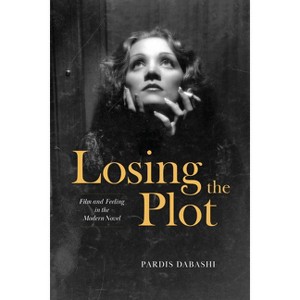
Losing the Plot - by Pardis Dabashi (Hardcover)
$99.00
In Stock

Free & easy returns
Return this item by mail or in store within 90 days for a full refund.
Eligible for registries and wish lists
About this item
Highlights
- An examination of the relationship between literature and classical Hollywood cinema reveals a profound longing for plot in modernist fiction.
- About the Author: Pardis Dabashi is assistant professor in the Department of Literatures in English at Bryn Mawr College and a faculty affiliate in the Film Studies Program and the Middle Eastern, Central Asian, and North African Studies Program.
- 296 Pages
- Literary Criticism, Modern
Description
About the Book
"It is widely understood that the modernist novel sought to escape what Virginia Woolf called the "tyranny" of plot. Yet even as twentieth-century writers pushed against the constraints of Victorian, plot-driven novels, Pardis Dabashi shows that plot kept its hold on them through the influence of another medium: the cinema. Focusing on the novels of Nella Larsen, Djuna Barnes, and William Faulkner-writers known for their moviegoing affinities and connections to early film-Dabashi uses the relationship between literature and the cinema to reveal a profound longing for plot in modernist fiction. Dabashi links the moviegoing practices of Larsen, Barnes, and Faulkner to the tensions in their works, tensions between the formal properties of the novels and the characters in them. In making a distinction between what the novel is doing and what their characters desire, these authors ponder how it is one thing to withhold plot as a gesture of modernist aesthetics, and quite another to be denied the comfort of plot's architecture in one's living and breathing existence"--Book Synopsis
An examination of the relationship between literature and classical Hollywood cinema reveals a profound longing for plot in modernist fiction. The modernist novel sought to escape what Virginia Woolf called the "tyranny" of plot. Yet even as twentieth-century writers pushed against the constraints of plot-driven Victorian novels, plot kept its hold on them through the influence of another medium: the cinema. Focusing on the novels of Nella Larsen, Djuna Barnes, and William Faulkner--writers known for their affinities and connections to classical Hollywood--Pardis Dabashi links the moviegoing practices of these writers to the tensions between the formal properties of their novels and the characters in them. Even when they did not feature outright happy endings, classical Hollywood films often provided satisfying formal resolutions and promoted normative social and political values. Watching these films, modernist authors were reminded of what they were leaving behind--both formally and in the name of aesthetic experimentalism--by losing the plot.Review Quotes
"Losing the Plot is an extremely ambitious book, one that aims to fundamentally rewrite and revise our understanding of modernist aesthetics in film and literature. By recasting plot as a modernist fantasy, and then by showing how cinema served as a model of that fantasy, Dabashi is able to provide an entirely original way of thinking about the relation between cinema and modernism, and indeed about modernism itself."-- "Daniel Morgan, University of Chicago"
"Reevaluating one of the most familiar critical truisms about the period, Losing the Plot is an erudite, elegant, and insightful exploration of modernism's ambivalent relationship to plot. Reading Larsen alongside Garbo, or Barnes alongside Dietrich, Dabashi shows us how the encounter with commercial narrative cinema allowed modernist writers to negotiate the double feelings of repudiation and longing for stability and coherence associated with the closure and teleology of plot."-- "Dora Zhang, University of California, Berkeley"
About the Author
Pardis Dabashi is assistant professor in the Department of Literatures in English at Bryn Mawr College and a faculty affiliate in the Film Studies Program and the Middle Eastern, Central Asian, and North African Studies Program. She is the coeditor of The New William Faulkner Studies, with Sarah Gleeson-White.Dimensions (Overall): 9.0 Inches (H) x 6.0 Inches (W) x .81 Inches (D)
Weight: 1.36 Pounds
Suggested Age: 22 Years and Up
Number of Pages: 296
Genre: Literary Criticism
Sub-Genre: Modern
Publisher: University of Chicago Press
Theme: 20th Century
Format: Hardcover
Author: Pardis Dabashi
Language: English
Street Date: November 7, 2023
TCIN: 1010454698
UPC: 9780226829241
Item Number (DPCI): 247-13-7188
Origin: Made in the USA or Imported
If the item details aren’t accurate or complete, we want to know about it.
Shipping details
Estimated ship dimensions: 0.81 inches length x 6 inches width x 9 inches height
Estimated ship weight: 1.36 pounds
We regret that this item cannot be shipped to PO Boxes.
This item cannot be shipped to the following locations: American Samoa (see also separate entry under AS), Guam (see also separate entry under GU), Northern Mariana Islands, Puerto Rico (see also separate entry under PR), United States Minor Outlying Islands, Virgin Islands, U.S., APO/FPO, Alaska, Hawaii
Return details
This item can be returned to any Target store or Target.com.
This item must be returned within 90 days of the date it was purchased in store, delivered to the guest, delivered by a Shipt shopper, or picked up by the guest.
See the return policy for complete information.