Target New ArrivalsGift Ideas for DadClothing, Shoes & AccessoriesHome & DecorKitchen & DiningOutdoor Living & GardenGroceryHousehold EssentialsBabyBeautyPersonal CareSports & OutdoorsHealthWellnessLuggageSchool & Office SuppliesToysElectronicsVideo GamesMovies, Music & BooksParty SuppliesGift IdeasGift CardsPetsUlta Beauty at TargetShop by CommunityTarget OpticalDealsClearanceNew ArrivalsGift Ideas for DadBack to SchoolCollegeTop DealsTarget Circle DealsWeekly AdShop Order PickupShop Same Day DeliveryRegistryRedCardTarget CircleFind Stores
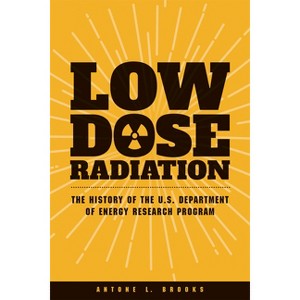
Low Dose Radiation - by  Antone L Brooks (Paperback) - 1 of 1

Low Dose Radiation - by Antone L Brooks (Paperback)

$39.95

In Stock

Free & easy returns

Free & easy returns

Return this item by mail or in store within 90 days for a full refund.
Eligible for registries and wish lists

About this item

Highlights

  • Antone Brooks grew up close enough to Nevada Test Site nuclear detonations to see the sky light up, feel the shockwaves, and be exposed to radioactive fallout.
  • Author(s): Antone L Brooks
  • 324 Pages
  • Science, Radiation

Description


About the Book


Findings from the U.S. Department of Energy's new low dose radiation research program were startling. At low doses, biological reactions are unique and often unrelated to those that occur at high levels. The hugely influential linear-no-threshold model--which predicted acute exposure damage can be extrapolated linearly to low dose exposures--was flawed. In fact, small amounts can have an adaptive protective effect. In addition, "hit theory," the idea that radiation only affected cells it directly traversed, yielded to a new "bystander theory," which hypothesizes that cells communicate with each other and a dose to one affects the cells around it. Low Dose Radiation tells the story behind the program that transformed the field.


Book Synopsis


Antone Brooks grew up close enough to Nevada Test Site nuclear detonations to see the sky light up, feel the shockwaves, and be exposed to radioactive fallout. His long scientific career--from early days trekking into the Uinta Mountains to hunt contaminated deer for tissue samples, to thousands of hours devoted to careful microscope work on chromosomal aberrations in animal studies--has been an increasingly sophisticated search for answers to questions these fallout exposures raised. How dangerous were they? Could they produce cancer? How afraid of low dose radiation should people be?

Dr. Brooks served as Chief Scientist for the U.S. Department of Energy's (DOE's) new Low Dose Radiation Research Program from 1999 to 2008. During that decade, the group redefined the field. Researchers applied advances in instrumentation and molecular biology from the Human Genome Project and developed new technologies, like the microbeam, to examine cellular response to low dose radiation.

The findings were startling. At low doses, biological reactions are unique and often unrelated to those that occur at high doses. The hugely influential linear-no-threshold model--which predicted that damage from acute exposures can be extrapolated linearly to low dose exposures--was flawed. In fact, small doses of radiation can have an adaptive protective effect. "Hit theory," the idea that radiation only affected cells it directly traversed, yielded to a new "bystander theory," which hypothesizes that cells communicate with each other and a dose to one cell affects others surrounding it.

Low Dose Radiation tells the story of the DOE program's development, the scientists who made it viable, and the fundamental results, highlighting lessons learned--including how that knowledge might be useful in a nuclear event. It describes the impact on current thinking, summarizing the data and providing a scientific basis for setting radiation standards.


Review Quotes


"[Dr. Brooks] provides a basic understanding of our bodies' unique responses to low doses of radiation delivered at low dose rates . . . critical to helping decrease unnecessary public fear, thereby allowing the incredible contributions of nuclear technology to be beneficially harnessed for energy, medicine, agriculture, industry, and more."

--Dr. Alan E. Waltar, Retired Professor and Head, Department of Nuclear Engineering, Texas A&M


"One cannot think of a more suitable individual to narrate, comment and critique the field . . . Unique and long overdue, this book will be well-received by a very wide audience of experts in the field, by scientists involved in basic research, clinicians, atomic radiation workers, regulators, funding administrators, and the public at large."

--Dr. Edouard I. Azzam, Professor, Rutgers Graduate School of Biomedical Sciences and New Jersey Medical School, and faculty member, Alfred P. Sloan Foundation


"Well written, easy to follow . . . The author's enthusiasm for the topic is obvious throughout the manuscript . . . an excellent resource for scientists, nonscientists, and students who are interested in radiation."

--Dr. Kanokporn Noy Rithidech, Professor of Research Pathology, Stony Brook University


Dimensions (Overall): 9.1 Inches (H) x 6.0 Inches (W) x .9 Inches (D)
Weight: 1.1 Pounds
Suggested Age: 22 Years and Up
Number of Pages: 324
Genre: Science
Sub-Genre: Radiation
Publisher: Washington State University Press
Format: Paperback
Author: Antone L Brooks
Language: English
Street Date: April 11, 2018
TCIN: 1010780972
UPC: 9780874223545
Item Number (DPCI): 247-32-5402
Origin: Made in the USA or Imported
If the item details aren’t accurate or complete, we want to know about it.

Shipping details

Estimated ship dimensions: 0.9 inches length x 6 inches width x 9.1 inches height
Estimated ship weight: 1.1 pounds
We regret that this item cannot be shipped to PO Boxes.
This item cannot be shipped to the following locations: American Samoa (see also separate entry under AS), Guam (see also separate entry under GU), Northern Mariana Islands, Puerto Rico (see also separate entry under PR), United States Minor Outlying Islands, Virgin Islands, U.S., APO/FPO, Alaska, Hawaii

Return details

This item can be returned to any Target store or Target.com.
This item must be returned within 90 days of the date it was purchased in store, delivered to the guest, delivered by a Shipt shopper, or picked up by the guest.
See the return policy for complete information.

Q: What role did Antone L. Brooks have in radiation research?

submitted by AI Shopping Assistant - 1 month ago
  • A: He served as Chief Scientist for the U.S. Department of Energy's Low Dose Radiation Research Program from 1999 to 2008.

    submitted byAI Shopping Assistant - 1 month ago
    Ai generated

Q: What impact does the book aim to have on public perception of radiation?

submitted by AI Shopping Assistant - 1 month ago
  • A: It aims to reduce public fear of low dose radiation by providing scientific insights into its effects and benefits.

    submitted byAI Shopping Assistant - 1 month ago
    Ai generated

Q: What is the main focus of the book 'Low Dose Radiation'?

submitted by AI Shopping Assistant - 1 month ago
  • A: The book explores findings about low dose radiation's unique biological responses and challenges existing models of radiation exposure.

    submitted byAI Shopping Assistant - 1 month ago
    Ai generated

Q: What significant theory is discussed in the book?

submitted by AI Shopping Assistant - 1 month ago
  • A: The book discusses the 'bystander theory,' which suggests that radiation affects not just traversed cells but also neighboring ones.

    submitted byAI Shopping Assistant - 1 month ago
    Ai generated

Q: Who is the author of 'Low Dose Radiation'?

submitted by AI Shopping Assistant - 1 month ago
  • A: The author is Antone L. Brooks, who has significant experience in radiation research.

    submitted byAI Shopping Assistant - 1 month ago
    Ai generated

Additional product information and recommendations

Discover more options

Frequently bought together

Get top deals, latest trends, and more.

Privacy policy