Sponsored
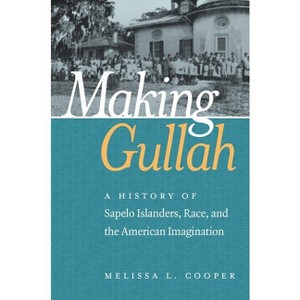
Making Gullah - (The John Hope Franklin African American History and Culture) by Melissa L Cooper (Paperback)
In Stock
Sponsored
About this item
Highlights
- During the 1920s and 1930s, anthropologists and folklorists became obsessed with uncovering connections between African Americans and their African roots.
- Author(s): Melissa L Cooper
- 304 Pages
- History, African American
- Series Name: The John Hope Franklin African American History and Culture
Description
Book Synopsis
During the 1920s and 1930s, anthropologists and folklorists became obsessed with uncovering connections between African Americans and their African roots. At the same time, popular print media and artistic productions tapped the new appeal of black folk life, highlighting African-styled voodoo as an essential element of black folk culture. A number of researchers converged on one site in particular, Sapelo Island, Georgia, to seek support for their theories about "African survivals," bringing with them a curious mix of both influences. The legacy of that body of research is the area's contemporary identification as a Gullah community.
This wide-ranging history upends a long tradition of scrutinizing the Low Country blacks of Sapelo Island by refocusing the observational lens on those who studied them. Cooper uses a wide variety of sources to unmask the connections between the rise of the social sciences, the voodoo craze during the interwar years, the black studies movement, and black land loss and land struggles in coastal black communities in the Low Country. What emerges is a fascinating examination of Gullah people's heritage, and how it was reimagined and transformed to serve vastly divergent ends over the decades.
Review Quotes
"A classic academic monograph in the best tradition."--The Journal of Southern History
"A descendant of Sea Islanders herself, Cooper has written a book that honors these survivors and leaves the readers pulling for them to thrive."--Oral History Review
"A rewarding read, Making Gullah chronicles the evolution of Gullah identity as crafted by outsiders, novelists, historians, and folklorists who have defined the people of Sapelo Island."--North Carolina Historical Review
"A unique contribution to the multitude of previous studies focusing on Gullah culture, skillfully highlighting the heritage of the Gullah people and unveiling the history of the prolific studies of African America's African connection through the lens of Sapelo Island, GA. Highly recommended"--CHOICE
"A well-written, richly researched study of a segment of the American population that remains the subject of caricature and mischaracterization."--American Historical Review
"An incisive history. . . . Highlight[s] the land battles, bigotry, and poverty that beset the Gullah.'" -- New Yorker#
"Cooper has written a book that honors these survivors and leaves the reader pulling for them to thrive."--Oral History Review
"Interrogates the evolution of Gullah identity on Georgia's Sapelo Island since the 1920s. . . . A stimulating, and ultimately satisfying, intellectual and cultural history that also accomplishes the rare feat of contributing to current debates outside of the academy."--Journal of African American History
"Powerful for anyone charged with addressing cultural heritage preservation and land-rights issues because it demands readers rethink the construction and use of history within communities they are charged with serving."--Journal of American History
"The book's chief strength is its perspicacious synthesis spotlighting white and black cultural representation, a scholarly and popular culture, journalism and fiction."--The Journal of Southern History
Shipping details
Return details
Frequently bought together


Guests also viewed



Discover more options