Sponsored

Modern/Postmodern - (Music Reference Collection; 58) by Eric Kramer (Hardcover)
In Stock
Sponsored
About this item
Highlights
- In this book Eric Kramer introduces his theory of dimensional accrual/dissociation to explain the difference between modernity and postmodernity.
- About the Author: ERIC MARK KRAMER is Assistant Professor of Communications at the University of Oklahoma.
- 256 Pages
- Philosophy, History & Surveys
- Series Name: Music Reference Collection; 58
Description
About the Book
In this book Eric Kramer introduces his theory of dimensional accrual/dissociation to explain the difference between modernity and postmodernity. He also argues that social scientific operational definitions are useful but very often arbitrary. Thus, realities based on them are available for creative (alternative) validities. Kramer then concentrates on the concepts of modernity and postmodernity to analyze how they have been defined and structured and, in the end, he offers clear definitions of these concepts and a better understanding of the work of those who have shaped these ideas. Kramer applies this position to the concepts of modernity and postmodernity, providing a painstaking review of the origins, key thinkers, and current status of these ideas.
By reviewing the development of these ideas and providing clear definitions of these concepts, Kramer helps scholars and researchers in the social sciences and humanities better understand applications and limitations of these key approaches in late twentieth-century scholarship.
Book Synopsis
In this book Eric Kramer introduces his theory of dimensional accrual/dissociation to explain the difference between modernity and postmodernity. He also argues that social scientific operational definitions are useful but very often arbitrary. Thus, realities based on them are available for creative (alternative) validities. Kramer then concentrates on the concepts of modernity and postmodernity to analyze how they have been defined and structured and, in the end, he offers clear definitions of these concepts and a better understanding of the work of those who have shaped these ideas. Kramer applies this position to the concepts of modernity and postmodernity, providing a painstaking review of the origins, key thinkers, and current status of these ideas.
By reviewing the development of these ideas and providing clear definitions of these concepts, Kramer helps scholars and researchers in the social sciences and humanities better understand applications and limitations of these key approaches in late twentieth-century scholarship.Review Quotes
?Following the phenomenological insights of Husserl and Jean Gebser, Kramer defends meaning against nihilism, rejecting what he terms 'stable systems, ' while prizing less systematic thinking by means of a 'variety of validities'.... Which is more viable--the endless effort to share one world and try to reach common criteria for validity, or living with the many worlds' vision beyond any perspective and the ongoing feat of seeing the value of others' successes? Whichever way it goes, Kramer's most valuable reminder to protagonists of all stripes is that their reach must exceed their grasp, or what is philosophy for? A good book for stirring up debate over the basic task as well as the outer limits of both doing philosophy and communication wih colleagues.?-Choice
"Following the phenomenological insights of Husserl and Jean Gebser, Kramer defends meaning against nihilism, rejecting what he terms 'stable systems, ' while prizing less systematic thinking by means of a 'variety of validities'.... Which is more viable--the endless effort to share one world and try to reach common criteria for validity, or living with the many worlds' vision beyond any perspective and the ongoing feat of seeing the value of others' successes? Whichever way it goes, Kramer's most valuable reminder to protagonists of all stripes is that their reach must exceed their grasp, or what is philosophy for? A good book for stirring up debate over the basic task as well as the outer limits of both doing philosophy and communication wih colleagues."-Choice
About the Author
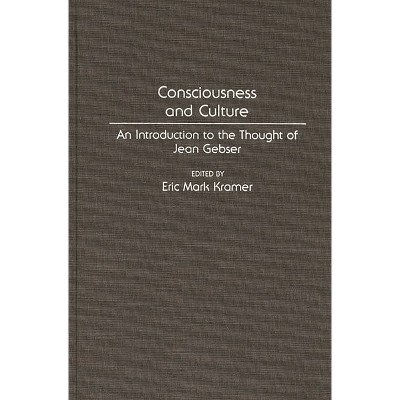
ERIC MARK KRAMER is Assistant Professor of Communications at the University of Oklahoma. Among his earlier publications are Consciousness and Culture: An Introduction to the Thought of Jean Grebser (Greenwood, 1992) and Postmodernism and Race, forthcoming from Praeger.Shipping details
Return details
Trending Philosophy