Sponsored
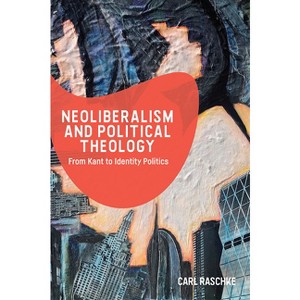
Neoliberalism and Political Theology - by Carl Raschke (Paperback)
In Stock
Sponsored
About this item
Highlights
- Neoliberalism has become the operative buzzword among pundits and academics to characterise an increasingly dysfunctional global political economy.
- About the Author: Carl Raschke is Professor of Religious Studies at the University of Denver.
- 208 Pages
- Political Science, History & Theory
Description
About the Book
Combining penetrating argument and broad-ranging scholarship, Carl Raschke shows what the term 'neoliberalism' really means, how it evolved and why it has been so misunderstood.
Book Synopsis
Neoliberalism has become the operative buzzword among pundits and academics to characterise an increasingly dysfunctional global political economy. It is often - wrongly - identified exclusively with free market fundamentalism and illiberal types of cultural conservatism. Combining penetrating argument and broad-ranging scholarship, Carl Raschke shows what the term really means, how it evolved and why it has been so misunderstood. He lays out how the present new world disorder, signalled by the election of Trump and Brexit, derives less from the ascendancy of reactionary forces and more from the implosion of the post-Cold War effort to establish a progressive international moral and political order for the cynical benefit of a new cosmopolitan knowledge class, mimicking the so-called civilising mission of 19th-century European colonialists.
From the Back Cover
Explains neoliberalism as a deep political theology Neoliberalism in recent years has become the operative buzzword among pundits and academics to characterise an increasingly dysfunctional global political economy. It is often - wrongly - identified exclusively with free market fundamentalism and illiberal types of cultural conservatism. Combining penetrating argument and broad-ranging scholarship, Carl Raschke shows what the term really means, how it evolved and why it has been so misunderstood. He lays out how the present new world disorder, signalled by the American election of 2016 and the Brexit vote, does not derive so much from the ascendancy of reactionary forces as from the implosion of the post-Cold War effort to establish a progressive international moral and political order for the cynical benefit of a new cosmopolitan knowledge class, mimicking the so-called civilising mission of nineteenth-century European colonialists. Carl Raschke is Professor of Religious Studies at the University of Denver and Consulting Editor for The New Polis.Review Quotes
In this penetrating analysis of the political forces which underlie the clash of contemporary values, Raschke exposes the extent to which emancipatory discourse has been co-opted to serve the hegemony of global elites. At once provocative and contemporary, this is political theology at its most critical.-- "Philip Goodchild, University of Nottingham"
About the Author
Carl Raschke is Professor of Religious Studies at the University of Denver. He is the author of Postmodernism and the Revolution in Religious Theory: Towards a Semiotics of the Event (University of Virginia Press, 2012), GloboChrist (Baker Academic, 2008), The Next Reformation (Baker Academic, 2004), The Digital Revolution and the Coming of the Postmodern University (Routledge, 2002), Fire and Roses: Postmodernity and the Thought of the Body (SUNY, 1995) and The Engendering God (Westminster, 1995) and Painted Black (HarperCollins, 1991).
Shipping details
Return details
Trending Non-Fiction





Discover more options