Sponsored
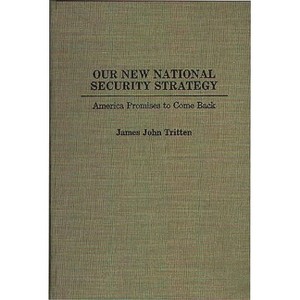
Our New National Security Strategy - by James John Tritten (Hardcover)
In Stock
Sponsored
About this item
Highlights
- This book is an analysis of President Bush's Regional Defense Strategy first unveiled in Aspen, Colorado, on August 2, 1990.
- About the Author: JAMES JOHN TRITTEN has served as the chairman of the Department of National Security Affairs at the Naval Postgraduate School and as Assistant Director, Net Assessment, in the Office of the Secretary of Defense.
- 208 Pages
- Technology, Military Science
Description
About the Book
This book is an analysis of President Bush's Regional Defense Strategy first unveiled in Aspen, Colorado, on August 2, 1990. This strategy involves a mix of active, reserve, and reconstitutable forces, and General Colin Powell's Base Force. If implemented, the new strategy and force structure would return significant U.S. ground and air forces to the continental United States where most would be demobilized. In the event of a major crisis, the United States would rely on active and reserve forces for a contingency response, much as was done for Operation Desert Storm. The new national security strategy is based upon the 25 percent budget cut negotiated with Congress, a greatly depleted Russian threat, and a new international security environment that assumes two-years' warning of a European-centered global war with the former USSR.
There are four major critical factors upon which the new strategy depends: (1) the continued decline of the Russians as a threat to world stability; (2) the ability of the intelligence community to meet new challenges; (3) the behavior of the allies and Congress; and (4) the ability of industry to meet new demands. The new strategy is not simply an adjustment to existing defense doctrine or strategy, but rather a fundamental revision of the way the United States has approached defense since 1945. Students and scholars interested in politico-military strategy and government policy will find this book of great interest.
Book Synopsis
This book is an analysis of President Bush's Regional Defense Strategy first unveiled in Aspen, Colorado, on August 2, 1990. This strategy involves a mix of active, reserve, and reconstitutable forces, and General Colin Powell's Base Force. If implemented, the new strategy and force structure would return significant U.S. ground and air forces to the continental United States where most would be demobilized. In the event of a major crisis, the United States would rely on active and reserve forces for a contingency response, much as was done for Operation Desert Storm. The new national security strategy is based upon the 25 percent budget cut negotiated with Congress, a greatly depleted Russian threat, and a new international security environment that assumes two-years' warning of a European-centered global war with the former USSR.
There are four major critical factors upon which the new strategy depends: (1) the continued decline of the Russians as a threat to world stability; (2) the ability of the intelligence community to meet new challenges; (3) the behavior of the allies and Congress; and (4) the ability of industry to meet new demands. The new strategy is not simply an adjustment to existing defense doctrine or strategy, but rather a fundamental revision of the way the United States has approached defense since 1945. Students and scholars interested in politico-military strategy and government policy will find this book of great interest.Review Quotes
?Those charged with making further adjustments to a new world and its changed defense needs could profit from this glance at recent history.?-Foreign Affairs
"Those charged with making further adjustments to a new world and its changed defense needs could profit from this glance at recent history."-Foreign Affairs
About the Author
JAMES JOHN TRITTEN has served as the chairman of the Department of National Security Affairs at the Naval Postgraduate School and as Assistant Director, Net Assessment, in the Office of the Secretary of Defense. He is a retired Naval officer and Naval aviator who held subspecialty ratings in strategic planning, joint intelligence, and the Soviet Union. He has done research for the Office of the Secretary of Defense, the Office of the Chief of Naval Operations, the National Security Council Staff, the Defense Nuclear Agency, and the RAND Corporation.Shipping details
Return details
Trending Computers & Technology Books





Discover more options