
Sponsored
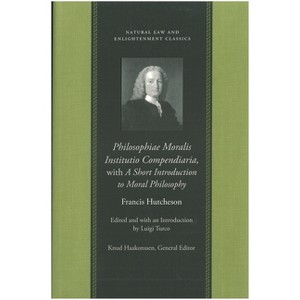
Philosophiae Moralis Institutio Compendiaria, with a Short Introduction to Moral Philosophy - (Natural Law and Enlightenment Classics) (Paperback)
$14.50
In Stock
Eligible for registries and wish lists
Sponsored
About this item
Highlights
- In this new, dual-language edition, Hutcheson's Latin Philosophiae Moralis Institutio Compendiaria is presented on facing pages with its English translation, A Short Introduction to Moral Philosophy, together with all the relevant alterations of the 1745 edition relating to the 1742 edition of the Institutio, including all the omissions and additions by the translator in the Short Introduction.
- Author(s): Francis Hutcheson
- 632 Pages
- Philosophy, Ethics & Moral Philosophy
- Series Name: Natural Law and Enlightenment Classics
Description
Book Synopsis
In this new, dual-language edition, Hutcheson's Latin Philosophiae Moralis Institutio Compendiaria is presented on facing pages with its English translation, A Short Introduction to Moral Philosophy, together with all the relevant alterations of the 1745 edition relating to the 1742 edition of the Institutio, including all the omissions and additions by the translator in the Short Introduction.
Francis Hutcheson (1694-1746) was educated at the University of Glasgow, where he assumed the chair of moral philosophy in 1729.
Luigi Turco is Professor of Philosophy at the University of Bologna.
Review Quotes
The second volume under review contains Hutcheson's Philosophiae Moralis Institutio Compendiaria (Glasgow, 1742; 2nd edn., 1745) in conjunction with the English translation of it, published in 1747 with new texts and other additions. As Hutcheson points out at the very beginning, it is designed for students at the universities who had already finished their courses on logic and metaphysics. The "chief points to be enquired into in Moral Philosophy must be," according to Hutcheson, "what course of life is according to the intention of nature? Wherein consists happiness? And what is virtue?" (p. 23). The book itself contains the elements of this branch of philosophy and is divided into ethics ("teaching the nature of virtue and regulating the internal dispositions") and the law of nature, covering civil law ("or the laws and rights obtaining in natural liberty"), oeconomics ("or the laws and rights of several members of a family") and politics ("shewing the various plans of civil government, and the rights of states with respect to each other").
Heiner F. Klemme, Johannes Gutenberg-Universität Mainz
Eighteenth-Century Scotland
Spring 2008
Dimensions (Overall): 8.8 Inches (H) x 5.8 Inches (W) x 1.3 Inches (D)
Weight: 2.25 Pounds
Suggested Age: 22 Years and Up
Number of Pages: 632
Genre: Philosophy
Sub-Genre: Ethics & Moral Philosophy
Series Title: Natural Law and Enlightenment Classics
Publisher: Liberty Fund
Format: Paperback
Author: Francis Hutcheson
Language: English
Street Date: July 2, 2007
TCIN: 1008493520
UPC: 9780865974531
Item Number (DPCI): 247-07-7221
Origin: Made in the USA or Imported
If the item details aren’t accurate or complete, we want to know about it.
Shipping details
Estimated ship dimensions: 1.3 inches length x 5.8 inches width x 8.8 inches height
Estimated ship weight: 2.25 pounds
We regret that this item cannot be shipped to PO Boxes.
This item cannot be shipped to the following locations: American Samoa (see also separate entry under AS), Guam (see also separate entry under GU), Northern Mariana Islands, Puerto Rico (see also separate entry under PR), United States Minor Outlying Islands, Virgin Islands, U.S., APO/FPO
Return details
This item can be returned to any Target store or Target.com.
This item must be returned within 90 days of the date it was purchased in store, shipped, delivered by a Shipt shopper, or made ready for pickup.
See the return policy for complete information.
Trending Philosophy
$13.99 - $30.40
MSRP $25.00 - $40.00
4.4 out of 5 stars with 200 ratings


$10.23
was $10.78 New lower price
4.6 out of 5 stars with 23 ratings
Discover more options
![Zen and the Art of Motorcycle Maintenance [50th Anniversary Edition] - by Robert M Pirsig (Paperback)](https://target.scene7.com/is/image/Target/GUEST_a091177a-e446-4862-8fd2-fbddb3522083)

$11.59 - $20.00
MSRP $21.00 - $33.00