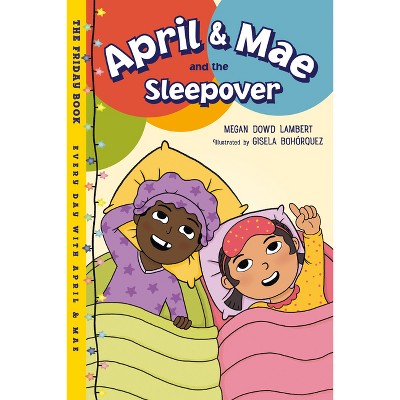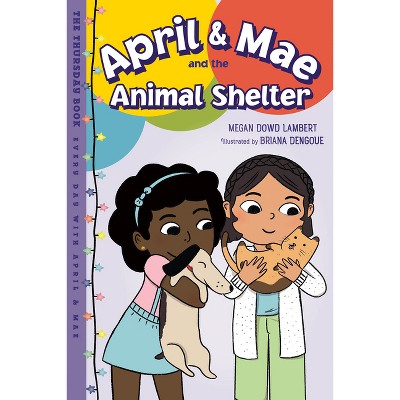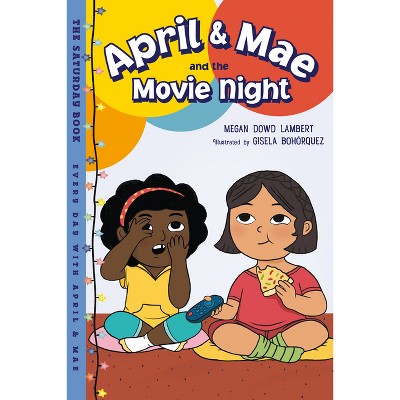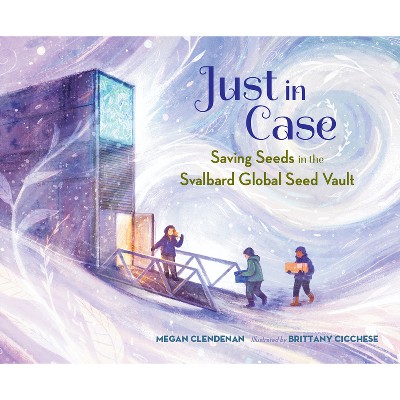
A new, interactive approach to storytime, The Whole Book Approach was developed in conjunction with the Eric Carle Museum of Picture Book Art and expert author Megan Dowd Lambert's graduate work in children's literature at Simmons College, offering a practical guide for reshaping storytime and getting kids to think with their eyes.
About the Author: Megan Dowd Lambert is an instructor at the Center for the Study of Children's Literature at Simmons College, where she previously earned her master's degree in children's literature.
192 Pages
Education, Teaching Methods & Materials
Description
About the Book
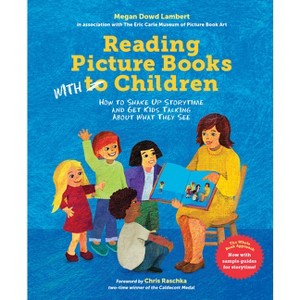
The title appears as 'Reading picture books to children' but with the word 'to' crossed out and replaced by 'with.'
Book Synopsis
A new, interactive approach to storytime, The Whole Book Approach was developed in conjunction with the Eric Carle Museum of Picture Book Art and expert author Megan Dowd Lambert's graduate work in children's literature at Simmons College, offering a practical guide for reshaping storytime and getting kids to think with their eyes.
Traditional storytime often offers a passive experience for kids, but the Whole Book approach asks the youngest of readers to ponder all aspects of a picture book and to use their critical thinking skills. Using classic examples, Megan asks kids to think about why the trim size of Ludwig Bemelman's Madeline is so generous, or why the typeset in David Wiesner's Caldecott winner, The Three Pigs, appears to twist around the page, or why books like Chris Van Allsburg's The Polar Express and Eric Carle's The Very Hungry Caterpillar are printed landscape instead of portrait. The dynamic discussions that result from this shared reading style range from the profound to the hilarious and will inspire adults to make children's responses to text, art, and design an essential part of storytime.
Review Quotes
An in-depth exploration of the author's Whole Book Approach: a way to slow storytime down and consider children's responses to art, design, and other visual elements. Lambert honed her new storytime style while sharing picture books at the Eric Carle Museum of Picture Book Art. She began by using traditional methods but realized that she was representing a museum; she should focus on art and the notion of a book as an art form. Taking cues from the open-ended questions used by the Carle museum's docents, Lambert created a similar approach toward reading with children. With chapters devoted to trim size and orientation, jackets and covers, endpapers, typography, and more, there really is no better way to say it: Lambert delves into the "whole book." Librarians may quake at the thought of inviting so much discussion while reading stories to a large group, but Lambert calms fears with repeated (and adorable--such as the "heightful tower" of Madeline) examples from her many years of practice. She also shares tips and tricks to regain focus if a group goes awry. Traditionalists' concerns that the integrity of the story might be compromised by many interruptions are unfounded; Lambert rightly stresses that reading both the words and the art are equally important and provides ample evidence of children's increased engagement with the books being shared. Welcome permission to shake things up, with an important acknowledgment of the art form at the core of modern storytimes. -Kirkus Reviews Lambert, a lecturer at Simmons College, provides a guidebook to the Whole Book Approach, a "co-constructed (interactive) storytime model centered on the picture book as a visual art form," an approach developed at the Eric Carle Museum of Picture Book Art. Despite the title, the Whole Book Approach is really more child- centered than book-centered, focusing on the ways children interact with books and emphasizing their experiences of what they see and hear during a storytime rather than analyzing the text or pictures. Lambert's thoughtful introduction discusses her own struggles with learning to decode pictures and her subsequent education in all things picture book, including layout, medium, style, etc. Chapters include overviews of trim size, jackets and covers, endpapers, front matter, typography, page design, and perhaps most helpfully, a guide to encouraging visual intelligence among children and the benefits of her approach. Resources includes tips on creating and leading Whole Book storytimes, sample questions for Whole Book storytimes, a glossary and further reading. -The Bulletin of The Center for Children's Books Lambert's Whole Book Approach challenges librarians to think differently about how they share a picture book in a group setting. It asks adult readers to value the opinions of young listeners and to engage them to become active participants as they try to make meaning of all they see and hear during a shared reading. This volume gives concrete examples and practical tips on how to do a shared reading based on the Whole Book Approach; through a conversational style and clear directions, Lambert offers support for librarians and teachers testing out new ways of engaging young listeners. The author developed this method during her graduate studies in children's literature at Simmons College and while working in the Education Department of the Eric Carle Museum of Picture Book Art. As she points out, the Whole Book Approach method of sharing picture books starts right on the title page--adults share vocabulary information about the various parts of a physical book. Lambert goes on to dedicate individual chapters to "Jackets and Covers," "Endpapers," "Front Matter," "Typography," and "Page Design" and spends a good deal of time on how to foster a child's visual intelligence. The author's storytime anecdotes are funny, touching, and ultimately illuminating, highlighting how this approach can open new avenues to explore with children. VERDICT An essential purchase for any educator wanting to understand and apply the Whole Book Approach in their storytimes, or for those who would like to better understand the various parts and wonders of the picture book as a unique art form. -School Library Journal
About the Author
Megan Dowd Lambert is an instructor at the Center for the Study of Children's Literature at Simmons College, where she previously earned her master's degree in children's literature. She writes about books and parenting for the Horn Book Magazine, has sat on a Caldecott Committee, and worked at the Eric Carle Museum of Picture Book Art for many years before writing A CROW OF HIS OWN, her first picture book.
Dimensions (Overall): 8.9 Inches (H) x 7.4 Inches (W) x .6 Inches (D)
Weight: 1.25 Pounds
Suggested Age: 22 Years and Up
Number of Pages: 192
Genre: Education
Sub-Genre: Teaching Methods & Materials
Publisher: Charlesbridge Publishing
Theme: Arts & Humanities
Format: Paperback
Author: Megan Dowd Lambert
Language: English
Street Date: September 16, 2025
TCIN: 1002267038
UPC: 9781623545772
Item Number (DPCI): 247-34-0701
Origin: Made in the USA or Imported
If the item details aren’t accurate or complete, we want to know about it.
Shipping details
Estimated ship dimensions: 0.6 inches length x 7.4 inches width x 8.9 inches height
Estimated ship weight: 1.25 pounds
We regret that this item cannot be shipped to PO Boxes.
This item cannot be shipped to the following locations: American Samoa (see also separate entry under AS), Guam (see also separate entry under GU), Northern Mariana Islands, Puerto Rico (see also separate entry under PR), United States Minor Outlying Islands, Virgin Islands, U.S., APO/FPO, Alaska, Hawaii
Return details
This item can be returned to any Target store or Target.com.
This item must be returned within 90 days of the date it was purchased in store, delivered to the guest, delivered by a Shipt shopper, or picked up by the guest.
A: The book is suggested for readers aged 22 years and up, typically aimed at educators and parents.
submitted byAI Shopping Assistant - 27 days ago
Ai generated
Q: How does this approach benefit children's reading experience?
submitted by AI Shopping Assistant - 27 days ago
A: It encourages active participation, critical thinking, and deep engagement with the story, enhancing children's understanding of visual elements in books.
submitted byAI Shopping Assistant - 27 days ago
Ai generated
Q: What is the Whole Book Approach?
submitted by AI Shopping Assistant - 27 days ago
A: The Whole Book Approach is an interactive storytime method emphasizing children's engagement with both text and art in picture books.
submitted byAI Shopping Assistant - 27 days ago
Ai generated
Q: Who is the author and her background?
submitted by AI Shopping Assistant - 27 days ago
A: Megan Dowd Lambert is an instructor at Simmons College with a master's degree in children's literature, focusing on picture book engagement.
submitted byAI Shopping Assistant - 27 days ago
Ai generated
Q: What topics are covered in the book?
submitted by AI Shopping Assistant - 27 days ago
A: The book covers topics such as trim size, typography, jackets and covers, endpapers, fostering visual intelligence, and active reading strategies.