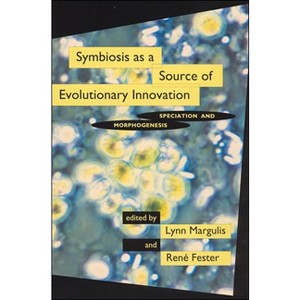
These original contributions by symbiosis biologists and evolutionary theorists address the adequacy of the prevailing neo-Darwinian concept of evolution in the light of growing evidence that hereditary symbiosis, supplemented by the gradual accumulation of heritable mutation, results in the origin of new species and morphological novelty.A departure from mainstream biology, the idea of symbiosis--as in the genetic and metabolic interactions of the bacterial communities that became the earliest eukaryotes and eventually evolved into plants and animals--has attracted the attention of a growing number of scientists.These original contributions by symbiosis biologists and evolutionary theorists address the adequacy of the prevailing neo-Darwinian concept of evolution in the light of growing evidence that hereditary symbiosis, supplemented by the gradual accumulation of heritable mutation, results in the origin of new species and morphological novelty.
About the Author: Lynn Margulis (1938-2011) was Distinguished Professor of Botany at the University of Massachusetts at Amherst.
470 Pages
Science, Life Sciences
Description
About the Book
These original contributions by symbiosis biologists and evolutionary theorists address the adequacy of the prevailing neo-Darwinian concept of evolution in the light of growing evidence that hereditary symbiosis, supplemented by the gradual accumulation of heritable mutation, results in the origin of new species and morphological novelty.
Book Synopsis
These original contributions by symbiosis biologists and evolutionary theorists address the adequacy of the prevailing neo-Darwinian concept of evolution in the light of growing evidence that hereditary symbiosis, supplemented by the gradual accumulation of heritable mutation, results in the origin of new species and morphological novelty.
A departure from mainstream biology, the idea of symbiosis--as in the genetic and metabolic interactions of the bacterial communities that became the earliest eukaryotes and eventually evolved into plants and animals--has attracted the attention of a growing number of scientists.
These original contributions by symbiosis biologists and evolutionary theorists address the adequacy of the prevailing neo-Darwinian concept of evolution in the light of growing evidence that hereditary symbiosis, supplemented by the gradual accumulation of heritable mutation, results in the origin of new species and morphological novelty. They include reports of current research on the evolutionary consequences of symbiosis, the protracted physical association between organisms of different species. Among the issues considered are individuality and evolution, microbial symbioses, animal-bacterial symbioses, and the importance of symbiosis in cell evolution, ecology, and morphogenesis. Lynn Margulis, Distinguished Professor of Botany at the University of Massachusetts at Amherst, is the modern originator of the symbiotic theory of cell evolution. Once considered heresy, her ideas are now part of the microbiological revolution.
Contributors Peter Atsatt, Richard C. Back, David Bermudes, Paola Bonfante-Fasolo, René Fester, Lynda J. Goff, Anne-Marie Grenier, Ricardo Guerrero, Robert H. Haynes, Rosmarie Honegger, Gregory Hinkle, Kwang W. Jeon, Bryce Kendrick, Richard Law, David Lewis, Lynn Margulis, John Maynard Smith, Margaret J. McFall-Ngai, Paul Nardon, Kenneth H. Nealson, Kris Pirozynski, Peter W. Price, Mary Beth Saffo, Jan Sapp, Silvano Scannerini, Werner Schwemmler, Sorin Sonea, Toomas H. Tiivel, Robert K. Trench, Russell Vetter
About the Author
Lynn Margulis (1938-2011) was Distinguished Professor of Botany at the University of Massachusetts at Amherst. An evolutionary theorist and biologist, science author, and educator, Margulis was the modern originator of the symbiotic theory of cell evolution. Once considered heresy, her ideas are now part of the microbiological revolution. René Fester is a graduate student in the biological sciences at Northern Arizona University.
Dimensions (Overall): 8.9 Inches (H) x 6.0 Inches (W) x 1.1 Inches (D)
Weight: 1.45 Pounds
Suggested Age: 22 Years and Up
Number of Pages: 470
Genre: Science
Sub-Genre: Life Sciences
Publisher: MIT Press
Theme: Genetics & Genomics
Format: Paperback
Author: Lynn Margulis & Rene Fester
Language: English
Street Date: June 17, 1991
TCIN: 1003466954
UPC: 9780262519908
Item Number (DPCI): 247-10-9640
Origin: Made in the USA or Imported
If the item details aren’t accurate or complete, we want to know about it.
Shipping details
Estimated ship dimensions: 1.1 inches length x 6 inches width x 8.9 inches height
Estimated ship weight: 1.45 pounds
We regret that this item cannot be shipped to PO Boxes.
This item cannot be shipped to the following locations: American Samoa (see also separate entry under AS), Guam (see also separate entry under GU), Northern Mariana Islands, Puerto Rico (see also separate entry under PR), United States Minor Outlying Islands, Virgin Islands, U.S., APO/FPO, Alaska, Hawaii
Return details
This item can be returned to any Target store or Target.com.
This item must be returned within 90 days of the date it was purchased in store, delivered to the guest, delivered by a Shipt shopper, or picked up by the guest.