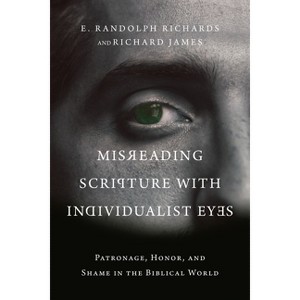
Misreading Scripture with Individualist Eyes - by E Randolph Richards & Richard James (Paperback)
$20.10Save $13.89 (41% off)
In Stock

Free & easy returns
Return this item by mail or in store within 90 days for a full refund.
Eligible for registries and wish lists
About this item
Additional product information and recommendations
Discover more options
- $22.08MSRP $33.99
- $19.89MSRP $33.99
- $15.88MSRP $23.99
- $25.89MSRP $39.99







Frequently bought together
- $21.98MSRP $24.95
- $17.39MSRP $32.00
- $30.75MSRP $35.95
- $12.94MSRP $12.99
- $11.68was $15.12 New lower price
- $15.58MSRP $27.99













Guests also viewed
- $33.49MSRP $59.99
Related Categories
3.0 out of 5 stars with 1 reviews
3 out of 5 stars
31 October, 2020
Always good to get a better understanding of culture
Rarely, when reviewing books, does where I live play a role. In reading “Misreading scripture with individualistic eyes” though, it feels important to note that South Africa has deep roots in collectivist culture. Authors E. Randolph Richards and Richard James set out to explain to readers from individualistic cultures the differences between the two and how that impacts the way we read the Bible, they comment: “…to understand ancient Mediterranean (and most modern Eastern) collectivist cultures, you need to understand six basic ingredients: kinship, patronage, brokerage, honor, shame, and boundaries.” However, I felt like neither fish nor fowl! I was raised as a first generation South African by British parents but in living over 30 years in South Africa, these six basic ingredients felt familiar and my interpretation of the examples given lined up on the collectivist side of things. I am a mix of the two, I can see both sides, but felt more comfortable with the collectivist than the individualist. Whichever side you find yourself on, better understanding how culture and context impact how we interpret stories is a good thing and as such, I enjoyed the book. My experience of collectivist culture meant I found having a concept explained three or four times over in different ways repetitive but, perhaps, for those less familiar with it, it will be helpful. In Africa, there is a saying about the meaning “being in the air”, unstated and yet understood. It would be seem to be similar in Eastern culture as a large part of the book explains what ISN’T said in the Bible as it “…examines some unspoken foundational social structures and tools used in the biblical world.” The authors do this through expounding on Biblical stories, sharing modern examples and writing fictional stories to highlight their points. In doing so, they achieve their objective of highlighting how different the Biblical world view was in comparison to today’s Western culture. If you haven’t experienced a collectivist culture, this book will open your eyes to a very different way of perceiving the world and change the way you see many of the familiar stories from the Bible. If you have, this may not be the one for you, it doesn’t dig deeply into particulars of the Biblical culture and admits to using generalisations to make the point. It’s a three out of five on the enJOYment scale.