Sponsored
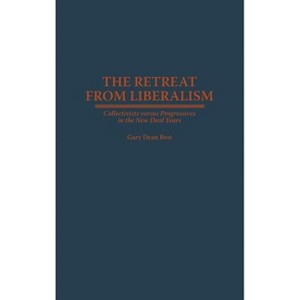
The Retreat from Liberalism - by Gary D Best (Hardcover)
In Stock
Sponsored
About this item
Highlights
- During the 1930s, a battle was waged over both philosophy and policy between those who described themselves as liberals, both inside and outside the Roosevelt administration.
- About the Author: GARY DEAN BEST is Professor of History at the University of Hawaii at Hilo.
- 192 Pages
- History, United States
Description
About the Book
During the 1930s, a battle was waged over both philosophy and policy between those who described themselves as liberals, both inside and outside the Roosevelt administration. On one side were those who viewed themselves as modern liberals, who saw capitalism as a failure and sought to replace it with a collectivist society and economy. On the other were more traditional American liberals or progressives who aimed merely to reform capitalism, in the belief that individual liberty and a free economy were synonymous. This study examines the role of each during this vital decade. Instead of reaching its high point in the New Deal years, Best argues, American liberalism retreated from most of its major tenets as a result of the popularity of collectivism.
Challenging existing stereotypes and conventional wisdom concerning the 1930s, this study delves into the controversy between the new liberals and the free enterprise group. Included in this latter category were the Brandeisians, who exercised considerable influence within the Roosevelt administration, as well as a variety of more traditional liberals who worked through other channels to achieve their goals. Many of those who called themselves liberals in the 1930s had, Best contends, actually abandoned their basic liberal tenets. This included the president as well.
Book Synopsis
During the 1930s, a battle was waged over both philosophy and policy between those who described themselves as liberals, both inside and outside the Roosevelt administration. On one side were those who viewed themselves as modern liberals, who saw capitalism as a failure and sought to replace it with a collectivist society and economy. On the other were more traditional American liberals or progressives who aimed merely to reform capitalism, in the belief that individual liberty and a free economy were synonymous. This study examines the role of each during this vital decade. Instead of reaching its high point in the New Deal years, Best argues, American liberalism retreated from most of its major tenets as a result of the popularity of collectivism.
Challenging existing stereotypes and conventional wisdom concerning the 1930s, this study delves into the controversy between the new liberals and the free enterprise group. Included in this latter category were the Brandeisians, who exercised considerable influence within the Roosevelt administration, as well as a variety of more traditional liberals who worked through other channels to achieve their goals. Many of those who called themselves liberals in the 1930s had, Best contends, actually abandoned their basic liberal tenets. This included the president as well.Review Quotes
"Gary Dean Best is the best historian currently writing on the New Deal. In Retreat from Liberalism, he studies the many forces at work during the 1930s that undermined traditional liberalism. The New Deal, of course, was one of these forces, and Best does an excellent job at showing the surprising resistance to centralization under Franklin Roosevelt, even among many who voted for him. Many former progressives found Roosevelt to be duplicitous and dictatorial in his many attempts to centralize power in the executive branch. Best's book ably fills a niche and is must reading for New Deal historians."-Burton W. Folsom Jr. author, The Myth of the Robber Barons
?Retreat from Liberalism is an excellent contribution to New Deal historiography. Best does a fine job of differentiating and contrasting the thinking of major collectivists and key liberals during the 1930's. He shows how leading liberals changed over time from supporting FDR and the New Deal, to mildly opposing it, to vehemently opposing it...Best shows how much about the New Deal is still not clearly understood by historians. I highly recommend the book.?-NEWDEAL: USA, 1929-1952
?With its focus on the progressive critics of the New Deal, this is a useful addition to New Deal collections. Recommended. Upper-division undergraduates and above.?-Choice
"With its focus on the progressive critics of the New Deal, this is a useful addition to New Deal collections. Recommended. Upper-division undergraduates and above."-Choice
"Retreat from Liberalism is an excellent contribution to New Deal historiography. Best does a fine job of differentiating and contrasting the thinking of major collectivists and key liberals during the 1930's. He shows how leading liberals changed over time from supporting FDR and the New Deal, to mildly opposing it, to vehemently opposing it...Best shows how much about the New Deal is still not clearly understood by historians. I highly recommend the book."-NEWDEAL: USA, 1929-1952
About the Author
GARY DEAN BEST is Professor of History at the University of Hawaii at Hilo. His previous books include Pride, Prejudice, and Politics (Praeger, 1990), FDR and the Bonus Marchers (Praeger, 1992), and The Nickel and Dime Decade (Praeger, 1993).Shipping details
Return details
Trending Non-Fiction



Discover more options