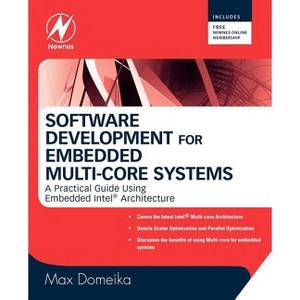
The multicore revolution has reached the deployment stage in embedded systems ranging from small ultramobile devices to large telecommunication servers.
Author(s): Max Domeika
438 Pages
Computers + Internet, Software Development & Engineering
Description
About the Book
This title provides embedded engineers with solid grounding in the skills required to develop software targeting multicore processors. Detailed coverage of critical issues for multicore employment within embedded systems is provided.
Book Synopsis
The multicore revolution has reached the deployment stage in embedded systems ranging from small ultramobile devices to large telecommunication servers. The transition from single to multicore processors, motivated by the need to increase performance while conserving power, has placed great responsibility on the shoulders of software engineers. In this new embedded multicore era, the toughest task is the development of code to support more sophisticated systems. This book provides embedded engineers with solid grounding in the skills required to develop software targeting multicore processors. Within the text, the author undertakes an in-depth exploration of performance analysis, and a close-up look at the tools of the trade. Both general multicore design principles and processor-specific optimization techniques are revealed. Detailed coverage of critical issues for multicore employment within embedded systems is provided, including the Threading Development Cycle, with discussions of analysis, design, development, debugging, and performance tuning of threaded applications. Software development techniques engendering optimal mobility and energy efficiency are highlighted through multiple case studies, which provide practical "how-to" advice on implementing the latest multicore processors. Finally, future trends are discussed, including terascale, speculative multithreading, transactional memory, interconnects, and the software-specific implications of these looming architectural developments. Table of Contents Chapter 1 - Introduction Chapter 2 - Basic System and Processor Architecture Chapter 3 - Multi-core Processors & Embedded Chapter 4 -Moving To Multi-core Intel Architecture Chapter 5 - Scalar Optimization & Usability Chapter 6 - Parallel Optimization Using Threads Chapter 7 - Case Study: Data Decomposition Chapter 8 - Case Study: Functional Decomposition Chapter 9 - Virtualization & Partitioning Chapter 10 - Getting Ready For Low Power Intel Architecture Chapter 11 - Summary, Trends, and Conclusions Appendix I Glossary References
Dimensions (Overall): 9.17 Inches (H) x 7.54 Inches (W) x 1.04 Inches (D)
Weight: 1.97 Pounds
Suggested Age: 22 Years and Up
Number of Pages: 438
Genre: Computers + Internet
Sub-Genre: Software Development & Engineering
Publisher: Newnes
Theme: General
Format: Paperback
Author: Max Domeika
Language: English
Street Date: April 1, 2008
TCIN: 1009430044
UPC: 9780750685399
Item Number (DPCI): 247-55-3477
Origin: Made in the USA or Imported
If the item details aren’t accurate or complete, we want to know about it.
Shipping details
Estimated ship dimensions: 1.04 inches length x 7.54 inches width x 9.17 inches height
Estimated ship weight: 1.97 pounds
We regret that this item cannot be shipped to PO Boxes.
This item cannot be shipped to the following locations: American Samoa (see also separate entry under AS), Guam (see also separate entry under GU), Northern Mariana Islands, Puerto Rico (see also separate entry under PR), United States Minor Outlying Islands, Virgin Islands, U.S., APO/FPO
Return details
This item can be returned to any Target store or Target.com.
This item must be returned within 90 days of the date it was purchased in store, shipped, delivered by a Shipt shopper, or made ready for pickup.