Sponsored
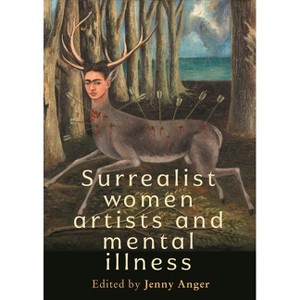
Surrealist Women Artists and Mental Illness - by Jenny Anger (Hardcover)
Pre-order
Sponsored
About this item
Highlights
- Female mental illness has been a prominent and complicated theme in surrealist cultural traditions, including the idealization of women with mental illness in works such as André Breton's Nadja (1928).
- About the Author: Jenny Anger is Professor of Art History at Grinnell College, Iowa
- 232 Pages
- Art, Women Artists
Description
About the Book
Surrealists idealized feminine madness for its purportedly unfettered access to the unconscious. At the same time, an unusually large number of surrealist women artists, including Leonora Carrington and Frida Kahlo, experienced mental illness. Die these women find the dream of feminized, mad genius prohibitive--or productive?Book Synopsis
Female mental illness has been a prominent and complicated theme in surrealist cultural traditions, including the idealization of women with mental illness in works such as André Breton's Nadja (1928). Art historians have examined this tendency before, but to date there has been no comprehensive study of the lived reality of women surrealist artists with mental illness. How did women's experience and their work intersect with this romanticized vision? Was the masculine dream of feminized, "mad" genius prohibitive or productive for these women artists? After establishing the ideological field within which these women worked, the book turns to case studies of well-known and some lesser-known artists, including Ángeles Santos, Leonora Carrington, Dora Maar, Claude Cahun, Frida Kahlo, Meret Oppenheim, Sonja Sekula, and Unica Zürn. This collection of essays contains a wide range of responses, revealing surrealism's generative as well as restrictive force.From the Back Cover
Surrealists idealised feminine madness for its supposedly unfettered access to the unconscious. At the same time, a significant number of surrealist women artists experienced mental illness. Indeed, Leonora Carrington, Frida Kahlo, Meret Oppenheim, Sonja Sekula, and Unica Zürn, among others, all suffered from maladies ranging from depression to schizophrenia--and all found their way into the surrealist movement.
It was an uncomfortable fit. Carrington was hospitalized due to psychosis, Kahlo is believed to have had post-traumatic stress disorder (PTSD), Oppenheim struggled with depression, and Sekula's and Zürn's schizophrenia affected their art processes and products. How did these experiences and their work intersect with surrealism's romanticised vision of feminine madness? Did these women--and others--see themselves in that ideal? Surrealist scholar Katharine Conley observes that the surrealist woman had 'a potential for shock and consequently for reversal--the potential to step down from her pedestal and to create on her own.' How true was that observation for the surrealist woman with the added burden of mental illness, which complicates all aspects of life? Did these women find the masculine, surrealist dream of feminised, mad genius prohibitive--or productive? This study explores how the work of these women pushed surrealism far beyond its mere idealisation of feminine madness--and how actual feminine mental illness expanded and deepened surrealist art. 'It is encouraging to finally see a serious study on women Surrealist artists and mental health and illness, an intersection overdue for scholarly exploration. A triumph and an absolute necessity'Amanda Cachia, University of Houston
Review Quotes
'It is encouraging to finally see a serious study on women Surrealist artists and mental health and illness, an intersection overdue for scholarly exploration. A triumph and an absolute necessity'
Amanda Cachia, University of Houston
About the Author
Jenny Anger is Professor of Art History at Grinnell College, IowaShipping details
Return details
Frequently bought together






Guests also viewed