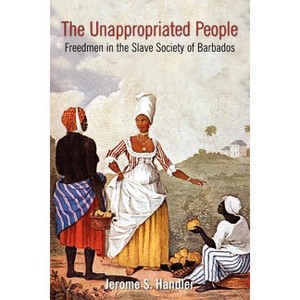
This classic examination of the freedmen in the slavesociety of Barbados was first published in 1974 and has not been widelyavailable for years.
Author(s): Jerome S Handler
225 Pages
Social Science, Sociology
Description
Book Synopsis
This classic examination of the freedmen in the slave society of Barbados was first published in 1974 and has not been widely available for years. Reissued now with a new introduction by Melanie Newton that places the work in the context of the historiography of studies of Caribbean free-coloured populations, this classic is now available to a new generation of scholars and students. The work remains the only treatment of the free people of colour of Barbados from the earliest periods of the slave society to emancipation in 1834 and provides the most detailed discussion of the manumission process for any British West Indian society. Allowed certain rights and privileges not extended to slaves but denied others reserved for whites, the social status of the free people was ambiguous. Thus there was wide latitude for varying interpretations of what their position should be, but Handler shows how the freedmen=s struggle for civil rights was a collective effort to maximize their free status and to avoid a position of permanent intermediacy between white and enslaved.
Using the petitions and addresses written by the freedmen themselves, Handler contends that they neither challenged the notion of a class society nor attempted to deny the upper stratum those privileges commensurate with its rank. They argued that a hierarchically organized society should be based on that set of social and economic criteria that whites used in drawing distinctions among themselves. It was evident, however, that as long as the slave society continued to exist, the freedmen of Barbados would remain an "unappropriated people", neither enslaved nor entirely free.
Review Quotes
"The Unappropriated People is a major contribution to Caribbean historiography.... Handler has beautifully illuminated the intricate relationship between class, occupation, and society in the plantation Caribbean."
- Franklin W. Knight, American Anthropologist
Dimensions (Overall): 8.9 Inches (H) x 5.9 Inches (W) x .7 Inches (D)
Weight: .88 Pounds
Suggested Age: 22 Years and Up
Number of Pages: 225
Genre: Social Science
Sub-Genre: Sociology
Publisher: University of the West Indies Press
Theme: General
Format: Paperback
Author: Jerome S Handler
Language: English
Street Date: April 29, 2009
TCIN: 1010169045
UPC: 9789766402181
Item Number (DPCI): 247-31-0757
Origin: Made in the USA or Imported
If the item details aren’t accurate or complete, we want to know about it.
Shipping details
Estimated ship dimensions: 0.7 inches length x 5.9 inches width x 8.9 inches height
Estimated ship weight: 0.88 pounds
We regret that this item cannot be shipped to PO Boxes.
This item cannot be shipped to the following locations: American Samoa (see also separate entry under AS), Guam (see also separate entry under GU), Northern Mariana Islands, Puerto Rico (see also separate entry under PR), United States Minor Outlying Islands, Virgin Islands, U.S., APO/FPO, Alaska, Hawaii
Return details
This item can be returned to any Target store or Target.com.
This item must be returned within 90 days of the date it was purchased in store, delivered to the guest, delivered by a Shipt shopper, or picked up by the guest.