Sponsored
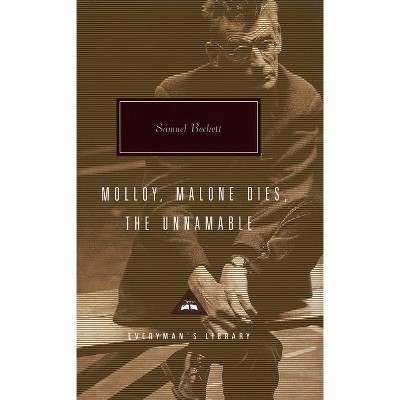
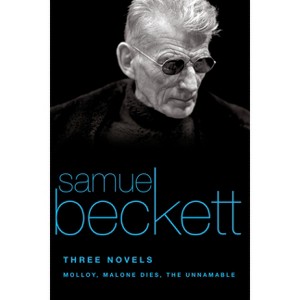
Three Novels - by Samuel Beckett (Paperback)
In Stock
Sponsored
About this item
Highlights
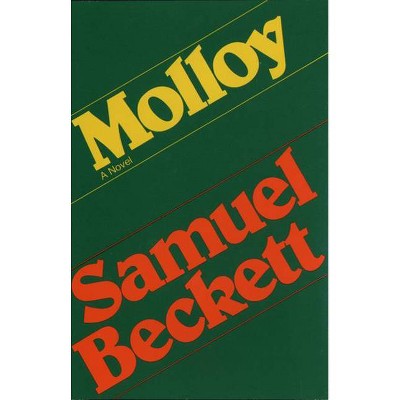
- Few works of contemporary literature are so universally acclaimed as central to our understanding of the human experience as Nobel Prize winner Samuel Beckett's famous trilogy.Molloy, the first of these masterpieces, appeared in French in 1951.
- About the Author: Samuel Beckett (1906-1989), one of the leading literary and dramatic figures of the twentieth century, was born in Foxrock, Ireland and attended Trinity University in Dublin.
- 416 Pages
- Fiction + Literature Genres, Classics
Description
About the Book
Few works of contemporary literature are so universally acclaimed as central to our understanding of the human experience as Nobel Prize winner Samuel Beckett's famous trilogy. "Molloy," the first of these masterpieces, appeared in French in 1951. It was followed seven months later by "Malone Dies" and two years later by "The Unnamable." All three have been rendered into English by the author.Book Synopsis
Few works of contemporary literature are so universally acclaimed as central to our understanding of the human experience as Nobel Prize winner Samuel Beckett's famous trilogy.
Molloy, the first of these masterpieces, appeared in French in 1951. It was followed seven months later by Malone Dies and two years later by The Unnamable. All three have been rendered into English by the author.
The first novel of Samuel Beckett's mordant and exhilarating midcentury trilogy introduces us to Molloy, who has been mysteriously incarcerated, and who subsequently escapes to go discover the whereabouts of his mother. In the latter part of this curious masterwork, a certain Jacques Moran is deputized by anonymous authorities to search for the aforementioned Molloy.
In the trilogy's second novel, Malone, who might or might not be Molloy himself, addresses us with his ruminations while in the act of dying.
The third novel consists of the fragmented monologue--delivered, like the monologues of the previous novels, in a mournful rhetoric that possesses the utmost splendor and beauty--of what might or might not be an armless and legless creature living in an urn outside an eating house.
Taken together, these three novels represent the high-water mark of the literary movement we call Modernism. Within their linguistic terrain, where stories are taken up, broken off, and taken up again, where voices rise and crumble and are resurrected, we can discern the essential lineaments of our modern condition, and encounter an awesome vision, tragic yet always compelling and always mysteriously invigorating, of consciousness trapped and struggling inside the boundaries of nature.
Review Quotes
Selected as one of Time Out's 1,000 Books to Change Your Life
"More powerful and important than Godot. . . . Mr. Beckett seeks to empty the novel of its usual recognizable objects--plot, situation, characters--and yet keep the reader interested and moved. Beckett is one of the most positive writers alive. Behind all his mournful blasphemies against man there is real love. And he is genuine: every sentence is written as if it had been lived." --The New York Times Book Review
"[Beckett] possesses fierce intellectual honesty, and his prose has a bare, involuted rhythm that is almost hypnotic." --Time
"Samuel Beckett is sui generis. . . . He has given a voice to the decrepit and maimed and inarticulate, men and women at the end of their tether, past pose or pretense, past claim of meaningful existence. He seems to say that only there and then, as metabolism lowers, amid God's paucity, not his plenty, can the core of the human condition be approached . . . Yet his musical cadences, his wrought and precise sentences, cannot help but stave off the void . . . Like salamanders we survive in his fire." --Richard Ellmann
"In the trilogy, Beckett is creating his own death in prose, quarrying right down to that subterranean country of his heart. . . . What remains is a terminal vision, a terminal style and, from the point of view of possible development, a work at least as aesthetically terminal as Finnegans Wake." --A. Alvarez
About the Author
Samuel Beckett (1906-1989), one of the leading literary and dramatic figures of the twentieth century, was born in Foxrock, Ireland and attended Trinity University in Dublin. In 1928, he visited Paris for the first time and fell in with a number of avant-garde writers and artists, including James Joyce. In 1937, he settled in Paris permanently.